










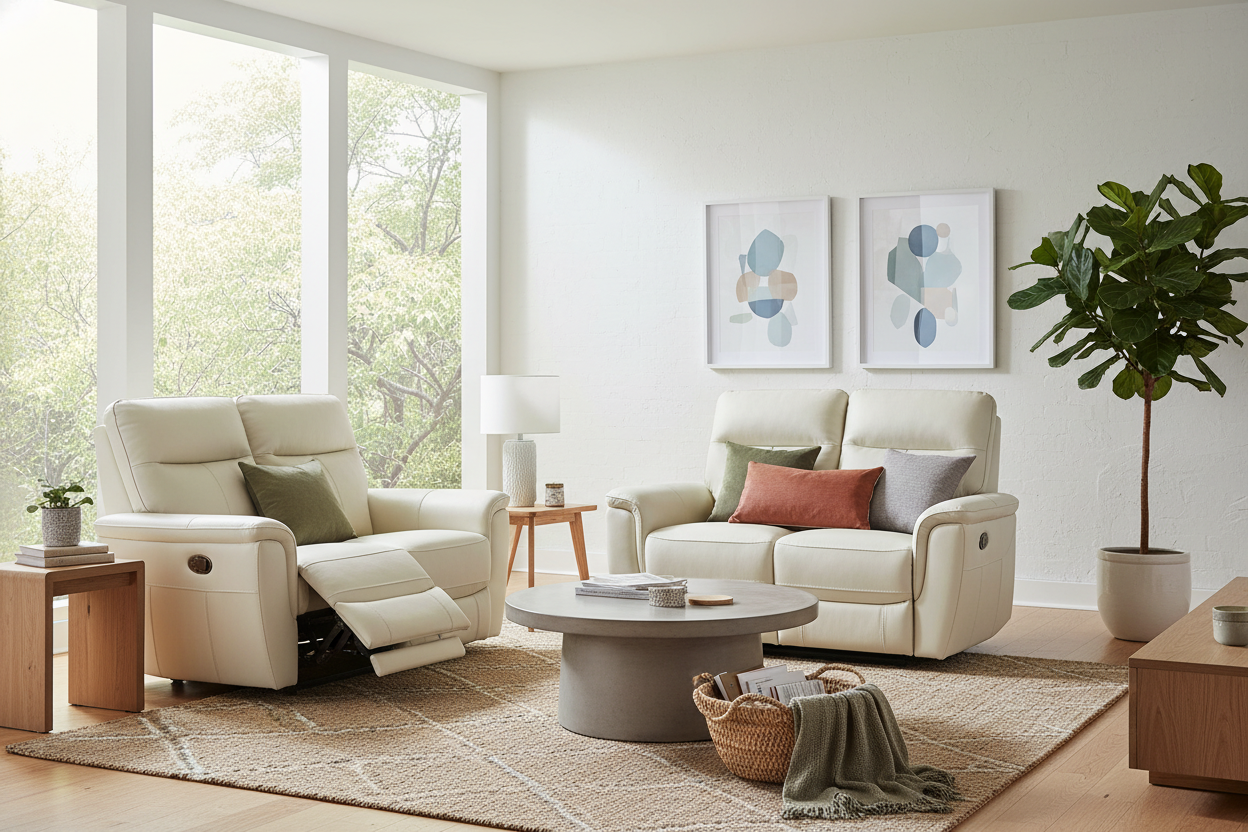
For years, interior designers faced a persistent dilemma: how to provide the deep, restorative comfort clients crave without ruining the room's visual lines with bulky machinery. Fortunately, the era of the overstuffed, shapeless sofa is behind us. The modern love seats recliner has evolved into a sophisticated piece of furniture that marries ergonomic engineering with architectural silhouettes. Whether you are furnishing a media room or a formal living area, selecting the right piece requires looking beyond the upholstery and understanding the mechanics of comfort.
Key Features to Look For
- Wall Clearance: Determine if you need a 'wall-hugger' (requires 2-4 inches) or a standard mechanism (requires 8-12 inches).
- Upholstery Grade: Look for high rub counts (over 25,000 double rubs) or top-grain leather to withstand friction from movement.
- Suspension System: Sinuous springs offer firmness, while eight-way hand-tied springs provide superior longevity and flex.
- Power vs. Manual: Power offers infinite positions but requires floor outlets or battery packs; manual is faster but offers limited angles.
Balancing Aesthetics and Ergonomics
The primary challenge with reclining furniture is "visual weight." Because these pieces house metal mechanisms and extra padding, they can easily dominate a room. When selecting reclining love seats, I always advise clients to look for "high-leg" models. These designs keep the furniture off the floor, allowing light to pass underneath, which tricks the eye into seeing the piece as lighter and less imposing.
The Silhouette and Scale
Pay close attention to the arms. Wide, rolled arms add unnecessary bulk to an already substantial piece. A track arm or a slender, tapered arm will modernize the look and save precious floor space. Furthermore, ensure the headrest doesn't obstruct sightlines, especially if the piece is floating in the center of an open-concept room. Many luxury models now feature articulating headrests that fold down when not in use, preserving the low profile of a standard sofa.
Choosing the Right Material
Friction is the enemy of reclining furniture. Unlike a stationary sofa, a love seat with recliner functionality involves constant movement between cushions.
Leather vs. Performance Fabric
Top-grain leather is often the gold standard because it moves with the mechanism and doesn't pill. However, be wary of bonded leather, which will peel rapidly under the stress of reclining. If you prefer fabric, opt for a tight-weave performance velvet or a heavy-duty chenille. Avoid loose weaves like linen, which can snag in the footrest mechanism or stretch out, leaving unsightly "puddling" on the seat after a few months of use.
Space Planning & Layout
The footprint of a recliner changes the moment you use it. A common error is placing a heavy coffee table too close to the unit. When the footrest extends, it creates a traffic jam. Instead of a rectangular coffee table, consider using a pair of nesting round tables or a C-table that can slide over the arm. This maintains the flow of the room while keeping surfaces accessible.
Lessons from My Own Projects
I learned a hard lesson about reclining furniture during a project for a high-rise condo in downtown Chicago. We selected a stunning, Italian-made power reclining love seat to float in the center of the room, facing the skyline. It looked sculptural and perfect—until we plugged it in.
I had completely overlooked the power source. We ended up with a black industrial cord snaking across a hand-knotted wool rug, creating both an eyesore and a trip hazard. It ruined the luxury aesthetic instantly. We eventually solved it by purchasing a rechargeable lithium-ion battery pack that hides underneath the frame, but it was a scramble.
Another detail I tell clients to check is the "lumbar gap." I’ve tested dozens of models where, once fully reclined, a hollow space opens up between the seat and the back cushion, leaving your lower back unsupported. Always test the piece in the fully extended position before buying; if you can fit your fist in the gap behind your lower spine, walk away.
Conclusion
Investing in a love seats recliner is an investment in your downtime. By focusing on the mechanical clearance, the durability of the textile, and the visual weight of the frame, you can secure a piece that supports your body without compromising your home's design integrity.
Frequently Asked Questions
How much space do I need behind a reclining love seat?
This depends entirely on the mechanism. "Zero-wall" or "wall-hugger" models track forward as they recline, requiring only 2 to 4 inches of clearance. Standard mechanisms generally require 10 to 14 inches behind the frame to fully extend.
Are power recliners prone to breaking?
Modern power motors are generally quite durable, often outlasting the fabric upholstery. However, the switch gear (the buttons) is the most common failure point. Look for models with easy-to-replace switch panels rather than those integrated deeply into the arm frame.
Can I use a rug under a reclining love seat?
Yes, but pile height matters. A high-pile shag rug can get caught in the metal scissor mechanism underneath the footrest. Stick to low-pile or flat-weave rugs to ensure smooth operation and prevent motor strain.

Leave a comment
This site is protected by hCaptcha and the hCaptcha Privacy Policy and Terms of Service apply.