










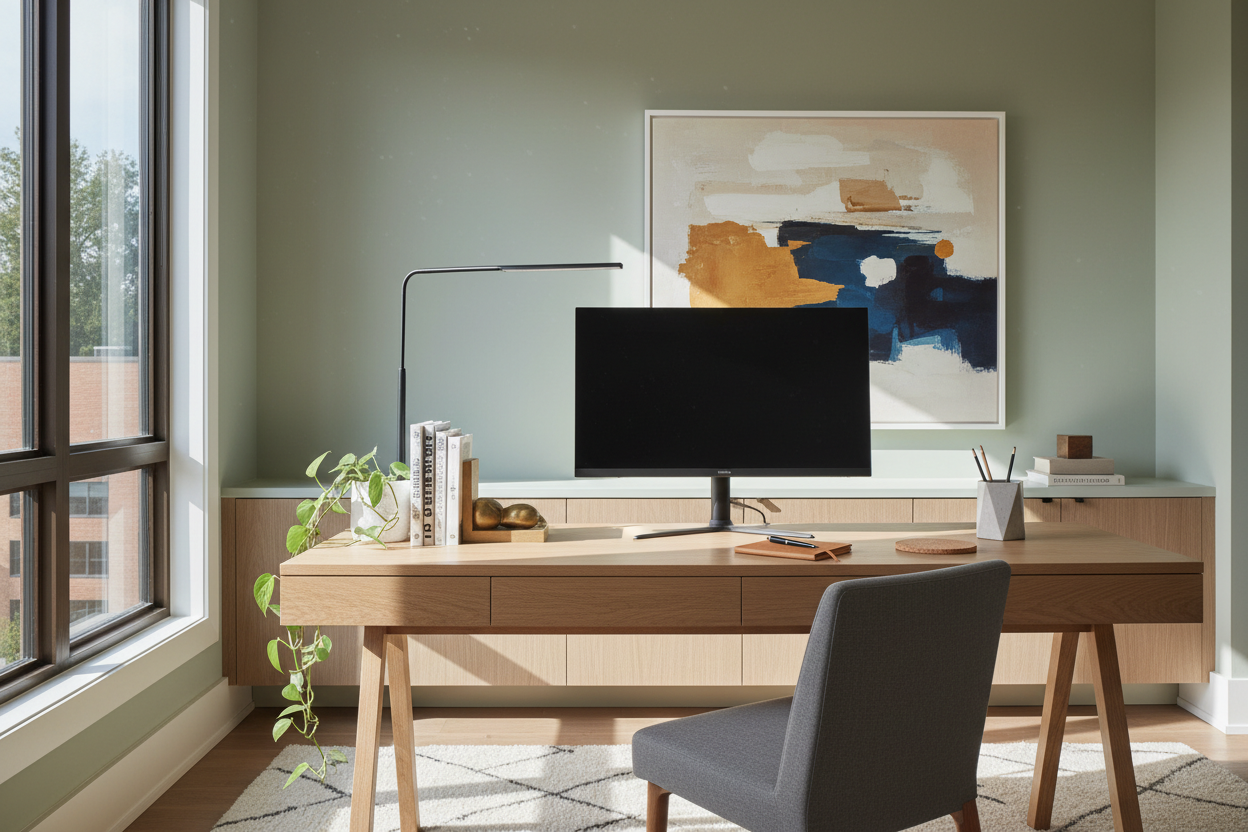
There is a distinct psychological difference between a workspace that merely functions and one that inspires. As an interior designer, I often walk into homes where the desk is treated as a dumping ground rather than a command center. A cluttered surface creates a cluttered mind, but a sterile surface offers no motivation. The goal is to curate home office desk decorating ideas that strike a delicate balance between personal expression and professional efficiency.
Quick Decision Guide: The Pillars of Desk Styling
- Zoning: distinct areas for computer work, writing, and reference materials to prevent visual chaos.
- Lighting Layers: Combine task lighting (function) with ambient table lamps (mood) to reduce eye strain.
- Material Contrast: If your desk is wood, accessorize with metal or stone. If it's glass, add warmth with leather or fabric.
- Verticality: Utilize wall space or risers to keep the primary work surface clear for actual work.
- Biophilic Elements: Incorporate living elements like succulents or moss to soften hard architectural lines.
Establishing the Foundation: Layout and Flow
Before buying a single accessory, we must address the spatial dynamics. To properly decorate home office desk setups, you need to understand your dominant hand and workflow. Keep your "active zone" (the radius your arms can reach) clear of purely decorative items. Place frequently used tools—like a high-quality pen set or a notepad—on your dominant side, and situate decorative lighting or sculptural elements on the passive side to create visual asymmetry.
Curating Texture and Materiality
The most sophisticated home desk decor ideas rely on texture rather than color. A flat, monochromatic desk feels institutional. To elevate the aesthetic, introduce contrasting materials.
The Power of the Desk Blotter
A leather or felt desk blotter is arguably the most underrated accessory. It serves a dual purpose: it anchors your technology visually, defining the workspace, and provides a tactile, soft surface that improves mouse tracking and wrist comfort. In high-end design, we use blotters to break up the visual mass of a large timber or glass desktop.
Sculptural Lighting
Stop relying solely on overhead recessed lighting. A desk lamp is your opportunity to introduce a sculptural silhouette. For a mid-century modern look, opt for matte black metal with brass accents. For a softer, organic feel, look for ceramic bases with linen shades. The light source should be positioned below eye level to prevent glare on your monitor.
Functional Decor: Hiding the Ugly
Desk decor inspiration often fails to address the reality of technology: cables. Beautiful styling falls apart if a tangle of wires is visible. Use decorative boxes or hollowed-out books to conceal external hard drives or charging hubs. Select trays made of travertine, marble, or walnut to corral small items like paperclips and USB drives. By containing loose items within a tray, you turn clutter into a deliberate composition.
Lessons from My Own Projects
I want to share a specific realization from a recent project that changed how I approach home office desk decorating ideas. I once designed a gorgeous, high-gloss lacquer executive desk for a client. We styled it with glass accessories and chrome accents. It looked incredible in the portfolio photos.
However, two weeks later, the client called me. The issue wasn't the look—it was the maintenance. The high-gloss finish magnified every fingerprint, and the glass accessories clattered loudly every time he set them down during a conference call. It was a sensory nightmare.
I swapped the glass trays for full-grain leather organizers and added a wool felt desk pad. The sound dampening was immediate, and the matte leather absorbed the light rather than reflecting it. The lesson? When styling your desk, consider the acoustics and the tactile experience, not just the visual. If an object makes a jarring noise when you use it, it doesn't belong on your desk, no matter how beautiful it is.
Conclusion
Your workspace should be a reflection of your professional identity and your personal taste. By focusing on quality materials, proper lighting layers, and functional organization, you can create a space that invites productivity. Start with one focal point—perhaps a vintage lamp or a leather pad—and build your aesthetic outward from there.
Frequently Asked Questions
How do I decorate a small desk without losing workspace?
Focus on verticality and wall-mounted decor. Use a monitor riser with storage underneath to keep the footprint small. Limit your surface decor to one functional statement piece, like a beautiful lamp, and keep the rest of your tools in drawers or wall organizers.
What is the best way to add color to a neutral office desk?
Avoid painting the desk itself. Instead, introduce color through swappable accessories like a desk mat, a ceramic planter, or art prints leaning against the wall. Deep greens, navy blues, and terracotta tones add sophistication without causing visual fatigue.
How do I mix metals in desk decor?
Pick a dominant metal (e.g., matte black) and an accent metal (e.g., brushed brass). Use the 70/30 rule. If your lamp and chair legs are black, choose a brass pen holder or tray to add warmth. Avoid mixing more than two metal finishes in a compact space like a desk.


Leave a comment
This site is protected by hCaptcha and the hCaptcha Privacy Policy and Terms of Service apply.