










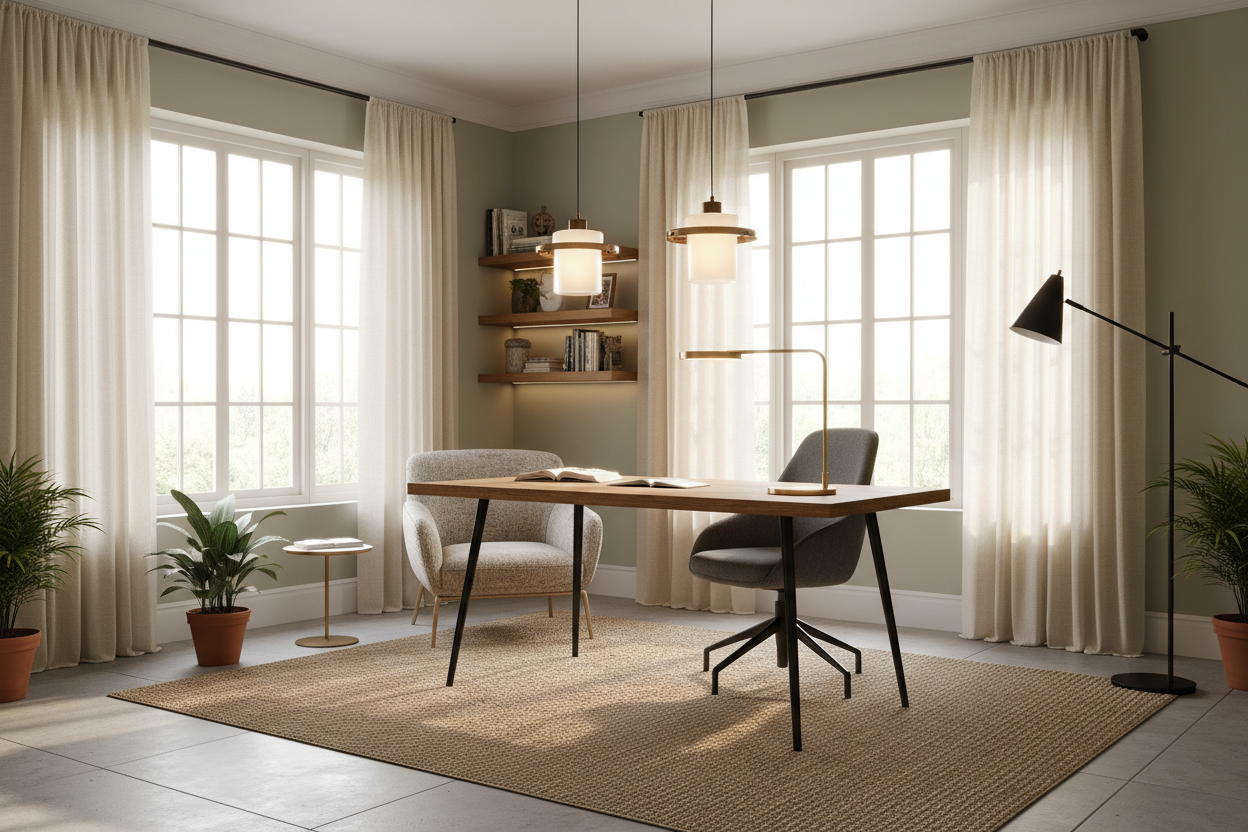
We have all experienced the dreaded 3 PM slump. While often blamed on a lack of caffeine, the culprit is frequently poor illumination. Staring at a screen in a dimly lit room or battling the harsh glare of overhead fluorescents creates visual fatigue that kills focus. As a designer, I see lighting not just as a utility, but as the most critical tool for defining the architecture of your workspace. By implementing strategic office lighting ideas, you can manipulate the mood, enhance video call quality, and significantly reduce eye strain.
Key Features to Look For
Before purchasing fixtures, consider these core elements to ensure functionality meets aesthetics:
- Color Temperature (Kelvin): Aim for 3500K to 4000K. This mimics natural daylight, keeping you alert without the harshness of blue-tinted clinical lighting.
- Layering Capability: Never rely on a single source. A proper scheme includes ambient (general), task (focused), and accent (decorative) lighting.
- Adjustability: Look for articulating arms on desk lamps and dimmer switches for overheads to control lumen output throughout the day.
- CRI (Color Rendering Index): Choose bulbs with a CRI of 90+. This ensures wood grains and fabric textures look rich and accurate, rather than washed out.
The Art of Layering Light
In residential design, specifically when exploring home office lighting ideas, the biggest error is relying solely on the room's existing central ceiling fixture. This creates shadows directly over your work surface. To achieve visual balance, we must build layers.
Ambient Lighting
This is your base layer. Instead of harsh recessed cans directly above your chair, consider a semi-flush mount or a linear suspension fixture with a diffuser. The goal is to bounce light off the ceiling or walls to create a soft, shadow-free glow that fills the volume of the room.
Task Lighting & Ergonomics
This is where function reigns supreme. A high-quality task lamp is non-negotiable. Look for a fixture with an asymmetric throw—this pushes light sideways across your desk rather than pooling it directly underneath. Ideally, place the lamp on the opposite side of your dominant hand to prevent writing shadows.
Materiality and Glare Control
The finish of your lighting fixtures plays a surprising role in visual comfort. While polished chrome or brass might suit a luxury aesthetic, they can create distracting specular highlights (glare spots) if placed near monitors.
For desk lamps, I often recommend matte finishes—powder-coated blacks, whites, or brushed metals. Additionally, consider the material of the shade. A metal shade directs light entirely downward for focused work, while a linen or glass shade offers a diffuse glow that contributes to the room's ambient light but offers less targeted lux on the paper.
My Personal Take on Office Lighting Ideas
I learned a hard lesson about surface reflection early in my career. I designed a stunning executive suite featuring a high-gloss, black lacquered desk—it looked like a grand piano. To match the opulence, I specified a powerful, directional LED architectural lamp.
The moment the client turned it on, the desk surface acted like a mirror. The glare bouncing off the lacquer and hitting the client's eyes was blinding. It was unusable. I had to swap the expensive architectural lamp for a fixture with a fabric shade and a lower lumen output to diffuse the light. Now, I always touch the desk surface before buying the lamp. If it feels slick or looks glossy, I strictly avoid exposed bulbs or focused beams. It’s a tactile detail that saves a lot of headaches later.
Conclusion
Lighting is the silent partner in your productivity. By moving away from single-source illumination and embracing a layered approach with the right color temperatures, you elevate your office from a simple workspace to a sophisticated environment that supports deep work. Assess your current setup, identify the shadows, and illuminate your day.
Frequently Asked Questions
What is the best lighting for video calls?
Avoid backlighting (windows behind you) which creates a silhouette. Place two diffused light sources behind your monitor at eye level, roughly 45 degrees apart. This fills in facial shadows and provides a flattering, professional look.
How many lumens do I need for a home office?
For general ambient lighting, aim for about 2,000 to 3,000 lumens total for the room. However, your desk surface (task lighting) needs higher intensity, roughly 500 lumens focused specifically on the work area.
Can I mix metal finishes in my office lighting?
Absolutely. Mixing metals adds depth and prevents the "showroom" look. A good rule of thumb is to choose a dominant metal (e.g., matte black) for roughly 70% of fixtures and an accent metal (e.g., aged brass) for the remaining 30%.


Leave a comment
This site is protected by hCaptcha and the hCaptcha Privacy Policy and Terms of Service apply.