










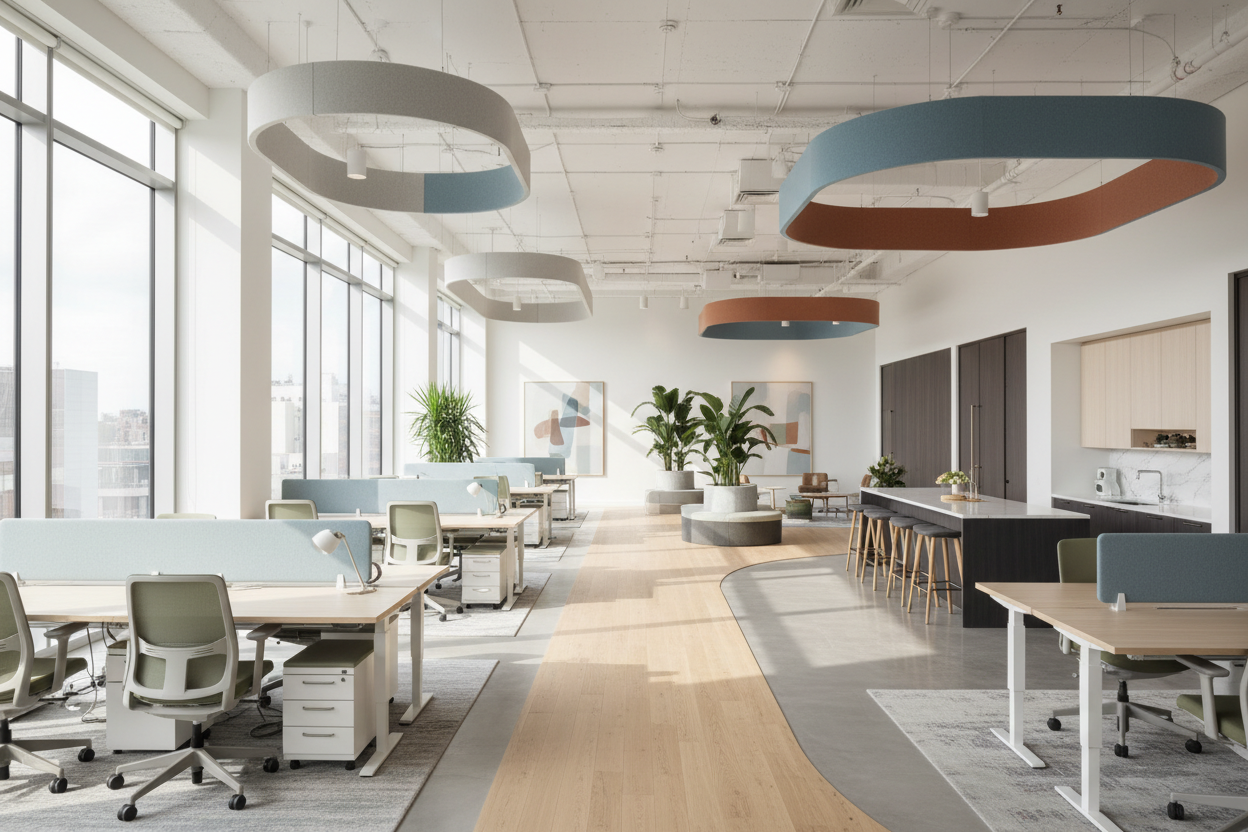
Staring at a blank floor plan can be daunting. You want the energy of a collaborative environment, but you are likely terrified of the potential for chaos and noise. It is a delicate balance; lean too far into openness and you lose focus, but wall everyone off and you lose culture. Getting the new office layout right is not just about fitting desks into a room—it is about choreographing how people move, interact, and produce their best work.
Quick Decision Guide: The Essentials
Before selecting furniture or knocking down walls, consider these four pillars of a successful workspace. These factors often determine whether a design succeeds or fails.
- Acoustic Zoning: Do not rely solely on walls. Use high-back sofas, acoustic baffles, and carpet density to absorb sound in high-traffic areas.
- Ergonomic Flexibility: Look for open workstation design elements that include sit-stand capabilities and articulated monitor arms to accommodate different working styles.
- Lighting Layers: Avoid relying strictly on overhead grid lighting. Incorporate task lighting at desks and ambient lighting in lounge areas to define zones.
- Circulation Paths: Ensure main walkways are at least 48 inches wide to prevent the "bumping into chairs" frustration.
Zoning: The Evolution of Open Concept Office Space Ideas
The era of the endless sea of desks is ending. Modern open concept office space ideas now revolve around "neighborhoods." This approach involves breaking a large floor plate into smaller, distinct zones based on function. You might have a high-energy collaboration zone featuring communal tables, separated from a heads-down focus zone by shelving units or greenery.
When planning these zones, visual barriers are just as important as physical ones. Using open shelving with plants provides a psychological boundary without blocking light, maintaining the airy feel of open office interior design while reducing visual distractions.
Materiality and Durability in Open Workstation Design
Choosing the right materials is critical for longevity. In a high-traffic office, a beautiful veneer desk might look stunning on day one, but it is susceptible to scratches from laptops and coffee mugs. For general workstations, I often recommend high-pressure laminate (HPL) with a textured wood grain finish. It offers the warmth of wood but is significantly more forgiving.
However, do not ignore the tactile experience. Use soft-touch materials like felt or fabric-wrapped panels on dividers. These not only soften the industrial aesthetic of many open space office layout ideas but also serve a functional purpose by dampening voice reverberation.
Ergonomics and Visual Balance
A layout must look good, but it has to feel good. Ergonomics extends beyond the chair. In open workstation design, monitor placement and desk depth are crucial. A standard 24-inch deep desk is often too shallow for modern dual-monitor setups; aim for 30 inches to prevent eye strain.
Visually, avoid the "soldier row" effect where every desk faces the same way. Rotating clusters of desks by 90 degrees can break up the monotony and create a more organic flow. This technique also helps with privacy, as it prevents workers from staring directly into the back of a colleague's head.
Lessons from My Own Projects: The "Fingerprint" Factor
I learned a hard lesson about finishes during a project for a tech startup in Austin. We designed a stunning central breakroom with a massive, high-gloss black communal table. It looked incredible in the renderings and on installation day. However, one week later, the client called me.
The issue wasn't the layout; it was the finish. The high-gloss surface acted like a mirror for overhead lighting, causing glare on laptop screens, and worse, it showed every single fingerprint and oil smudge from lunch. It looked perpetually dirty. We ended up having to resurface it with a matte, anti-fingerprint laminate (Fenix is a great brand for this). Now, when I advise clients on communal surfaces, I always bring a sample and ask them to press their thumb on it. If the mark stays, we switch to a matte or textured finish. Practicality must always partner with aesthetics.
Conclusion
Designing a workspace is about empathy for the user. By focusing on acoustic zones, durable materials, and thoughtful circulation, you can create an environment that supports productivity rather than hindering it. Your office should be a tool that helps your team work better, not an obstacle course they have to navigate.
Frequently Asked Questions
How do I reduce noise in an open office layout?
Layer your materials. Use carpet tiles with a thick cushion backing, install acoustic ceiling baffles (clouds) above collaborative areas, and use fabric-wrapped dividers between desks. Soft surfaces absorb sound, while hard surfaces bounce it around.
What is the ideal amount of space per employee?
While trends vary, a general rule of thumb for open space office layout ideas is allocating about 125 to 150 square feet per person. This calculation includes their desk, chair clearance, and a share of the communal circulation and meeting space.
Is it better to use round or rectangular tables for meeting zones?
Round tables are generally better for collaboration and flow. They eliminate the "head of the table" hierarchy, encouraging equal participation, and their curved edges are easier to navigate around in tighter spaces.

Leave a comment
This site is protected by hCaptcha and the hCaptcha Privacy Policy and Terms of Service apply.