










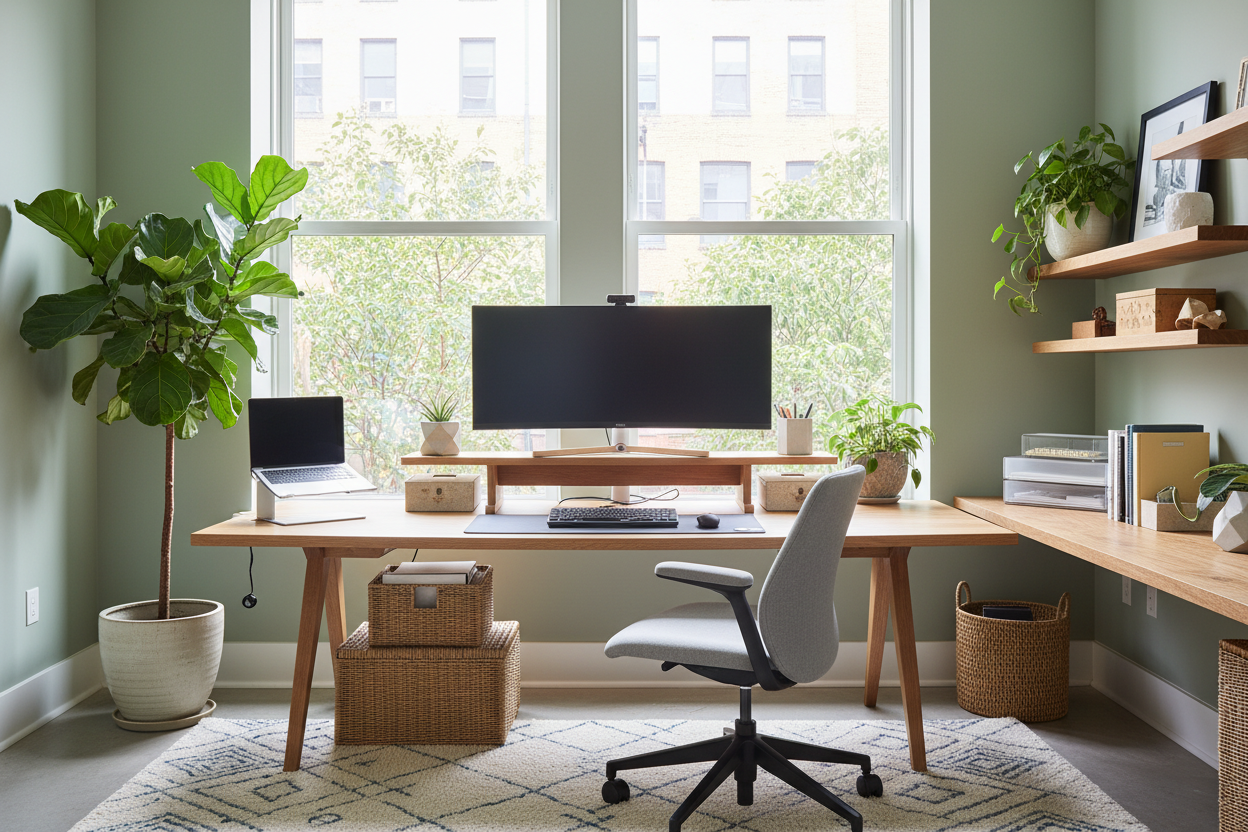
The dining table was never meant to be a permanent desk, and that stiff kitchen chair is likely wreaking havoc on your lumbar support. As a designer, I see this scenario constantly: clients land a prestigious job of work from home but try to function in a space designed for leisure, not labor. The result is a clash between domestic comfort and professional necessity. Whether you are navigating complex work from home projects or managing a team remotely, your environment dictates your output. This guide will walk you through curating a workspace that balances high-end aesthetics with ruthless functionality.
Quick Decision Guide: The Home Office Essentials
- Ergonomics First: Prioritize chairs with adjustable lumbar support and seat depth over purely sculptural pieces.
- Material Durability: For high-traffic surfaces, opt for hardwoods (oak, walnut) or high-pressure laminates over soft softwoods or glass that fingerprints easily.
- Lighting Layers: Combine ambient overhead lighting with task lighting and face-level diffusion for video calls.
- Acoustic Control: Incorporate textiles like rugs or upholstered panels to dampen echo during calls.
- Spatial Flow: Ensure a minimum of 36 inches of clearance behind your chair for movement.
Defining the Zone: Layout and Orientation
When securing wfh opportunities, the first design challenge is rarely the furniture itself, but where to put it. The placement of your desk anchors the room's energy. Never face a wall if you can avoid it; this is known as the "cubicle effect." Instead, position your desk to face the door (the command position) or perpendicular to a window.
For those with job vacancies to work from home that require confidentiality, acoustic separation is vital. If a dedicated room isn't available, use open shelving units as room dividers to create a psychological boundary between from home work and relaxation areas.
The Desk: Surface Area and Materiality
Your desk is the workbench of your trade. If your working from home job involves reviewing large architectural blueprints or spreading out legal documents, a standard 48-inch desk will feel claustrophobic. Aim for a 60-inch width minimum for executive tasks.
Material Selection
While glass desks offer a sleek, modern silhouette, they are cold to the touch and amplify the sound of typing. For a warmer, more sophisticated tactile experience, I recommend solid wood or high-quality veneer. Walnut offers a deep, rich tone that conveys authority, ideal for a company job work from home where video background aesthetics matter.
The Chair: The 8-Hour Investment
Many job opportunities work from home fail to mention the physical toll of sedentary work. The "aesthetic" velvet tub chair you see on social media often lacks the necessary mechanics for an 8-hour shift. Look for a chair with a synchro-tilt mechanism, which allows the seat and back to move in a ratio that supports natural body movement.
However, you don't have to settle for a plastic eyesore. High-end manufacturers now produce ergonomic task chairs wrapped in premium leathers and boucle fabrics that blend seamlessly with residential decor, perfect for maintaining the style of your work home environment.
Lighting: The Invisible Design Element
Poor lighting causes eye strain and fatigue faster than any other element. In wfh work, you are often battling screen glare. Avoid placing your screen directly opposite a window. Instead, layer your lighting. Start with a warm ambient light (2700K-3000K), add a focused task lamp with a dimmer, and if you are frequently on camera for a work from home job offer interview or meeting, consider a soft-box light or a ring light bounced off a wall for a flattering, shadow-free glow.
My Personal Take on job of work from home Design
I learned a hard lesson about finishes during a recent project for a client who had just transitioned to full-time remote work. We selected a stunning, matte-black "soft touch" laminate desk. It looked incredible in the photos—sleek, modern, and architectural.
However, three weeks later, the client called. The "soft touch" finish was a magnet for skin oils. Every time she rested her wrists to type or put down a coffee mug, it left a shiny, greasy-looking mark that was nearly impossible to buff out without specialized cleaner. It drove her crazy during her wfh job opportunities. We ended up having to swap it for a textured wood grain that was far more forgiving. The lesson? Always test a material with your actual hand—and a coffee cup—before committing to it for a high-traffic workspace. Practicality must sit right alongside beauty.
Conclusion
Transforming your space for the demands of work from home jobs in the modern era requires a shift in perspective. It is not just about buying a desk; it is about curating an environment that fosters focus and signals to your brain that it is time to perform. Invest in touchpoints—the chair you sit in, the desk you touch, the light you see—and your home office will serve you for years to come.
Frequently Asked Questions
What is the ideal desk depth for a home office?
For most computer-based work, a depth of 24 to 30 inches is ideal. This allows enough distance between your eyes and the monitor (roughly an arm's length) to prevent eye strain while leaving room for a keyboard and notepad.
How do I hide cables in a floating desk setup?
Cable management is crucial for visual calm. Use a vertebrae cable spine to run cords from the floor to the underside of the desk. Mount a J-channel raceway under the desktop to hold power strips and excess cabling, keeping the floor entirely clear.
Can I use a dining chair for work?
Generally, no. Dining chairs are designed for 1-2 hour meals, not 8-hour workdays. They lack lumbar support, height adjustment, and casters. Using one long-term can lead to significant back and neck strain.

Leave a comment
This site is protected by hCaptcha and the hCaptcha Privacy Policy and Terms of Service apply.