










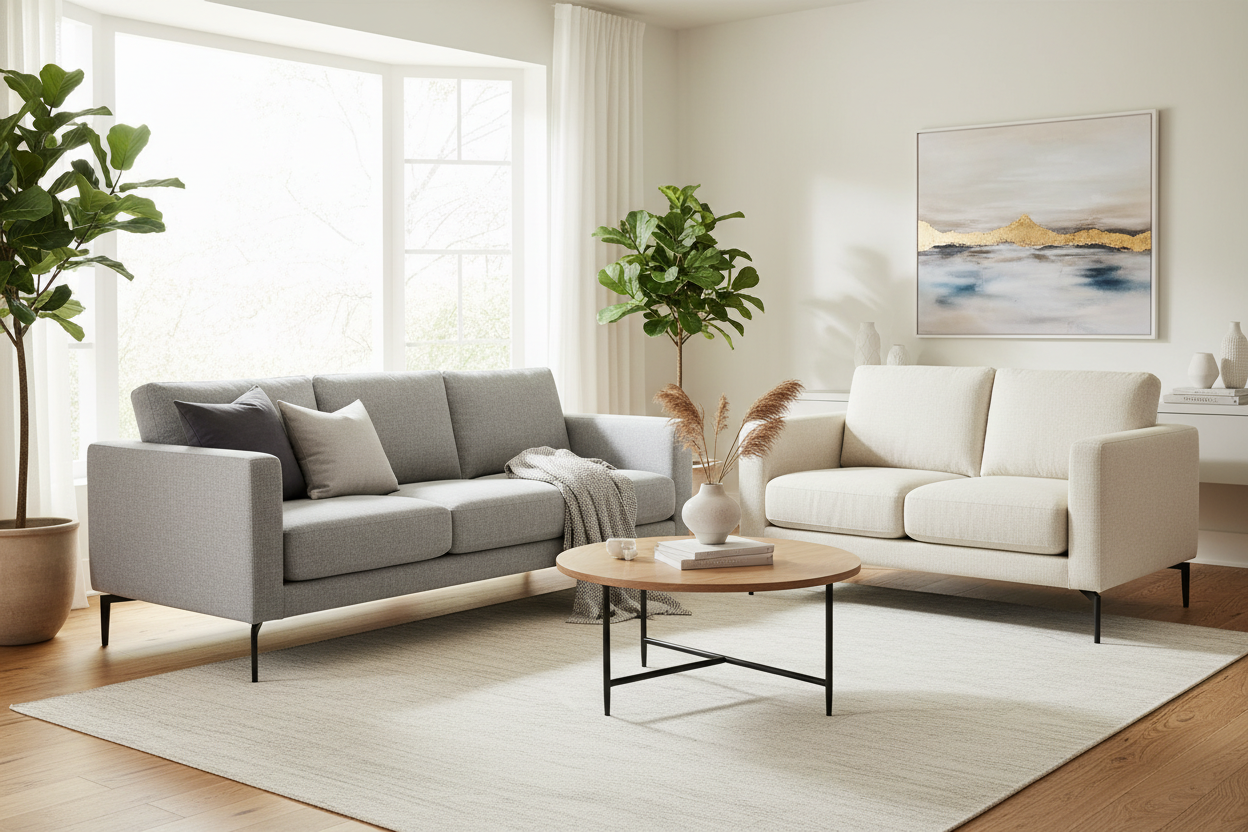
Nothing disrupts the flow of a living room faster than furniture that dominates the floor plan rather than serving it. Many homeowners default to a matching pair without considering the architectural constraints of their space. However, when curated correctly, a loveseat couch set can anchor a room, offering distinct zones for conversation and relaxation without the bulk of a massive sectional.
As an interior designer, I often see clients struggle to balance visual weight with functionality. This guide moves beyond the showroom floor aesthetics to help you understand the structural and spatial nuances of choosing the right seating combination.
Quick Decision Guide: Key Features to Look For
If you are rushing to make a purchase, review these non-negotiable specifications to ensure longevity and comfort.
- Frame Construction: Look for kiln-dried hardwood frames. Avoid particleboard or stapled plywood, which warp over time.
- Suspension System: Eight-way hand-tied springs are the gold standard, but heavy-gauge sinuous springs are a reliable runner-up for a couch and loveseat set.
- Cushion Density: Aim for high-resiliency foam wrapped in down or dacron. Pure foam feels stiff; pure down requires constant fluffing.
- Rub Count: Check the fabric's Martindale rating. For family rooms, you need at least 25,000 rubs to resist wear.
Analyzing Space and Scale
The most common error with a sofa set with loveseat is the assumption that they must be arranged in an L-shape pushed against the walls. This creates a "waiting room" effect that kills intimacy.
Breaking the "Showroom" Look
To achieve a designer look, float the furniture. Pull the sofa and loveseat away from the walls to create a dedicated conversation island. If you are working with a standard sofa set loveseat configuration, consider placing them perpendicular to each other with a substantial square coffee table in the center to bridge the gap. This layout encourages eye contact and improves traffic flow around the perimeter of the room.
Visual Weight and Silhouettes
Consider the "leg lines" of the set. If you have a small space, avoid skirted bases that go all the way to the floor; they make the room feel heavy. Instead, opt for a set with exposed, tapered legs. Seeing the floor beneath the furniture tricks the eye into perceiving the room as more expansive.
Choosing the Right Material
The fabric you choose dictates not just the style, but the maintenance schedule of your home. A couch and loveseat set is a high-traffic investment.
Performance vs. Natural Fibers
While a linen blend offers a sophisticated, organic texture, it is unforgiving with stains. For clients with children or pets, I almost exclusively recommend performance velvet or crypton fabrics. They mimic the hand-feel of luxury textiles but offer industrial-grade resistance to spills. Be wary of cheap polyester microfibers; while durable, they often retain heat and can feel static-charged in dry climates.
Lessons from My Own Projects
I want to share a specific realization from a project I managed in a pre-war apartment last year. We ordered a stunning, deep-seated velvet loveseat couch set. On paper, the dimensions fit perfectly. However, I overlooked the "diagonal depth"—the measurement of the furniture when tilted to fit through a doorway.
We had to remove the door frame to get the sofa in, but the real lesson came six months later. The clients used the loveseat as their primary TV-watching spot because it was centered with the screen. Because loveseats usually have two wide cushions, the center spot where the cushions meet became a "valley" much faster than on the three-cushion sofa.
My advice: If you plan to use the loveseat as your main lounging zone, look for a "bench seat" (one long cushion) configuration. It prevents that uncomfortable sinking feeling in the middle and keeps the silhouette looking cleaner, longer.
Conclusion
Investing in a high-quality seating set is about more than matching colors. It requires an understanding of scale, traffic flow, and how the materials will age under daily use. By prioritizing frame integrity and rethinking your layout, you can elevate a standard furniture set into a bespoke design statement.
Frequently Asked Questions
What is the standard size difference in a sofa set with loveseat?
A standard sofa typically measures between 84 to 96 inches in width, while a loveseat generally ranges from 52 to 72 inches. Always measure your available floor space and tape out the dimensions on the floor before buying to visualize the footprint.
Can I mix a different chair with a couch and loveseat set?
Absolutely. In fact, I encourage it. Adding an accent chair in a contrasting fabric (like leather or a bold pattern) breaks up the monotony of a matching set and adds a layer of curated texture to the room.
How do I prevent my loveseat cushions from sliding?
This is a common annoyance. Look for sets that utilize clips or Velcro tabs on the underside of the cushions. If your current set lacks these, you can place a non-slip rug pad mesh between the cushion and the frame to provide friction.

Leave a comment
This site is protected by hCaptcha and the hCaptcha Privacy Policy and Terms of Service apply.