










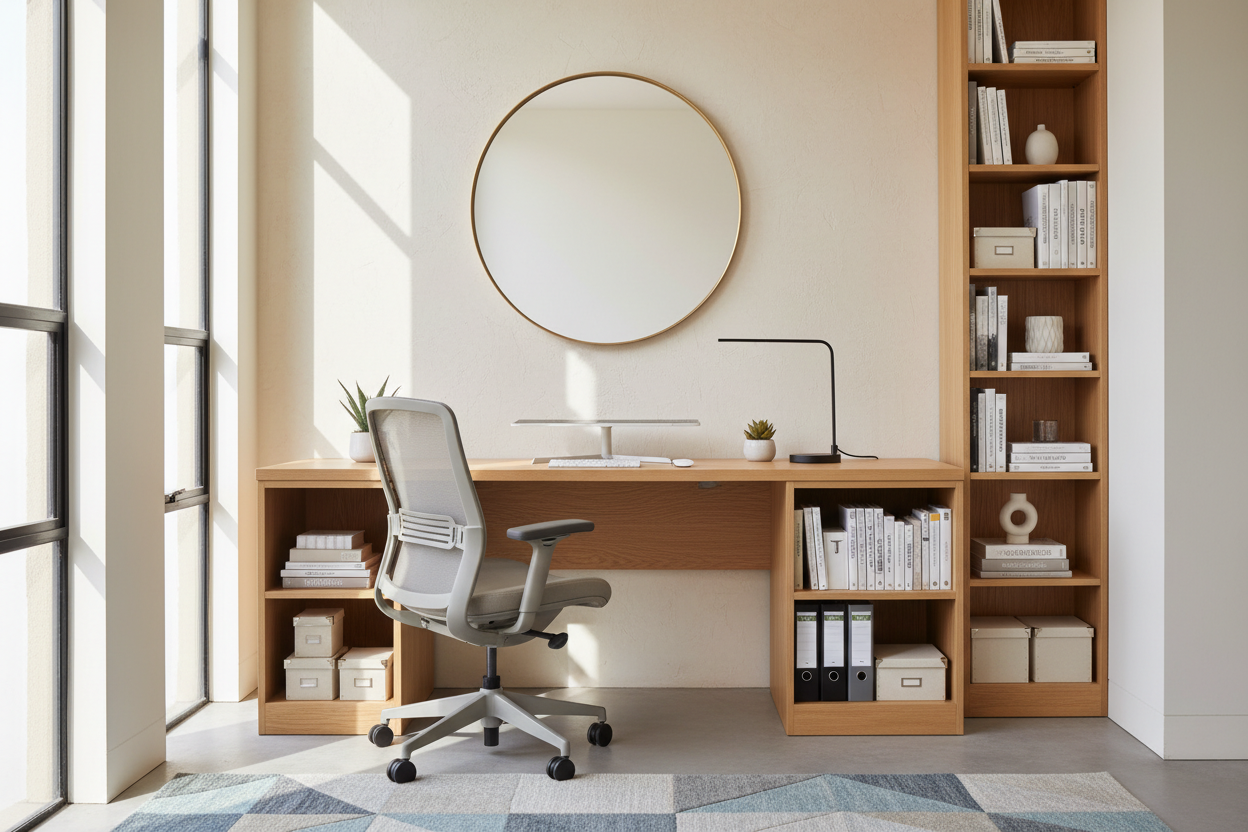
Visual clutter is the silent killer of productivity. In my years designing home offices, the most common complaint I hear isn't about the chair or the lighting—it's about the lack of clean surface area. When you are working with a tight footprint, every square inch of vertical and horizontal space matters. This is where the desk with shelf underneath becomes a hero piece in interior design.
It offers a streamlined silhouette that eliminates the need for bulky filing cabinets while keeping essentials within arm's reach. However, selecting the wrong one can lead to ergonomic nightmares and visual chaos. This guide will walk you through selecting a piece that balances function with high-end aesthetics.
Key Features to Look For
- Leg Clearance (The Shin Test): Ensure the shelf is recessed enough or positioned high enough to prevent restricting leg movement.
- Material Integrity: Look for reinforced joinery; lower shelves often bear heavy loads (books, towers) and need structural rigidity.
- Depth Accessibility: A shelf that is too deep becomes a graveyard for lost items; aim for 10-12 inches of depth for optimal utility.
- Cable Management: Check if the design includes pass-throughs, as lower shelves can easily become tangled nests of wires.
Balancing Ergonomics with Storage
The primary concern when selecting a desk with shelves underneath is the compromise between storage volume and human comfort. In design theory, we look at the "envelope of motion." If the shelf is positioned directly where your knees should be, no amount of aesthetic appeal will make up for the discomfort.
I always advise clients to look for designs where the shelving is offset to the side or positioned at the very rear of the structure. This configuration maintains the open feel of a parson's style desk while providing that crucial "landing zone" for laptops or sketchbooks when not in use.
Materiality and Visual Weight
Because this furniture piece adds mass to the lower half of your visual field, the material choice dictates how heavy the room feels. For smaller rooms, I recommend a desk with shelves underneath constructed from glass or acrylic combined with metal. This allows light to pass through, reducing the visual footprint.
Conversely, if you want the desk to anchor a large room, opt for solid walnut or oak. Real wood veneers can also work, but be wary of cheap laminates on lower shelves; they are prone to bowing if you plan to store heavy reference books or equipment.
Styling the Lower Shelf
The danger of open storage is that it can quickly look messy. To maintain a luxury look, treat the lower shelf as a curated display rather than a junk drawer. Use uniform storage bins—felt, woven hyacinth, or leather—to hide unsightly items like cables or paperwork. Leave at least 30% of the shelf empty (negative space) to keep the piece looking intentional and airy.
My Personal Take on desk with shelf underneath
I learned a hard lesson about these desks early in my career during a project for a client in a downtown loft. We selected a stunning, architectural desk with a full-width lower shelf. It looked incredible in the photos.
However, three months later, the client called me with a specific annoyance I hadn't anticipated: dust and cable chaos. Because the shelf was close to the floor, it became a magnet for dust bunnies, and because it was open, every power brick and cable was visible.
Since then, my "unpolished" rule for buying these is simple: I only specify them if we have a plan for cable management (like Velcro ties specifically mounted to the underside of the desktop) and if the client commits to using baskets for the bottom shelf. It’s a small detail, but seeing a rat's nest of wires resting on a beautiful oak shelf ruins the entire aesthetic.
Conclusion
A desk with a shelf underneath is a brilliant solution for the modern, space-conscious home, provided you prioritize legroom and material quality. By choosing a piece that respects your ergonomic needs and styling it with discipline, you transform a simple workspace into a sophisticated command center.
Frequently Asked Questions
How much legroom do I really need with an under-desk shelf?
Standard desk height is 29-30 inches. Ideally, you want at least 24-25 inches of vertical clearance for your legs. If the shelf eats into this space, ensure it is recessed at least 15 inches back from the front edge of the desk.
Can a desk with shelves underneath support a computer tower?
It depends on the construction. A solid wood or metal-frame desk usually can, but you must check the weight rating. Many lower shelves are rated for 20-30 lbs, while a PC tower can exceed that. Always place heavy items near the legs for better support.
How do I hide cords on a desk with an open lower shelf?
Use adhesive cable clips along the back legs of the desk to route wires down to the floor. For the shelf itself, use a decorative box with a hole cut in the back to house power strips and excess cabling, keeping the visual clutter hidden.


Leave a comment
This site is protected by hCaptcha and the hCaptcha Privacy Policy and Terms of Service apply.