










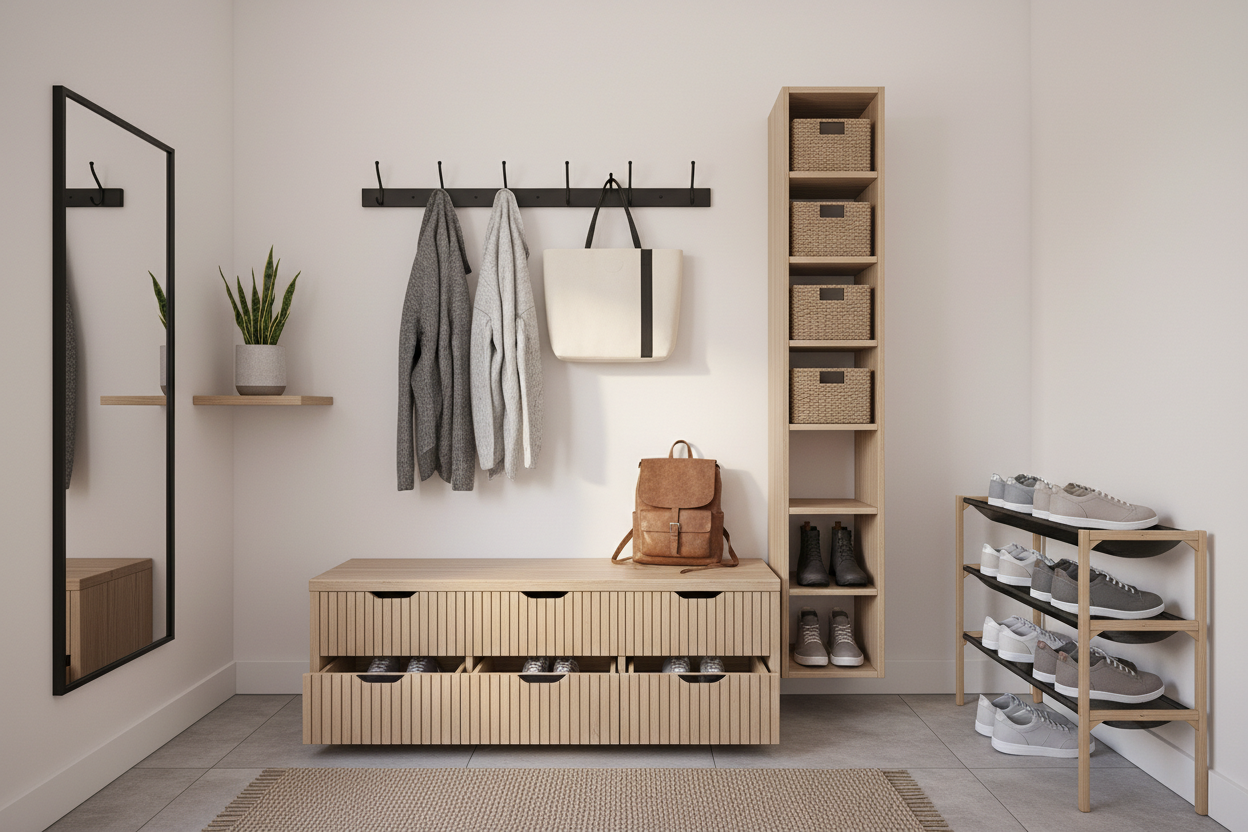
You don't need a sprawling foyer to create a functional landing spot for putting on shoes or dropping off keys. The most effective solution for tight spaces is a dedicated short entryway bench with storage that serves a dual purpose: reducing clutter while providing a comfortable place to sit. By prioritizing depth—usually keeping it under 15 inches—and utilizing vertical space beneath the seat, you can transform even the narrowest corridor into an organized mudroom.
Entryways are notorious for becoming the bottleneck of the home. It is where traffic converges, and without the right furniture, it quickly becomes a chaotic pile of footwear and mail. Finding the right furniture for these zones requires a different approach than buying for a living room or bedroom. Every inch counts, and the visual weight of the piece matters just as much as its physical dimensions.
A Lesson Learned in Square Footage
I learned the hard way that standard furniture rarely works in a non-standard hall. A few years ago, I moved into a charming but cramped craftsman bungalow. The front "hall" was essentially a 3-foot wide strip of hardwood floor. Eager to organize, I bought a standard 48-inch wide bench online without checking the depth. Once assembled, it looked beautiful, but I physically had to turn sideways to shimmy past it to get to the kitchen. It blocked the natural flow of traffic and actually made the space feel more stressful, not less.
I ended up selling that piece and hunting for a specific shallow-depth unit. The replacement was a game-changer: a backless, open-shelf bench that was only 12 inches deep. It didn't encroach on the walking path, yet it still held four pairs of daily-use shoes and gave me a spot to tie my laces. That experience taught me that in small spaces, clearance is king.
Defining the Short Hallway Bench
When we talk about a short hallway bench, we are usually referring to two specific dimensions. First, the length (or width) of the bench often needs to be compact, typically between 30 to 40 inches, to fit between door frames or along short walls. Second, and perhaps more importantly, is the depth. A standard dining bench might be 16 to 18 inches deep, but a specialized small hall seat should ideally hover around 12 to 14 inches.
This slimmer profile prevents the furniture from dominating the walkway. If your hallway is particularly tight, look for "shoe rack benches" rather than standard accent benches, as manufacturers design shoe racks with narrower footprints in mind. The goal is to maintain a clear path of travel—usually a minimum of 36 inches for comfortable walking—although in older homes, you might be working with less.
Storage Styles: Hidden vs. Open
The utility of a small hallway seat depends entirely on how you access the storage. In a tight area, drawers can sometimes be a hindrance. If you have to step back to pull a drawer out, you might not have the room to do so comfortably. This is why open cubbies or flip-top benches are often superior choices for cramped quarters.
Open shelving offers immediate access. You can kick your shoes off and slide them right into the cubby without using your hands. This reduces the friction of tidying up, making it more likely that family members will actually use the storage. To keep the visual noise down, you can use baskets within the cubbies to hide scarves, gloves, or dog leashes.
Flip-top benches offer a cleaner look because the clutter is completely hidden. However, they are less practical for daily shoe storage since you have to stand up and open the lid to retrieve items. These are better suited for out-of-season accessories or bags. If you choose a small front hall bench with a flip-top, ensure the hinges are high quality and hold the lid open to prevent smashed fingers.
Visual Weight and Material Choice
In a small area, a solid wooden box can feel heavy and block light, making the hall feel smaller. To combat this, look for small seats for hallway applications that feature legs or open metal frames. Being able to see the floor underneath the furniture tricks the eye into thinking the room is larger than it is.
Acrylic or light-colored woods like ash or birch reflect light and blend into neutral walls, further reducing the visual footprint. If you need the durability of a solid piece, consider one with a mirror hung directly above it. The mirror adds depth and bounces light around, counteracting the bulk of the storage unit.
Maximizing Vertical Space
Since floor space is limited, your small entryway strategy must go vertical. The bench is the anchor, but the wall above it is prime real estate. Installing a row of hooks or a floating shelf above your bench transforms a simple seat into a full-service drop zone.
Ensure you mount hooks high enough so that coats don't bunch up on the bench surface. A good rule of thumb is to place hooks at least 60 inches off the ground, though this varies based on the length of your coats. This arrangement keeps the bench clear for sitting and prevents the space from looking messy.
Multi-Functionality is Key
Sometimes, a dedicated bench isn't the right fit. In extremely tight corners, you might look for alternative small seats for hallway use, such as a sturdy storage ottoman or a ceramic garden stool. While these don't offer the same volume of storage as a bench, they provide the necessary seating without the footprint.
For those who need to maximize every square inch, look for a bench that incorporates a tall side cabinet or hall tree elements. These units are often sold as "hall trees" but look for the "mini" or "slim" versions. They combine the bench, hooks, and upper storage into a single cohesive unit. Just be wary of the depth; these units can sometimes be deeper than standalone benches.
Styling Your Compact Entry
Functionality comes first, but aesthetics prevent the space from feeling utilitarian. A small throw pillow or a slim seat cushion adds texture and invites you to sit. If your bench has open shelves, using matching baskets creates a rhythm that is pleasing to the eye. A runner rug placed in front of the bench can guide the eye down the hall, elongating the space and grounding your furniture selection.
Ultimately, the right furniture allows you to stop thinking about the lack of space and start enjoying the organization. Whether it is a custom built-in or a carefully selected retail piece, a well-proportioned bench turns a pass-through space into a welcoming part of your home.
Frequently Asked Questions
What is the minimum walkway width I should leave in front of a hallway bench?
Ideally, you should maintain at least 36 inches of clearance for a comfortable walkway. However, in very old homes or tight apartments, you can sometimes get away with 30 inches, but this may feel cramped when carrying groceries or large bags.
Can I use a dining bench as an entryway bench?
You can, but dining benches are often deeper (around 16-18 inches) than benches designed specifically for hallways. If you have a wide foyer, a dining bench works well, but for narrow corridors, a purpose-built entryway bench with a depth of 12-14 inches is usually a better fit.
How much weight can a small storage bench typically hold?
Most standard small storage benches are designed to hold between 200 and 300 pounds. Always check the manufacturer's specifications, especially for benches with long spans and no center support leg, to ensure they can safely support an adult sitting down to put on shoes.


Leave a comment
This site is protected by hCaptcha and the hCaptcha Privacy Policy and Terms of Service apply.