










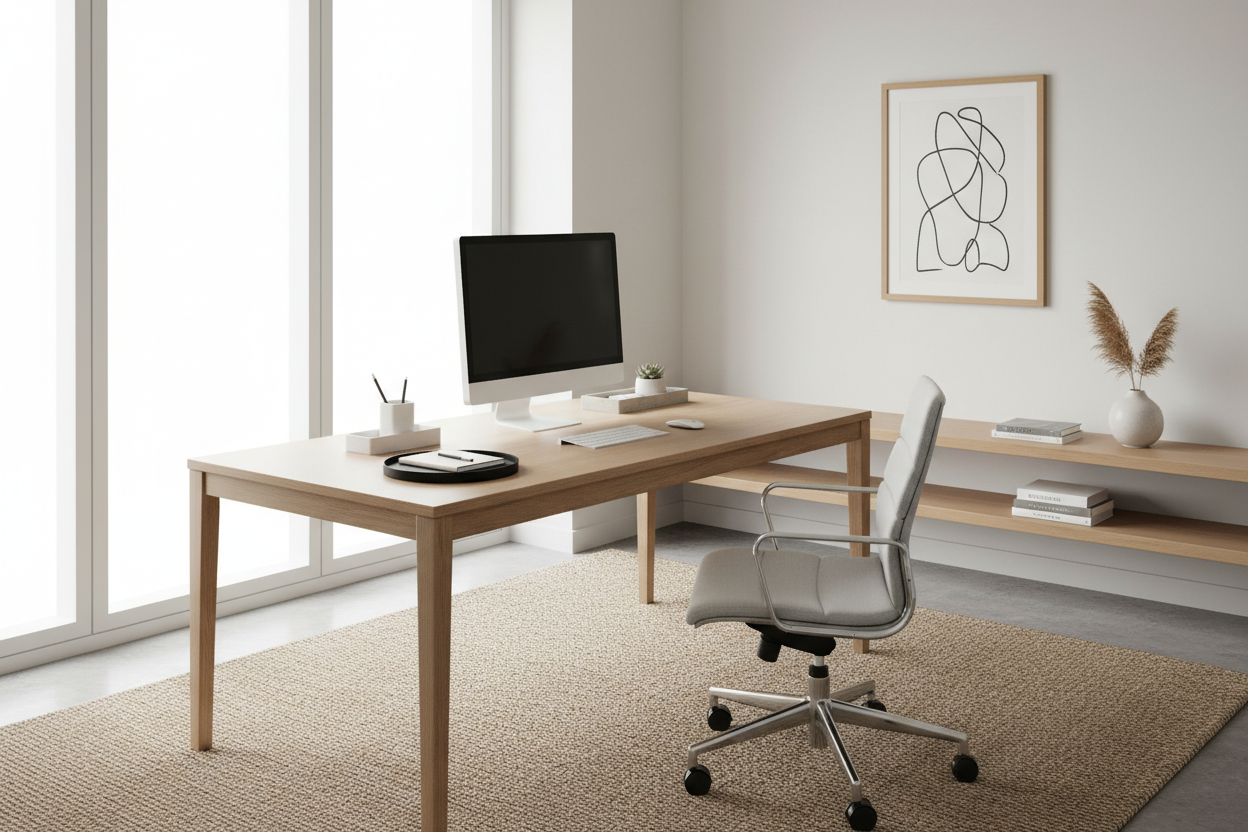
I have walked into countless home offices that started with good intentions but quickly devolved into chaotic catch-alls. Piles of mail, tangled charging cables, and a graveyard of half-used notebooks can make a room feel suffocating. When your workspace is visually loud, your focus inevitably takes a hit. The secret to minimalist home office organization is not about throwing everything away or forcing yourself to work in a sterile, empty box. It is about intentionality and managing visual weight.
By the end of this guide, you will understand how to curate a workspace that feels calm, highly functional, and deeply personal, all while keeping the dreaded clutter at bay.
Quick Decision Guide
- Embrace the 80/20 rule: Keep 20% of your daily tools visible and hide the remaining 80% in closed storage to instantly reduce visual noise.
- Prioritize negative space: Leaving empty areas on your desktop is a design choice, not a waste of space. It gives the eye a place to rest.
- Consolidate with purpose: Swap scattered cups and trays for a single, unified desk organizer minimalist system.
- Tame the tech: Invest in under-desk cable management. Visible cords will ruin even the most beautifully styled room.
The Foundation of a Calm Workspace
Managing Visual Weight and Proportion
In North American homes, office spaces often double as guest rooms or occupy a carved-out corner of an open-concept living area. This makes visual weight incredibly important. A heavy, dark mahogany desk paired with bulky filing cabinets will dominate a small room. Instead, opt for pieces with clean silhouettes and slender legs. When selecting minimalist modern desk accessories, match their finishes to your larger furniture. If you have an ash wood desk, choose accessories in matte white or brushed steel to maintain a cohesive, airy feel.
Strategic Closed Storage
Minimalism fails when you lack practical storage. You cannot simply wish away your printer paper, tax documents, and extra staples. The goal is to route these items into closed credenzas or sleek drawer units. When you remove the visual distraction of everyday office supplies, the few items you do leave out become intentional focal points rather than just leftover clutter.
Selecting the Right Tools
Curating Minimalist Office Accessories
When sourcing pieces for a client's desk, I look for items that serve double duty without drawing unnecessary attention. A sleek, weighted tape dispenser or a sculptural pen cup can act as practical art. Avoid the temptation to buy multi-piece accessory sets just because they match. Instead, buy only what you use daily. Curating your minimalist office accessories piece by piece ensures you aren't adding items to your desk merely to fill a matching tray.
Material choice dictates longevity and maintenance. Powder-coated metals, solid walnut, and natural leather age beautifully and can handle the daily friction of a busy workday. Avoid flimsy plastics that scratch easily and degrade the overall aesthetic of your room.
Designer's Honest Take
A few years ago, I designed a stunning home office in a downtown loft. The client wanted a hyper-modern look, so we went all-in on clear acrylic trays, a glass desk, and high-gloss white organizers. It looked incredible on installation day—like a magazine editorial. But within a week, the client called me, incredibly frustrated.
Every single fingerprint, coffee splatter, and speck of dust was magnified. Worse, the clear acrylic didn't hide the clutter inside the drawers; it framed it. I learned the hard way that true minimalist design relies on opaque, matte materials. Now, I strictly specify warm woods, leather, or powder-coated steel for desktop items. They absorb light rather than reflecting it, which naturally softens the room's energy and hides the realities of daily use.
Frequently Asked Questions
How do I maintain minimalist office organization daily?
Implement a five-minute end-of-day reset. Put your pens back in their cup, file away loose papers, wipe down the surface, and remove coffee mugs. Minimalism is an ongoing habit, not a one-time aesthetic fix.
What should I look for in a desk organizer minimalist style?
Look for low-profile, modular systems made of durable materials like wood or matte metal. Avoid organizers with dozens of tiny compartments, as they tend to encourage hoarding small, unnecessary items like dead batteries and random paperclips.
Can I still have personal items in a minimalist setup?
Absolutely. A minimalist space should not feel devoid of personality. Choose one or two meaningful items—a framed photograph, a unique ceramic mug, or a low-maintenance plant—and give them dedicated breathing room on your desk. The negative space around them will actually make them stand out more.

Leave a comment
This site is protected by hCaptcha and the hCaptcha Privacy Policy and Terms of Service apply.