










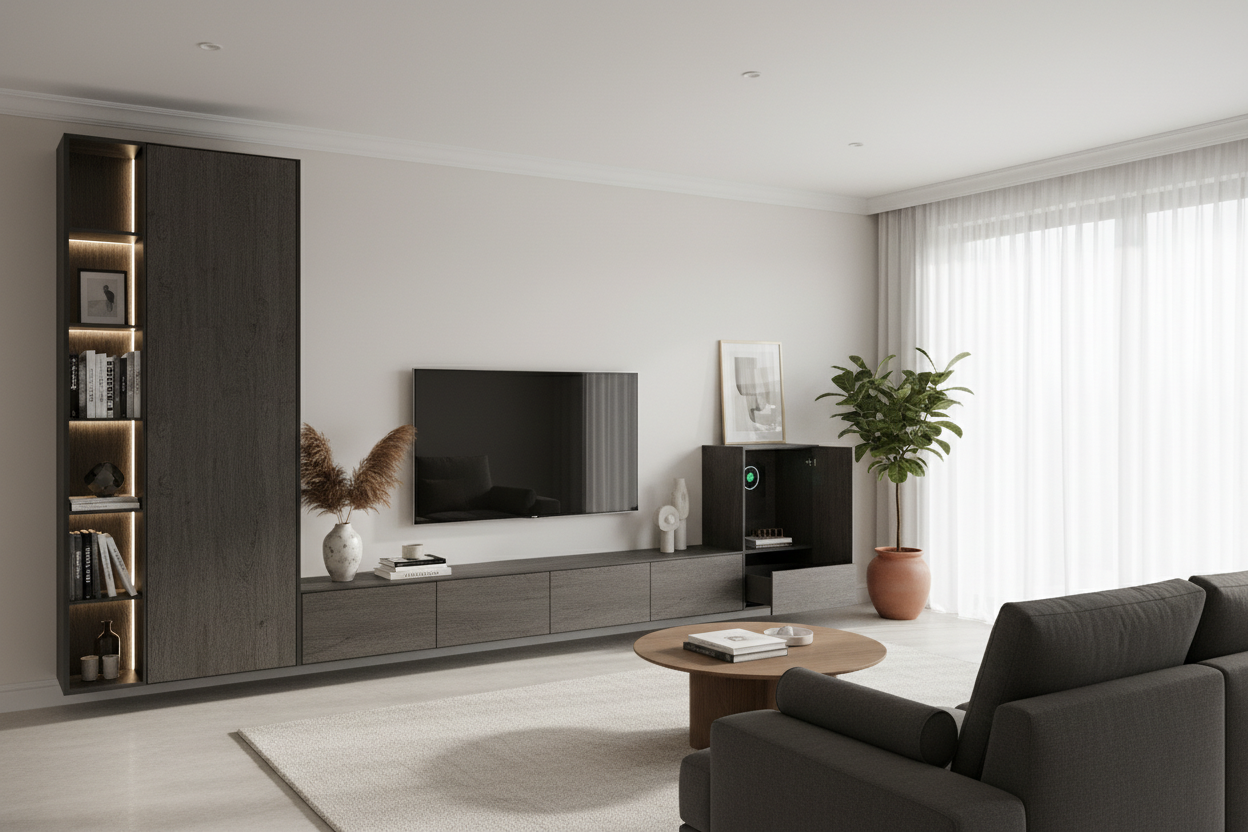
You know the feeling. You've just moved into a new apartment, or maybe you're finally redecorating the living room after the kids have left. You find a sleek modern entertainment unit online that looks perfect. It arrives, you assemble it, place your TV on top, and... that's it. It just sits there, holding your TV, while your remotes, game consoles, and random living room clutter pile up elsewhere. I've seen this exact scenario in over 200 homes I've furnished. The truth is, a great TV cabinet should solve problems, not just create a flat surface.
Quick Takeaways
- Your entertainment unit is the functional hub of your living room, not just a TV stand.
- Smart cable management is non-negotiable for a clean, modern look.
- Storage needs to be designed for real-life items like game consoles and media boxes.
- Scale and proportion are critical—a unit should be 2/3 to 3/4 the width of your wall.
- Materials like solid wood or metal frames offer durability that MDF can't match.
The Modern Entertainment Unit Evolution: From TV Stand to Living Room Hub
I remember furnishing homes in the early 2000s. A TV stand was just that: a stand. It was often a bulky, 30-inch deep box made of particle board, designed solely to hold a heavy CRT television. Today, our needs have completely changed. We have flat screens, soundbars, streaming devices, gaming consoles, and a desire for our living rooms to feel open and organized. The modern tv cabinet has evolved into a multifunctional design piece. It's now the command center for your entertainment and often the main storage solution in the room. Choosing the wrong one can lead to a cluttered, dysfunctional space. I've seen how poor entertainment unit choices can negatively impact a room, like selecting a piece that's the wrong scale or lacks necessary features—these are common modern tv console mistakes I help clients avoid.
Essential Features Every Modern TV Cabinet Should Have
So, what separates a basic stand from a truly useful unit? First, consider structure. A quality frame should be made of kiln-dried hardwood or steel, not just laminated MDF. This ensures stability, especially for wider units. Second, think about flexibility. Not every wall is the same. An adjustable length modern tv console can be a lifesaver, allowing you to customize the fit for a 10-foot wall versus a 14-foot one. Third, leg height matters. A 6 to 8-inch clearance underneath makes the room feel larger and is essential for robot vacuums. Finally, the surface should be durable. For a family room, I'd recommend a scratch-resistant laminate or sealed wood over a delicate high-gloss finish that shows every fingerprint.
Cable Management: The Hidden Design Challenge
This is the number one issue I address in homes. A beautiful modern tv setup is ruined by a nest of visible cables. The solution is integrated management. Look for units with a dedicated cable channel routed through the back panel, not just a hole. For power strips and bulky adapters, a concealed compartment at the rear is ideal—aim for one that's at least 4 inches deep and 8 inches wide. Use velcro straps, not zip ties, inside so you can easily add or remove devices. For the cleanest look, plan to have at least one grounded outlet directly behind the unit to minimize cord length.
Storage That Actually Works for Real Life
Drawers are good, but smart drawers are better. Standard 4-inch deep drawers won't hold a PlayStation 5. You need compartments that are at least 7 inches tall and have open backs or ventilation cutouts for electronics. For media, consider a mix: shallow drawers for remotes and small items, and larger cabinets with adjustable shelves for game cases or books. A unit with a dedicated slot for a soundbar, typically a 6-inch tall by 40-inch wide opening, keeps your setup streamlined. I always point clients toward a modern tv cabinet with smart storage that includes these purposeful compartments, as it eliminates the need for additional clutter-catching furniture.
Choosing the Right Modern TV Unit for Your Space
Walking into a showroom or scrolling online, it's easy to fall in love with a style that won't work in your room. The first step is always to measure. You need to consider the unit's width, depth, and height in relation to your TV, your wall, and your traffic flow. A unit that's too large will overwhelm the room, while one that's too small will make your TV look awkwardly floating. Color is equally important. A dark unit can feel grounding, but it also adds visual weight. If you're considering a dark finish, there are ways to keep the room feeling light, which I discuss when helping clients with avoiding heavy-looking black tv stands.
Scale and Proportion: Getting the Measurements Right
Here's my rule of thumb: your modern tv entertainment unit should be roughly 2/3 to 3/4 the width of the wall it's on. For a standard 12-foot wall (144 inches), look for a unit between 96 and 108 inches wide. The depth is crucial for walkways. In a room with a primary walkway behind the sofa, you need at least 36 inches of clearance. If the unit sits in a traffic path, keep its depth to 18 inches or less. For TV placement, the center of the screen should be at seated eye level, which is typically 42 inches from the floor. Your unit height will determine if you need a TV mount to achieve this.
Material Matters: From Sleek Glass to Warm Wood
The material defines the unit's character and durability. Solid wood, like oak or walnut, offers warmth and longevity but requires more maintenance and investment. Engineered wood with a real wood veneer is a great mid-point, offering stability and a natural look. Metal frames, often powder-coated steel, provide a sleek, industrial feel and are incredibly sturdy. Glass tops and shelves create visual lightness but show dust and smudges easily—best for low-traffic, adult-oriented spaces. For family homes, I lean toward wood or laminate surfaces that can handle daily life.
Styling Your Modern Entertainment Unit Like a Designer
Once the unit is in place, styling is what makes it feel like home. The key is balance and negative space. Don't cover every inch. Start with your largest items: the TV (obviously) and perhaps a soundbar. Then, add a pair of substantial objects, like a set of hardcover books stacked horizontally or a medium-sized sculptural vase. Add one or two smaller items for texture, like a small woven basket or a ceramic bowl. Keep a plant, but choose one with a clean shape like a snake plant or ZZ plant in a simple pot. Remember, the surface of your tv console bench is a display, not a catch-all.
The Future of Modern TV Setups: What's Next for Entertainment Units
The trend is moving toward even greater integration and flexibility. We're seeing more units with built-in, wireless charging pads on the surface. I'm also specifying more modular systems—bases that can be configured with different drawer and cabinet inserts, or units that can be broken down and rearranged as needs change. As TVs get thinner and components become wireless, the storage needs inside the cabinet will shift more toward general living room items, making the unit a true hybrid piece of furniture. The focus will remain on clean lines, but with even smarter hidden functionality.
Personal Experience & Honest Downsides
In my own home, I have a 96-inch wide modern tv unit with a walnut veneer. I love how it consolidates all our media gear and provides closed storage for board games. The honest downside? Even with great cable management, when I need to swap out an HDMI cable or add a new streaming dongle, it's a minor project to pull the unit away from the wall and re-organize the cords in the back compartment. It's not a quick, 30-second task. The trade-off for a clean look is that occasional bit of maintenance.
FAQ
How high should a modern TV cabinet be?
Standard height is between 18 and 24 inches. This allows you to place your TV at the ideal viewing height (center of screen ~42" from floor) either directly on the unit or with a low-profile mount.
Can a modern entertainment unit work in a small living room?
Absolutely. Choose a unit with a shallow depth (16-18 inches) and legs that raise it off the floor. This creates a sense of space. A wall-mounted, floating media console is another excellent space-saving option.
What's better: drawers or cabinets?
It depends on your clutter. Drawers are superior for small, daily items like remotes, charging cables, and coasters—things you need quick access to. Cabinets with doors are better for hiding larger, less-attractive items like game consoles, routers, and media collections.
How do I clean and maintain a modern tv cabinet?
For wood or laminate, use a slightly damp microfiber cloth. Avoid abrasive cleaners or excessive water. For glass, a standard glass cleaner is fine. For metal legs, a dry cloth usually suffices; if needed, use a damp cloth and dry immediately to prevent water spots.
Finding the right piece takes measurement and intention, but it's worth it. When your entertainment unit finally does more than just hold a TV, your whole living room feels more organized and intentional. If you're starting your search, I recommend you browse our tv stand collection to see how different styles and features can meet your specific needs.

Leave a comment
This site is protected by hCaptcha and the hCaptcha Privacy Policy and Terms of Service apply.