










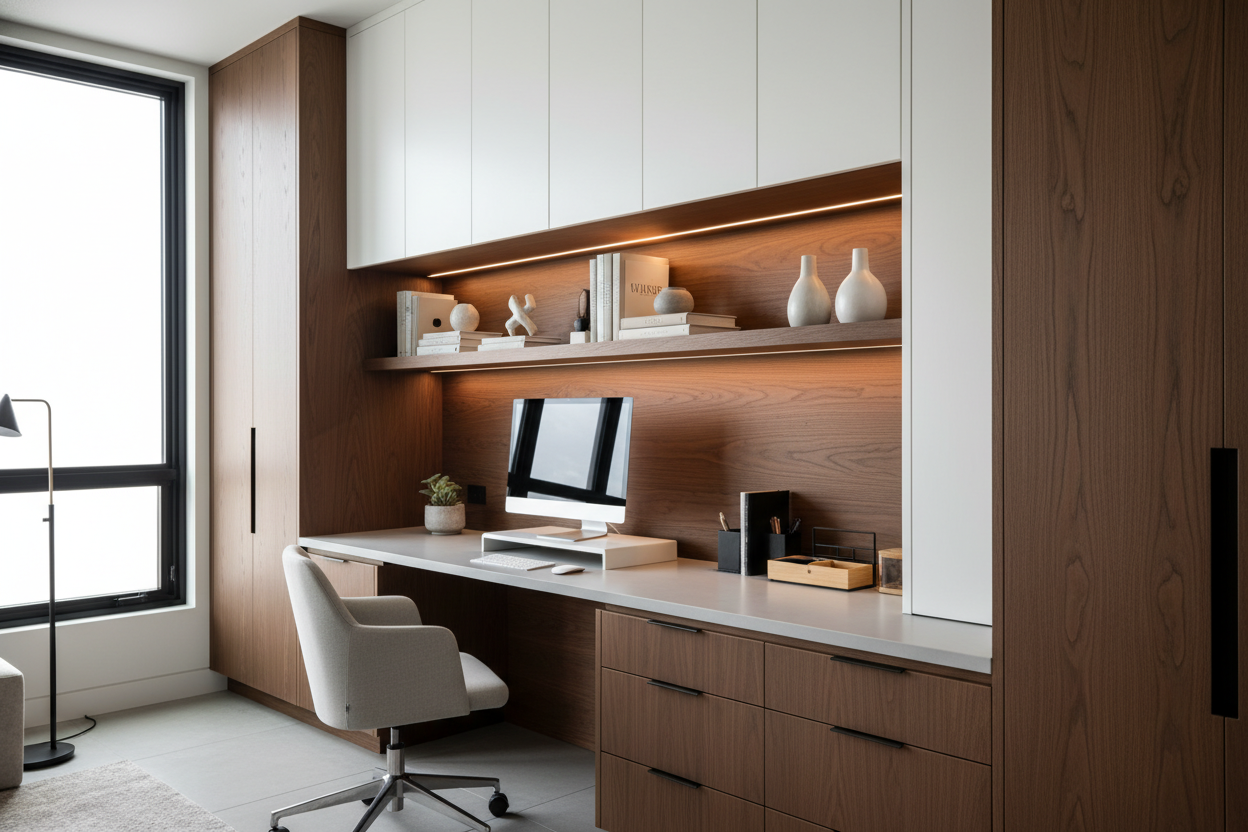
There is nothing that kills a creative workflow faster than visual noise. We have all experienced the frustration of a cluttered desk where paperwork and tangled cords compete for space, leaving you feeling overwhelmed before the day even begins. The solution requires more than just buying a generic filing unit; it requires a strategic approach to storage. Modern home office cabinets act as the architectural backbone of your workspace, anchoring the room while hiding the chaos of daily business.
Key Features to Look For
- Material Durability: Prioritize high-pressure laminate (HPL) or architectural grade veneers over standard paper foils for longevity.
- Mechanism Quality: Look for soft-close hinges and heavy-duty drawer slides rated for at least 100 lbs if storing files.
- Ergonomics: Ensure base cabinets are the correct height (usually 29-30 inches) if they are doubling as a secondary work surface.
- Cable Management: Verify the existence of integrated grommets or routed channels behind the back panel.
Defining the Modern Aesthetic
When clients ask for a "modern" look, they are rarely asking for cold, industrial metal. In the current design landscape, modern refers to clean silhouettes, intentional asymmetry, and a lack of ornamentation. We are moving away from shaker-style doors and toward flat-panel, slab fronts. The goal is to make the cabinetry feel less like office utility and more like integrated architectural millwork.
Choosing the Right Materials
The finish you select dictates both the vibe and the maintenance level of your office.
Matte vs. High-Gloss
While high-gloss lacquer reflects light and makes small rooms feel larger, it is unforgiving with fingerprints. For a high-traffic home office, I almost always recommend a super-matte finish with anti-fingerprint technology. It absorbs light, creating a calm, sophisticated atmosphere essential for deep work.
Wood Veneers
To add warmth to a sterile room, incorporate walnut or white oak veneers. Modern home office cabinetry often utilizes wood tones to break up monochromatic color schemes. However, ensure you are buying "book-matched" veneers where the grain continues seamlessly from one drawer front to the next. This subtle detail creates a high-end, bespoke look.
Layout and Space Planning
The footprint of your cabinetry determines the flow of the room. A common strategy in luxury design is the use of floating cabinets. By mounting the units to the wall and leaving floor space visible underneath, you reduce the visual weight of the furniture. This makes the room feel airy and expansive, rather than boxy and enclosed.
If you require substantial storage, consider a floor-to-ceiling wall unit behind your desk. This creates a strong focal point and allows you to keep your actual workspace minimalist, as everything has a designated place behind closed doors.
My Personal Take on Modern Home Office Cabinets
I want to share a specific lesson from a project I installed last year that you won't find in a brochure. We designed a stunning, handle-less wall unit using push-to-open latches to maintain that sleek, ultra-modern look. It looked incredible in the photos.
However, three months later, the client called me. The issue wasn't the look; it was the functionality. Because he accessed the printer drawer ten times a day, the constant "push-click-release" motion became tedious, and the oil from his hands started polishing a shiny spot onto the matte finish right where he pushed the door.
The Lesson: For your primary, high-use drawers, skip the push-to-open mechanism. Use a discreet, edge-pull handle instead. It preserves the modern lines but saves your finish—and your patience—in the long run.
Conclusion
Investing in the right storage is an investment in your productivity. By selecting cabinets that offer both architectural beauty and rugged durability, you create a workspace that invites you to sit down and focus. Don't settle for temporary fixes; curate a space that works as hard as you do.
Frequently Asked Questions
What is the ideal depth for home office cabinets?
Standard kitchen cabinets are 24 inches deep, but this is often too deep for a home office, making it hard to reach items in the back. I recommend a depth of 18 to 20 inches for general storage, which accommodates standard binders and equipment without encroaching on floor space.
Can I mix metal and wood in modern cabinetry?
Absolutely. In fact, mixing materials is encouraged to prevent the space from looking flat. Consider open metal shelving units integrated between closed wood cabinets to display books or awards, adding texture and visual interest.
How do I maintain matte finish cabinets?
Matte finishes are beautiful but can show oil marks. Avoid standard furniture polish or abrasive sponges. Use a microfiber cloth slightly dampened with warm water and a mild, non-detergent soap. Wipe the surface gently and immediately dry it with a clean cloth to prevent streaking.

Leave a comment
This site is protected by hCaptcha and the hCaptcha Privacy Policy and Terms of Service apply.