










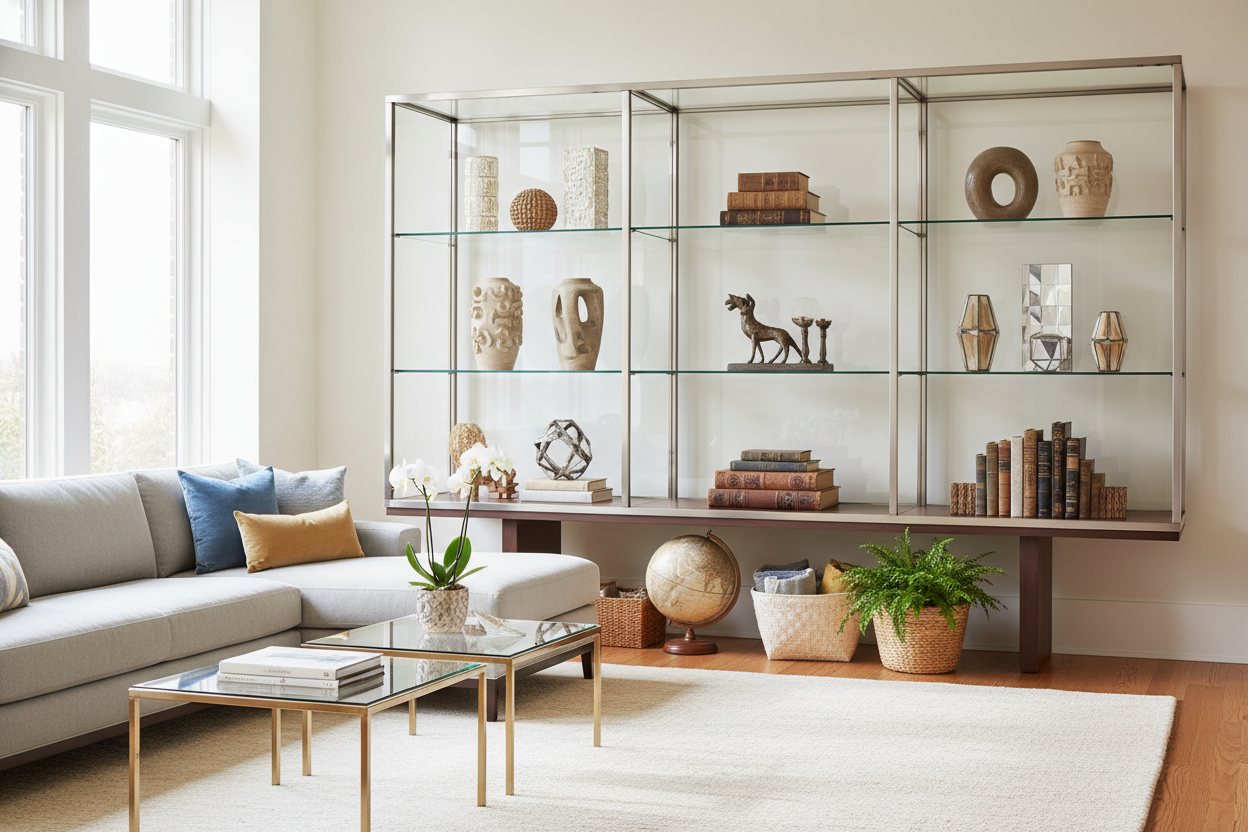
I once owned a vintage 1950s Underwood typewriter that was as beautiful as it was inconvenient. It weighed about thirty pounds and had a carriage return that could take out a small child. For months, I tried to shove it onto my wall-mounted shelves, but it hung off the edge like a clumsy gargoyle. It made the whole room look unfinished, like I’d just moved in and hadn't found a place for my junk yet.
Everything changed when I stopped trying to make it fit into a bookshelf and bought a large glass display box. Suddenly, that awkward hunk of metal wasn't clutter—it was a curated centerpiece. It turns out, when you give a bulky object its own clear boundaries, you stop seeing the bulk and start seeing the design.
- Standard shelves are usually too shallow for irregular items.
- Glass enclosures create a museum-quality focal point.
- Clear boundaries prevent a room from feeling stuffed.
- Sealed boxes eliminate the nightmare of dusting intricate parts.
Why Your Big, Weird Stuff Hates Standard Shelves
The 11-inch depth of most standard bookcases and display cabinets is a total lie for anyone who collects anything larger than a paperback. When you force a 14-inch architectural model or a deep vintage camera onto a shallow shelf, it creates a visual overhang that stresses the eye. It feels precarious, even if it’s technically stable.
I’ve seen people try to angle their bulky items to make them fit, but that just makes the shelf look messy. A deep, irregular object needs 360-degree breathing room. Without it, the item loses its shape and just becomes a shadow in a dark corner of your furniture. You lose the very details that made you want to display it in the first place.
The Magic of a Large Glass Display Box
There is a psychological shift that happens when you put glass around an object. It says, 'This is important.' By using a standalone enclosure, you’re physically separating the item from the chaos of your daily life. I found this out the hard way when displaying awkward bulky collectibles in my last apartment. My typewriter went from a dust-magnet on the floor to the first thing people talked about when they walked in.
A glass box doesn't just hold an item; it frames it. It allows you to see the profile and the rear details that would be hidden against a wooden backboard. If you've spent money on a high-end LEGO set or a heavy bronze sculpture, you deserve to see all of it, not just the front forty percent. It turns 'random stuff' into an exhibit.
Where to Actually Put It (Without Tripping Over It)
Don't just plop a massive glass box in the middle of a high-traffic zone. I made the mistake of putting mine on a narrow console in the entryway once; I clipped it with my grocery bags every single day. Instead, look for dead corners. The space next to an armchair is perfect—it acts like a side table that you aren't allowed to clutter with coffee mugs.
If you have a low, long credenza, centering a box there creates a great anchor for the wall. Just make sure the surface can handle the weight. A thick glass box plus a heavy collectible can easily top 50 pounds, so skip the cheap honeycomb-core tables. You want something kiln-dried or metal-framed to support that kind of pressure.
Three Rules for Styling Oversized Objects Behind Glass
When you style a glass display box, the goal is intentionality. Don't just throw the item in there and call it a day. First, respect the negative space. The item should not touch the glass on any side. If it's touching, the box is too small, and you're back to that cramped feeling.
Second, think about lighting. A small, wireless puck light hidden behind the base can make the glass glow and highlight the textures of your object. Third, resist the urge to add 'filler.' People love to throw loose stones or dried moss around the main object, but unless you're making a terrarium, it usually just looks cluttered. Let the object breathe.
The Unspoken Benefit: Zero Dusting Guilt
Let’s talk about the real reason we buy these: dusting. Have you ever tried to get cat hair out of a vintage typewriter's keys? Or dust off the delicate wings of a dried botanical arrangement? It’s a losing battle. A sealed glass box is a gift to your future self. It keeps the intricate bits pristine while you just wipe down the exterior glass once a month.
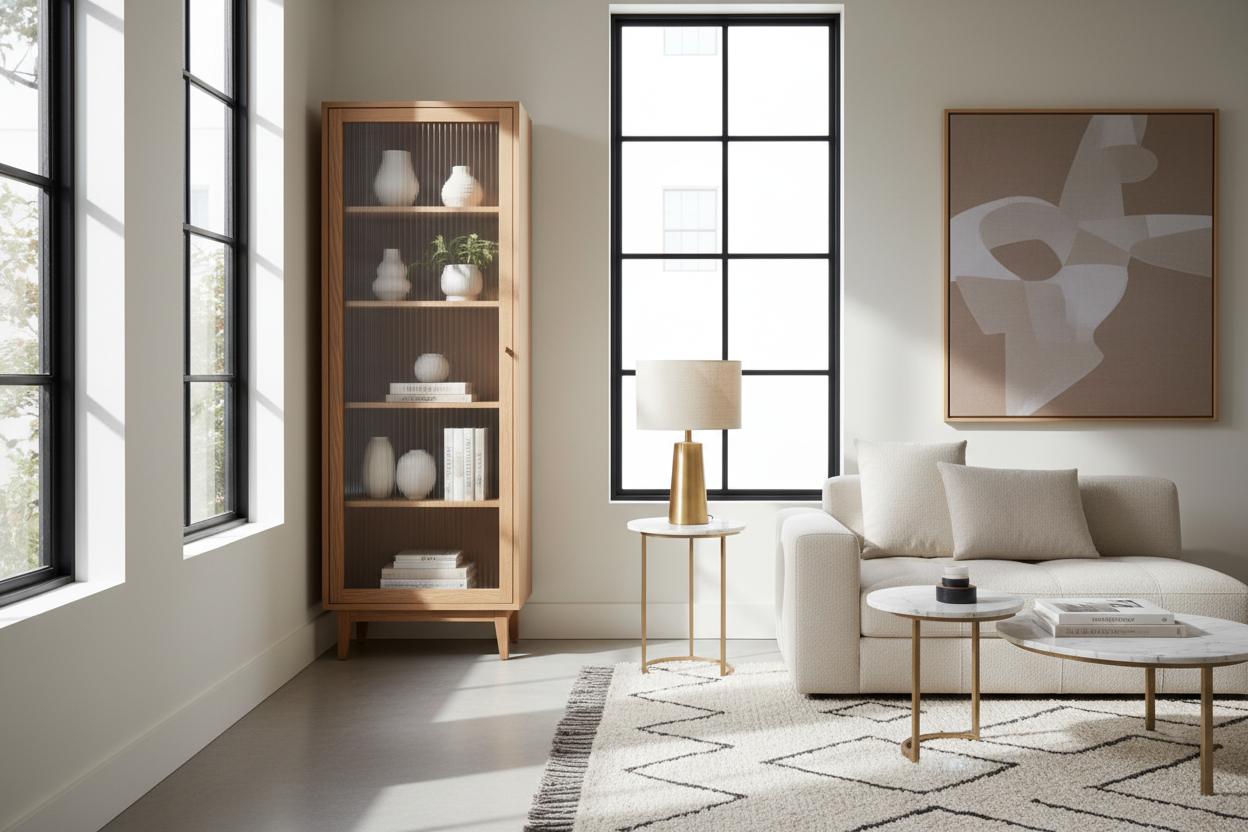
If you have an entire collection of these oversized headaches, you might eventually need to graduate to a large display cabinet with glass doors. But for that one special piece that refuses to play nice with your other furniture, a single, high-quality box is the most honest solution you'll find. It’s about giving your favorite things the stage they deserve.
FAQ
Is acrylic better than glass for a large box?
Acrylic is lighter and won't shatter if you drop it, but it’s a magnet for scratches and static. If you want it to look high-end and stay clear for a decade, go with real tempered glass. It has a weight and clarity that plastic just can't match.
How do I stop the glass from looking streaky?
Use a clean microfiber cloth and a 50/50 mix of water and white vinegar. Avoid those blue supermarket sprays; they often leave a waxy film that shows up under LED lights. Wipe in a circular motion, then buff it dry.
What if my item is too heavy for the glass bottom?
Look for a five-sided box that sits over a solid wooden or metal base rather than a fully enclosed glass cube. Never place a 40-pound item directly onto a sheet of glass that isn't supported by a frame or a solid surface underneath.


Leave a comment
This site is protected by hCaptcha and the hCaptcha Privacy Policy and Terms of Service apply.