










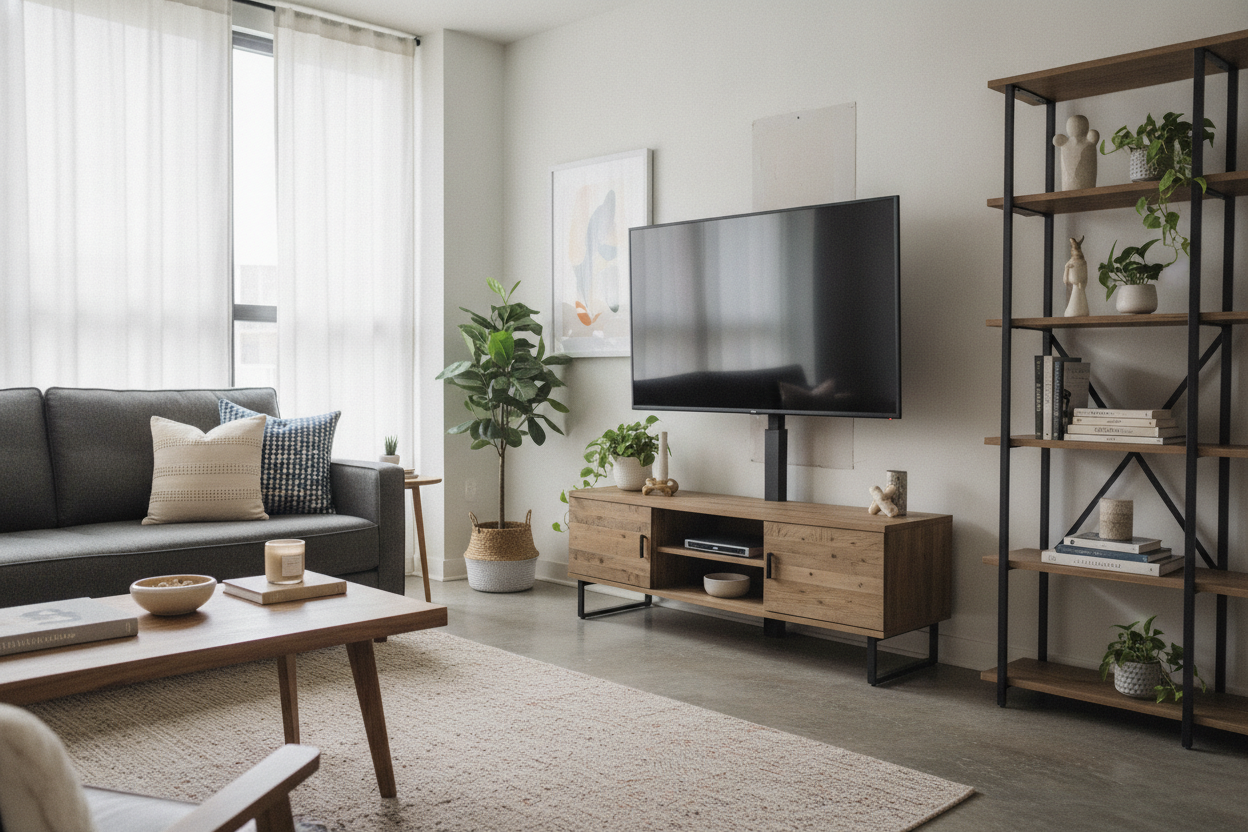
I spent three hours measuring the studs in my third-floor walk-up, convinced I was some kind of DIY prodigy. Ten minutes later, I was staring at a jagged hole in the drywall and a pile of white chalky dust on my rug. My screen was still on the floor, and my security deposit was officially a memory. That was the day I gave up on the dream of a floating wall mount and bought a 60 inch tv mount stand.
Quick Takeaways
- Zero wall damage: You get the floating look without the structural risk or the spackle.
- Adjustable height: Most stands let you choose the eye-level height that actually fits your sofa.
- Built-in swivel: You can turn the screen toward the kitchen without buying a $200 articulating arm.
- Cable concealment: The hollow spine hides the 'tech spaghetti' that usually dangles from wall mounts.
The Day My Living Room Wall Crumbled
I learned the hard way that modern apartment drywall is often about as sturdy as a cracker. I used the plastic anchors that came in the box—mistake number one—and tried to hang a heavy LED screen on a wall that was apparently mostly air and hope. When the top anchor pulled out, it took a dinner-plate-sized chunk of paint and plaster with it. I spent the rest of the night Googling how to patch drywall, knowing full well my landlord would see the patch from a mile away.
The reality is that unless you have a stud finder you actually trust and the permission to drill massive lag bolts into your rental, wall mounting is a gamble. Most 60-inch screens weigh between 40 and 60 pounds. That is a lot of leverage on a thin sheet of gypsum. A 60 tv stand with mount bypasses the physics problem entirely by putting that weight on a heavy steel base instead of your fragile walls.
Why I Finally Chose a TV Stand With Mount for 60 Inch TV
The beauty of this hybrid design is that it creates the illusion of a custom theater setup. While shopping for traditional tv stands, I realized most of them sit far too low. If you have a coffee table or a pile of books in the way, you’re constantly crane-necking to see the bottom of the screen. A hybrid stand uses a vertical metal spine to hoist the screen up to a civilized viewing height.
You get the best of both worlds: the clean, modern look of a mounted screen and the practical storage of a console table. I chose a model with a dark glass base that actually has enough room for my soundbar and PlayStation. It feels grounded and intentional, not like a temporary fix. It’s the smartest way to fake a high-end built-in without calling a contractor.
The Spin-and-Swivel Factor You Don't Get on a Wall
One thing I didn't expect to love was the swivel. If you wall-mount a TV with a standard bracket, it’s stuck facing one direction forever. If you want to watch the news while you’re chopping onions in the kitchen, you’re out of luck unless you shell out for a heavy-duty articulating arm that looks like a robotic limb when extended.
Since I switched to a mount stand, I can just grab the edge of the screen and pivot it 30 degrees toward my dining nook. It’s smooth, silent, and doesn't feel like I’m about to rip the screws out of the studs. It turns your living room into a multi-use space without any extra hardware or engineering degrees required.
Weight Limits Are Not Suggestions (Here's What to Check)
Before you hit 'buy,' you need to look at two things: the VESA pattern and the weight capacity. Most 60-inch TVs use a 400x400mm VESA pattern, but don't guess—measure the holes on the back of your TV. If the bracket on the stand doesn't line up, you're going to be very frustrated during assembly. Also, check that the stand is sturdy enough for a large screen by looking at the base dimensions.
A narrow base on a tall stand is a recipe for a tip-over, especially if you have plush carpet. I look for a base made of tempered glass or heavy-gauge steel that is at least 25 inches wide. This lowers the center of gravity. If you’re pushing the weight limit of the stand, it might lean forward slightly, which looks cheap and feels dangerous. Always aim for a stand rated for at least 20% more weight than your TV actually weighs.
The Cord Management Is Honestly Superior
The worst part of a wall-mounted TV is the 'tail'—that bundle of black HDMI and power cables dangling down the wall. Unless you pay an electrician to run wires behind the drywall (which is a big no-no in most rentals), it looks messy. A tv stand with mount for 60 inch tv usually features a hollow central column with ports at the top and bottom.
You feed the wires in behind the screen and they pop out right at the shelf level. It’s a five-minute fix for a problem that usually requires a professional. If you really want to go all out on the 'now you see it, now you don't' vibe, you could even look into a hidden tv mechanism with remote, but for most of us, a simple mounting spine does the job perfectly. It’s clean, it’s organized, and most importantly, it keeps my security deposit safe.
FAQ
Will a 60-inch stand fit a 65-inch TV?
Usually, yes, but check the weight limit first. Most stands are rated by weight and VESA pattern rather than screen size, though the '60 inch' label is a good guide for the width of the base.
Is it hard to assemble alone?
The stand itself is easy, but you definitely want a second person to help you lift the TV onto the mounting bracket. Doing that solo is a great way to crack your screen.
Can I use this on thick carpet?
Yes, but look for a stand with a wide, heavy base. Avoid the tripod-style stands if you have deep shag carpet, as they can be a bit more prone to wobbling.

Leave a comment
This site is protected by hCaptcha and the hCaptcha Privacy Policy and Terms of Service apply.