










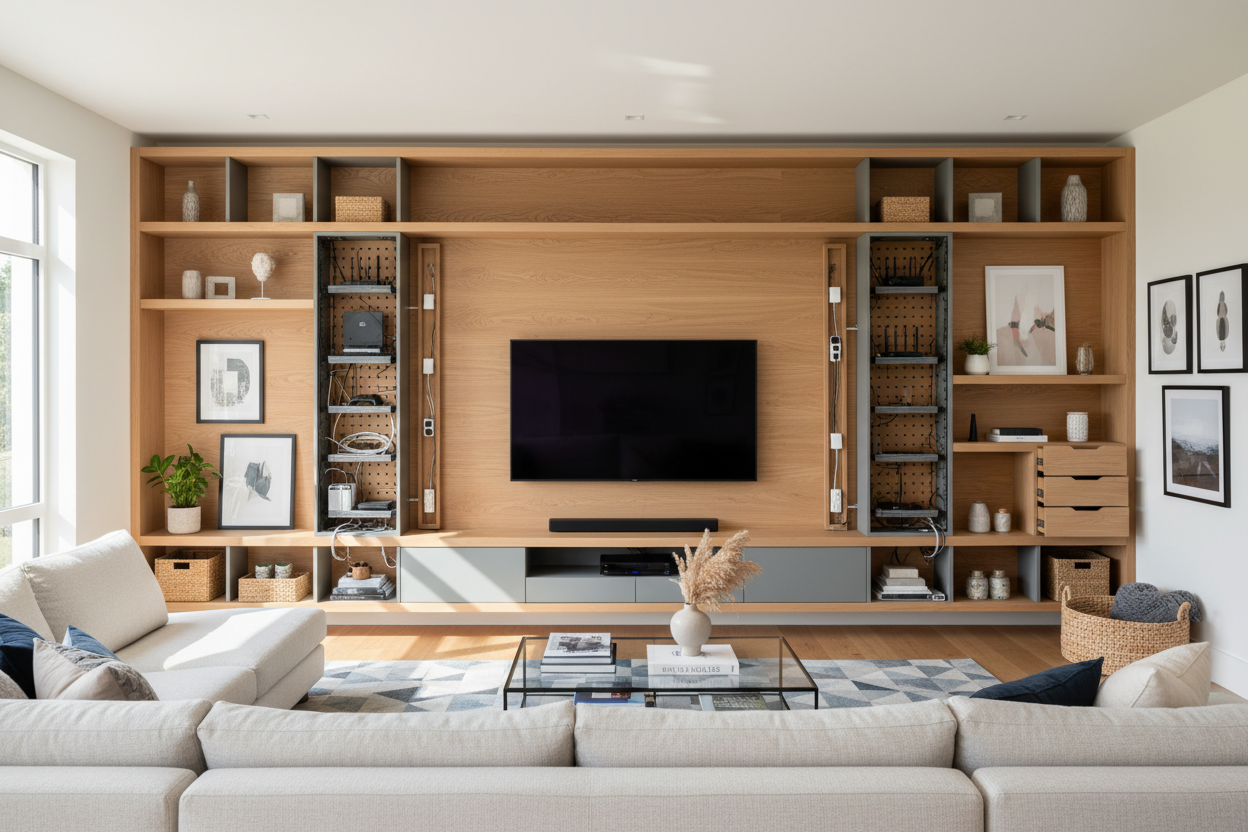
I spent three years staring at a 'media center' that was really just a graveyard for dust bunnies and tangled HDMI cables. Every time I sat down to watch a movie, my eyes would drift from the screen to the flashing green router lights and the black plastic spiderweb behind my PlayStation. It looked like a college dorm room, even though I'm well into my thirties.
I finally hit my breaking point when I tripped over a charging cable and nearly took down my soundbar. I realized I didn't need a bigger cabinet; I needed to get everything off the floor. Designing a tv stand wall wasn't just about aesthetics—it was about reclaiming my sanity and making my living room feel like an actual home instead of a server room.
- Floor Space: Floating units make small rooms feel double the size by keeping the floor line visible.
- Cable Management: If you can see a cord, you've failed. Use in-wall kits or back-panel routing.
- Storage: Drawers are better than shelves for hiding the ugly stuff like controllers and remotes.
- Lighting: Integrated LEDs aren't just for gamers; they provide essential bias lighting for your eyes.
The Open-Shelving Trap I Fell Right Into
When I first moved in, I bought a trendy mid-century console with open glass shelving. Huge mistake. Unless you own exactly two pieces of high-end audio equipment and zero cables, open shelving is a curse. Within a month, those glass tiers were covered in a fine layer of gray dust that seemed to be magnetically attracted to the electronics.
The blinking lights of my modem and the messy tangle of power strips were on full display. It didn't matter how many 'cable management' clips I used; the sheer volume of tech made it look cluttered. I learned the hard way that open media furniture is for people who don't actually use their TVs. For the rest of us, concealment is the only path to peace.
Why a Floating TV Stand Wall Setup Was the Only Fix
The moment I decided to go with a floating look, the room's energy shifted. By mounting the furniture directly to the studs, I eliminated the bulky legs that usually trap dust and make a room feel cramped. I opted for a floating tv stand wall mounted media console that spanned about 80 inches, giving the room a sense of horizontal scale it desperately needed.
Lifting the unit 10 inches off the floor allows my robot vacuum to actually do its job without getting stuck on a forest of furniture legs. It also created a dedicated zone for my tech. Instead of everything being piled on top of each other, the wall-mounted design gave me a clean slate to organize my gear from the ground up. It’s a sleek, architectural look that makes the TV feel like a deliberate choice rather than an afterthought.
The Magic of Concealed Drawers for Gaming Gear
Let’s talk about the 'plastic problem.' I love my gaming consoles, but I hate looking at them. Controllers, VR headsets, and extra cables are inherently ugly. I specifically looked for a wall mounted tv stand with drawers because I wanted a place to 'sweep' the mess into when company comes over.
I chose a unit with deep, soft-close drawers. One drawer is dedicated entirely to my Switch and PS5 controllers, while another holds the 'cable graveyard' of adapters I only use once a year. Having that hidden storage means the top of the console stays clear for a single candle or a small plant. It’s the difference between a room that looks lived-in and a room that looks messy.
Planning the Layout (And Routing the Wires)
The biggest hurdle was the 'waterfall of cords'—that hideous vertical line of black wires hanging from the screen to the console. To fix this, I used a heavy-duty tv mount unit that allowed for a bit of tilt and swivel. But the real secret was the cable pass-throughs I installed behind the drywall. I cut two holes, one behind the TV and one behind the console, and ran every single wire through the wall.
Be careful about your heights, though. I’ve seen so many people ruin this look by mounting everything too high. You don't want to be looking up at the ceiling like you're in a sports bar. I spent a lot of time measuring and hanging your wall-mounted TV stand at a height where the center of the screen was at eye level while seated. It prevents that awkward gap between the TV and the furniture that makes the whole setup look disconnected.
Adding Mood Lighting for a Cinematic Vibe
Once the wall mounted tv rack was securely on the wall, it felt a little flat. It needed depth. I added a strip of warm 3000K LED lights behind the unit and the TV itself. This isn't just for show—it's called bias lighting, and it actually makes the colors on your screen pop while reducing the strain on your eyes during late-night Netflix binges.
I eventually upgraded to a wall mounted tv unit with LED lighting that had the strips built-in. It creates this soft glow that makes the whole unit look like it's hovering in a high-end theater. It’s the ultimate evening vibe. When the sun goes down and those lights kick on, the room feels expensive, even if I’m just eating cereal and watching reruns.
My Living Room Finally Looks Like an Adult Lives Here
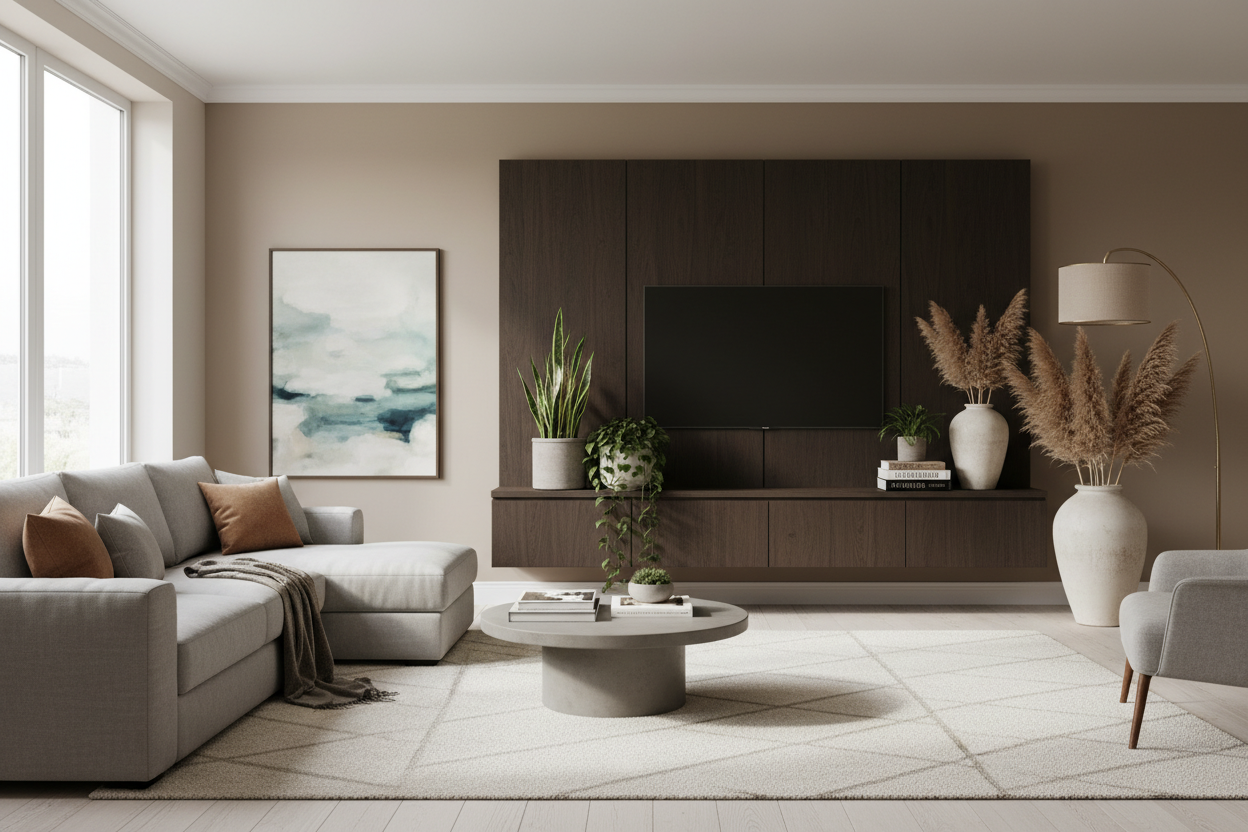
Looking back at the photos of my old setup, I can’t believe I lived with that cable disaster for so long. Switching to a floating system forced me to curate my tech and hide the utility of it all. The room feels lighter, cleaner, and significantly more sophisticated. It’s no longer a 'tech corner'; it’s a styled living space.
If you’re still wrestling with a tangle of wires, stop settling for floor-based clutter. Take the time to style a modern wall-mounted TV stand with some intention. Clear the surface, hide the plastic, and give your TV the frame it deserves. You’ll be surprised how much better your entire home feels when your entertainment zone isn't an eyesore.
FAQ
Is it hard to mount a TV stand to the wall?
It’s not 'hard,' but it is precise. You absolutely must use a stud finder. Do not trust drywall anchors with a heavy media console. If you hit your studs and use a level, it’s a two-hour job that will last forever.
How do I hide the wires if I can't cut into my walls?
If you're renting, use a paintable cable raceway. It’s a plastic channel that sticks to the wall. Paint it the exact same color as your wall, and it virtually disappears.
What is the best height for a floating TV stand?
Generally, you want the bottom of the unit to be 8 to 12 inches off the floor. This leaves enough room for cleaning while keeping the TV at a comfortable viewing height. Always sit on your sofa to test the sightlines before you drill the first hole.

Leave a comment
This site is protected by hCaptcha and the hCaptcha Privacy Policy and Terms of Service apply.