










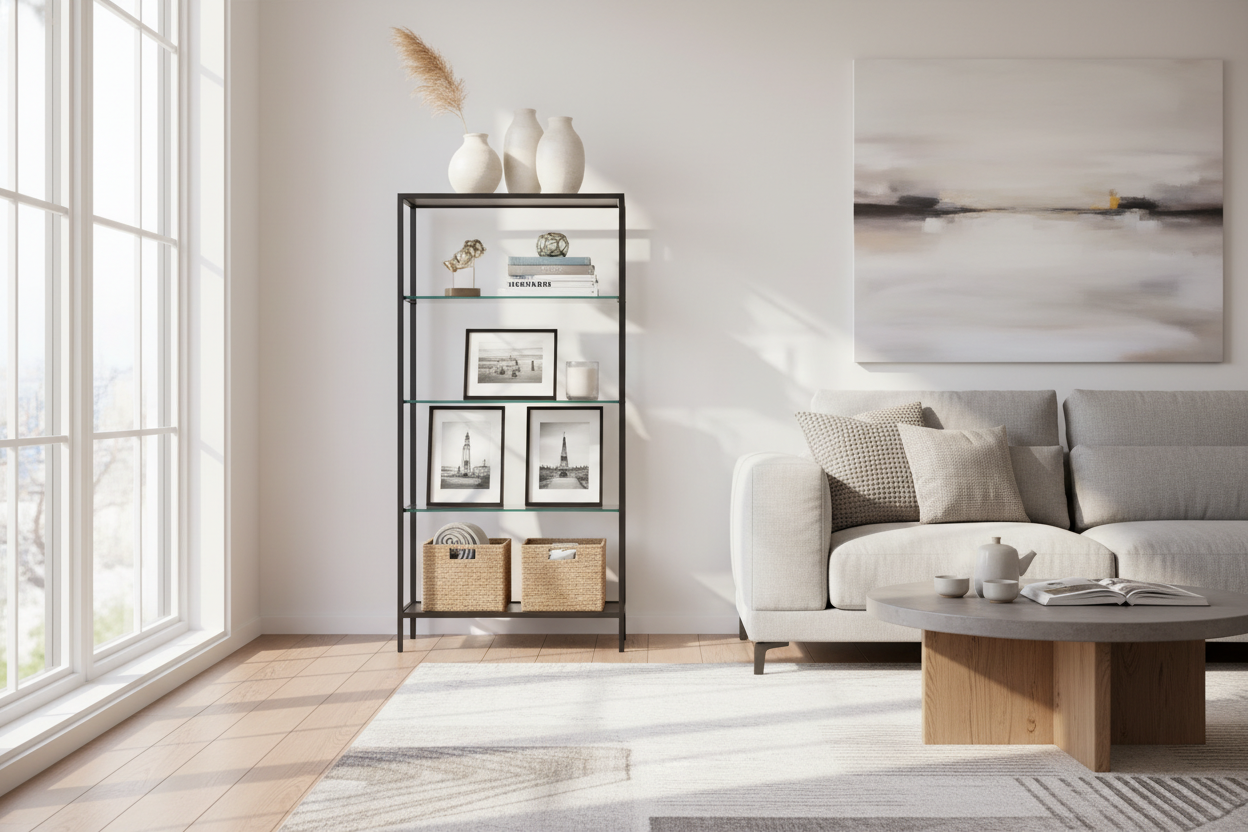
I spent three months hunting for the perfect velvet sofa and a vintage Turkish rug, only to realize my living room still felt like a 19-year-old’s first studio. The culprit? A massive, glowing white PS5 sitting on a minimalist glass shelf, flanked by a spiderweb of black HDMI cables and a router that blinked like an angry lighthouse. No amount of coffee table books could distract from the tech-gore happening in the corner. I finally caved and bought proper tv unit cabinets to hide the mess, and honestly, I should have done it years ago.
- Open shelving is for styling; cabinets are for surviving the visual noise of tech.
- Exposed cables are the fastest way to make expensive furniture look cheap.
- Heat management is easy with a few simple ventilation hacks.
- Hidden storage allows your actual decor—not your router—to be the focal point.
The Day I Realized My Living Room Looked Like a Dorm
I used to think open shelving was 'airy' and 'modern.' In reality, it just meant I was staring at a dusty power strip every time I tried to watch a movie. My PS5 is many things—powerful, fast, essential for my Friday nights—but it is not a piece of art. It’s a giant plastic fin that glows blue. When I sat back on my sofa, my eye didn't go to the art on the wall; it went straight to the tangled mess of wires hanging off the back of the metal frame. It felt temporary, like I was still waiting to move into a 'real' adult apartment.
The breaking point was a dinner party where a guest asked if I was 'still setting up' my media center. I had lived there for two years. That’s when I realized that open glass-and-metal units are great for showrooms, but they are a nightmare for anyone who actually owns electronics. I needed a way to shut the door on the chaos.
Why a TV Unit With Cabinets Is the Ultimate Aesthetic Fix
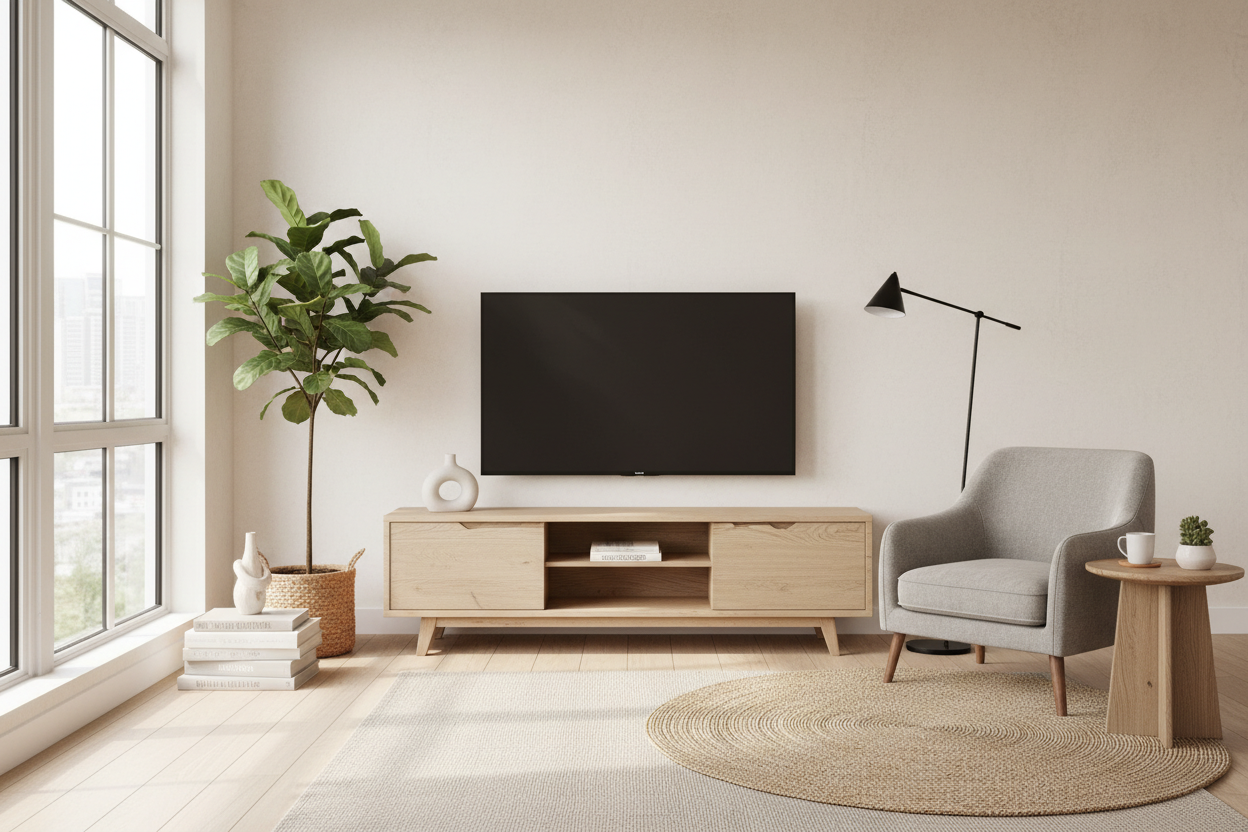
Transitioning to a tv unit with cabinets was an instant hit of dopamine. There is something deeply satisfying about physically closing a door on your internet router. Suddenly, the living room felt like a curated space rather than a server room. When you swap out a flimsy open rack for a modern tv stand with cabinets, the visual weight of the room shifts. It anchors the TV and gives the eye a place to rest that isn't a mess of plastic and LEDs.
It’s also about intentionality. Cabinets give you a 'clean slate' on top. Instead of fighting for space with a controller charging dock, you can actually place a ceramic vase or a nice lamp. It makes the room feel grown-up. You aren't just housing a TV; you're styling a piece of furniture that happens to hold a TV.
But Won't My Electronics Overheat in There?
The biggest fear is always the 'red ring of death' or a melted motherboard. I get it—consoles generate a lot of heat, especially when you're running something graphics-heavy. But you don't have to keep them in the open air to keep them alive. I took a box cutter to the flimsy cardboard backing of my cabinet to create a massive ventilation hole that no one will ever see. It tripled the airflow instantly.
If you're doing a 4-hour gaming session, just leave the cabinet door cracked an inch. I even tucked a $15 USB-powered cooling fan inside to pull the hot air out the back. My console stays cool, and my living room stays pretty. It's a five-minute fix that solves the only real downside of closed storage.
When You Need to Go Vertical With Your Storage
If your TV is floating on a massive blank wall, a low-profile console can sometimes look a bit lonely. That’s when you need to think about the vertical space. I’ve seen people try to fix this with gallery walls, but if you have a lot of gear—think soundbars, physical media, or extra controllers—an entertainment center with overhead cabinets is the smarter move.
It frames the screen and gives you extra spots to hide the things you need but don't want to see. I use my upper cabinets for board games and those manuals for appliances I haven't looked at in three years. It turns the TV wall into a cohesive architectural feature rather than just a screen hanging in a void. If you have the square footage, go big. It actually makes the room feel larger because the clutter is contained.
Three Non-Negotiable Features for Your Next Console
Before you click 'buy' on a new unit, check three things. First, make sure the internal shelves are adjustable; some receivers and consoles are surprisingly tall and won't fit in a standard 10-inch opening. Second, look for pre-drilled cable management holes so you aren't drilling through 1-inch thick oak yourself. Finally, measure the internal depth—not the outside. Some consoles like the PS5 are deep, and you don't want the door hitting the front of the unit when you try to close it. Ready to hide the chaos? You can browse enclosed tv stands to find something that actually fits your style.
How do I use my remote if the doors are closed?
Most modern consoles and boxes use Bluetooth, but for older IR gear, you can get a cheap IR repeater or choose a unit with slatted 'louvers' that let the signal pass through while still hiding the tech.
Will wood cabinets muffle the sound of the console fans?
Yes, which is actually a huge bonus. If your console sounds like a jet engine when it's under load, a solid wood door acts as a great sound dampener.
Can I put my router in a cabinet?
Usually, yes. As long as the cabinet isn't made of solid metal, your Wi-Fi signal will pass through wood or MDF just fine. If you have a massive house and a weak signal, keep the router on the top shelf or near the back.

Leave a comment
This site is protected by hCaptcha and the hCaptcha Privacy Policy and Terms of Service apply.