










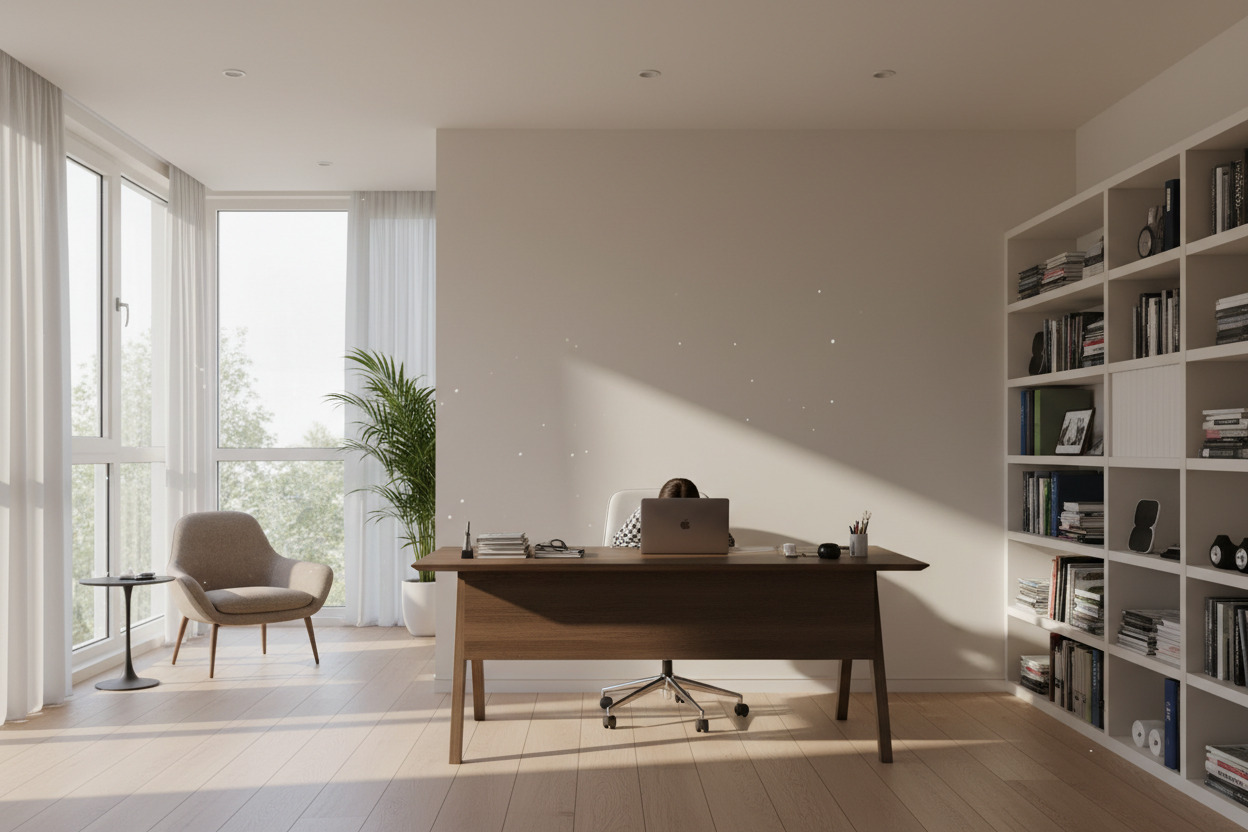
We often treat storage and workspace as separate entities, resulting in cluttered rooms where file cabinets fight for floor space with workstations. This disjointed approach disrupts visual flow and hinders productivity. As a designer, I constantly steer clients toward a more cohesive solution: the office shelving desk. This unified piece of furniture does more than just hold a laptop; it anchors the room, utilizes vertical real estate, and defines the aesthetic tone of your professional sanctuary.
Key Features to Look For
Before committing to a purchase, review these critical specifications to ensure the piece serves both your functional needs and design standards:
- Vertical Clearance: Ensure the distance between the desktop and the first shelf allows for your monitor height (typically 18-22 inches).
- Material Integrity: Distinguish between high-pressure laminate (durable, affordable) and solid hardwood (heirloom quality, susceptible to humidity).
- Weight Capacity: Check the load rating for upper shelves, especially if you plan to store heavy reference books or hardware.
- Joinery & Stability: Look for reinforced cross-bracing to prevent lateral wobble while typing.
- Cable Management: Integrated grommets or hollow legs are essential for maintaining a clean visual profile.
Choosing the Right Material and Finish
The material you select dictates not just the longevity of the furniture, but the feeling of the room. While it might be tempting to opt for a cheap desk shelf solution made of particleboard to save budget, these often bow under the weight of books over time and chip at the edges.
For a sophisticated, executive feel, look for walnut or oak veneers over high-grade plywood. These offer the warmth of wood without the warping risks of solid timber. If your aesthetic is more industrial, a shelf office desk combining powder-coated steel frames with reclaimed wood surfaces offers immense durability and a striking silhouette.
Space Planning & Layout Strategy
Placement is everything. A common error is placing a tall shelving unit directly in front of a window, blocking natural light. Instead, position your home office desk shelf unit perpendicular to the light source to reduce screen glare while illuminating your workspace.
The Vertical Advantage
In smaller urban apartments, floor space is a luxury. A desk table shelf system that reaches upward rather than outward draws the eye up, creating an illusion of height. Use the upper shelves for items you need occasionally—archived files or decorative objects—keeping the immediate office table shelf area clear for daily tasks. This concept of "zoned storage" is crucial for maintaining focus.
Ergonomics and Visual Balance
When selecting office table shelves, consider the visual weight. A unit with open backing feels airy and less imposing, making it ideal for shared spaces or living rooms. Conversely, a unit with a closed back provides a solid focal point and hides messy cords, but it can make a small room feel smaller.
Ergonomically, the shelving must not encroach on your active workspace. I often see designs where the lower shelf is too deep, forcing the user to lean forward uncomfortably. Ensure the primary work surface provides ample depth for your elbows and keyboard without your forehead meeting a shelf.
My Personal Take on Office Shelving Desks
Lessons from My Own Projects
I learned a hard lesson about integrated lighting on a project in a dim loft space. I specified a gorgeous, floor-to-ceiling shelving desk unit in a dark espresso finish. It looked stunning in the catalog. However, once installed, we realized the overhead shelves cast a harsh, distinct shadow directly onto the writing surface, making it nearly impossible to work without eye strain.
I had to retroactively install LED tape lighting under each shelf to correct the ambient light levels. Now, I always check if the shelving unit has a lip to hide LED strips. Another detail rarely mentioned is the texture: avoid high-gloss finishes for the main desk surface. They look sleek in photos, but in practice, the reflection of overhead lights and the accumulation of fingerprints will drive you absolutely crazy within a week.
Conclusion
Investing in the right desk setup is an investment in your mental clarity. By choosing a unit that balances structural integrity with ergonomic design, you transform a simple work area into a command center that inspires creativity. Measure twice, consider your lighting, and prioritize materials that age gracefully.
Frequently Asked Questions
What is the ideal depth for a desk with attached shelving?
For a functional workspace, the main desk surface should be at least 24 to 30 inches deep. This allows enough distance between your eyes and the monitor, even with shelving units above or to the side.
How do I style the shelves without them looking messy?
Follow the "2/3 Rule." Fill only two-thirds of each shelf to leave negative space, which prevents a cluttered look. Mix vertical items (books, binders) with horizontal objects (trays, boxes) to create visual rhythm.
Can I use a shelving desk in the middle of a room?
Yes, but only if the unit is finished on the back. Many units have unfinished backing meant to face a wall. If you plan to float the desk, ensure it is designed for 360-degree viewing and has a weighted base to prevent tipping.


Leave a comment
This site is protected by hCaptcha and the hCaptcha Privacy Policy and Terms of Service apply.