










You sit down to work, but your eyes keep bouncing from the stack of mail to the bulky filing cabinet, to the tangled web of cords under your desk. Sound familiar? Over the last few years, I’ve seen countless clients try to cram corporate-level storage into their spare bedrooms, resulting in spaces that feel heavy and chaotic. Getting an office simple design right is about stripping away the visual noise so your brain can actually focus.
A minimalist workspace isn't about working on a folding table in an empty room. It is about highly intentional furniture choices that balance utility with breathing room. By the end of this guide, you will know exactly how to curate a streamlined workspace that feels inviting, comfortable, and ready for deep work.
Quick Decision Guide
- Prioritize closed storage: Open shelving creates visual clutter. Opt for a single, sleek credenza or desk with built-in drawers to hide daily mess.
- Float the desk: If space allows, pull your desk away from the wall. Facing the room or a window prevents the 'penalty box' feeling.
- Invest in the chair: A simple aesthetic shouldn't compromise your spine. Choose an ergonomic chair with clean lines over a rigid wooden stool.
- Master cord management: A minimalist room is instantly ruined by dangling cables. Use under-desk trays and raceways to keep power invisible.
Mapping Out the Minimal Layout
When planning a home office, the instinct is often to push everything against the perimeter walls to maximize floor space. In a simple design scheme, this actually works against you.
The Power of Negative Space
Negative space—the empty areas around your furniture—is what gives a room its calm, unhurried feeling. Instead of filling every corner with a bookshelf or a plant stand, leave intentional gaps. If you have a standard 10x10 foot North American spare bedroom, center the desk or float it perpendicular to the window. This allows the desk to become the focal point, while the empty walls reflect natural light and keep the room from feeling cramped.
Choosing Pieces with Low Visual Weight
Not all furniture is created equal when it comes to visual presence. A solid oak pedestal desk and a slim metal-framed writing desk might have the exact same footprint, but the oak desk demands far more attention.
Material and Silhouette Selection
When clients ask me for simple office design ideas, I immediately steer them toward pieces with exposed legs and thin profiles. Materials like powder-coated steel, light ash wood, or even matte-finished engineered wood work beautifully. These materials allow light to pass under and around the furniture. Avoid heavy, floor-to-ceiling cabinetry unless it is painted the exact same color as your walls to blend in completely.
Comfort Doesn't Mean Clutter
There is a dangerous trend in minimalist workspaces: prioritizing a stark aesthetic over physical comfort. A hard acrylic chair might look incredible on a mood board, but it will ruin your back during a 40-hour workweek.
The Ergonomic Non-Negotiables
You can maintain a clean look while supporting your body. Look for office chairs wrapped in performance fabrics with muted tones—like charcoal, oat, or navy—rather than aggressive, gamer-style mesh chairs. Ensure your desk height sits around 29 to 30 inches, which accommodates most standard ergonomic chairs. If you use a standing desk, opt for one with a solid wood or high-quality veneer top and a hidden dual-motor base so the mechanics don't interrupt the room's clean lines.
Lessons from My Own Projects
A few years ago, I designed my own home office with what I thought was the ultimate minimalist piece: a completely transparent, tempered glass desk. I loved how it practically vanished into the room, creating zero visual weight.
I learned the hard way that a glass desk is a nightmare for a working professional. Every single fingerprint, coffee cup ring, and speck of dust was magnified. Worse, because the desk was clear, there was absolutely nowhere to hide my laptop charger, monitor cables, or hard drives. The cord chaos completely ruined the sleek aesthetic I was going for. I swapped it out six months later for a warm walnut desk with a built-in cable management tray. The lesson? True simplicity requires hidden utility. If a piece of furniture forces you to leave your mess out in the open, it isn't serving a simple design.
Frequently Asked Questions
How do I manage cords in an office simple design?
Cord management is critical. Mount a wire management tray directly under the back edge of your desk. Run a single, sleeved cable down one of the desk legs to the wall outlet. Use adhesive clips to route smaller cords along the underside of the desktop.
What size desk do I need for a minimalist office?
For a laptop and a single monitor, a desk that is 48 inches wide and 24 inches deep is the sweet spot. It provides enough surface area for your arms and a notebook without encouraging you to pile up unnecessary papers. If you use dual monitors, size up to 60 inches.
Can I still have decor in a simple office?
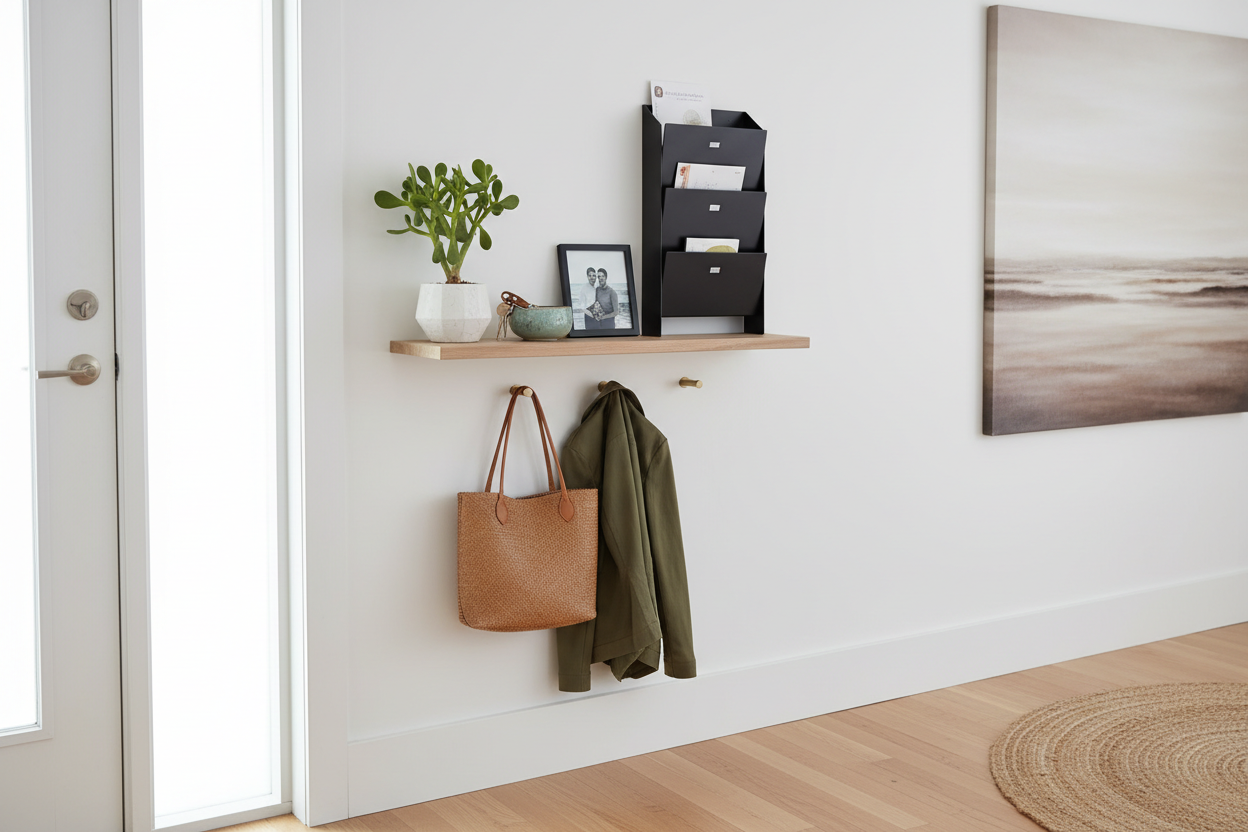
Absolutely. Simple doesn't mean sterile. Limit yourself to two or three intentional decor pieces—a large, low-maintenance plant like a Ficus Audrey, a single piece of oversized abstract art, and a high-quality desk lamp. Group smaller items on a single tray to keep the desk surface looking tidy.


Leave a comment
This site is protected by hCaptcha and the hCaptcha Privacy Policy and Terms of Service apply.