










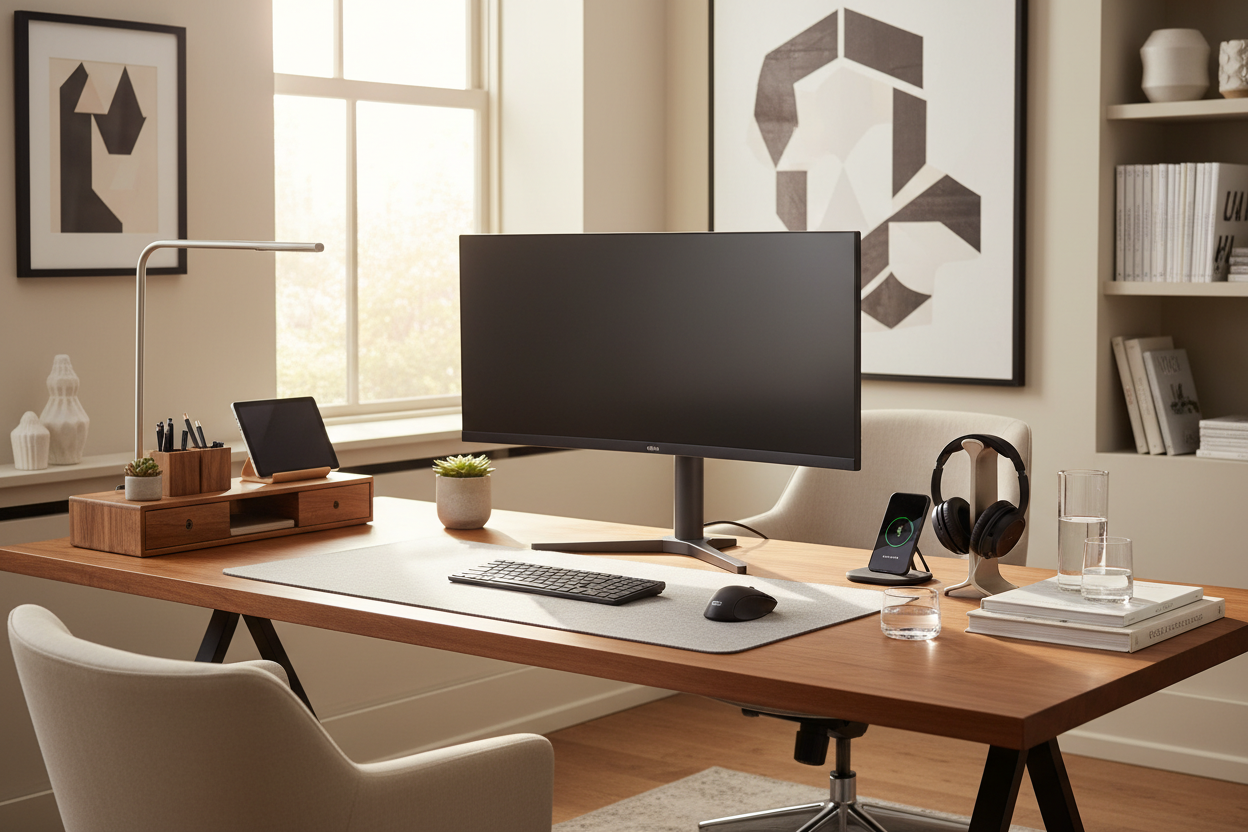
We have all experienced the friction of a poorly appointed workspace. You sit down to work, but the lighting creates glare, the chair forces a slouch, and the clutter distracts the eye. As an interior designer, I often see clients invest heavily in a statement desk but neglect the supporting cast—the smaller tools and accessories that actually dictate the workflow. Selecting the right products for the office is not merely about shopping; it is about curating an ecosystem that supports your cognitive load while maintaining visual harmony.
Key Features to Look For
Before purchasing items for your work desk, consider these core principles to ensure longevity and functionality:
- Material Integrity: Prioritize natural materials like leather, wood, or matte metals over high-gloss plastics which attract dust and fingerprints.
- Ergonomic Scale: Ensure items like monitor risers or keyboard trays fit your specific anthropometric measurements.
- Visual Weight: Choose accessories that balance the desk's size; bulky organizers on a slim parson's desk create visual tension.
- Cable Management: Look for products with integrated channels to hide wires, keeping the surface pristine.
Establishing the Foundation: Desk Needs and Layout
When determining what to put on a desk, start with the 'anchor' pieces. These are the non-negotiables that define the workspace's zone. A high-quality desk pad is often the most overlooked of all work office essentials. It serves a dual purpose: it defines the active work area and provides a tactile surface that improves mouse tracking and softens the sound of typing.
Lighting is equally critical. Among the things needed for office desk setups, an articulated task lamp with adjustable color temperature is paramount. It allows you to shift from cool light for focused tasks to warm light for evening reviews, reducing eye strain significantly.
Curating the Surface: What to Put on Your Desk
The items on desk surfaces should follow the 'reach rule.' Only things used hourly should be on the primary surface. For things to keep on your desk, consider a cohesive set of organizers. A unified material palette—perhaps a walnut tray and a matching pen cup—reduces visual noise.
When clients ask, "what do I need in my office to stay organized?" I point them toward vertical solutions. Paper trays that stack or wall-mounted pockets clear the horizontal plane. This is one of the most useful office items for maintaining a clear mind. If you are looking for things to put on your desk at work that add personality without clutter, opt for functional decor: a sculptural paperweight or a beautifully designed mechanical keyboard.
Balancing Personal and Professional
In a corporate setting, personal items on desk at work must be curated carefully. Instead of a scattering of loose photos, frame one or two distinct images in frames that match your hardware. This elevates the space from 'cluttered cubicle' to 'executive suite.' These are the subtle corporate office must-haves that signal professionalism.
Ergonomics: The Invisible Office Job Essentials
Beyond aesthetics, the things for your work desk must support your body. A monitor arm is superior to a static stand as it frees up square footage and allows for precise eye-level alignment. Similarly, wrist rests are often ignored until pain sets in. Look for firm, gel-free options upholstered in breathable fabric or leather. These work necessities transform a rigid workstation into a responsive environment.
My Personal Take on Products for the Office
I learned a hard lesson about material selection early in my career while outfitting a high-end boutique firm. I specified gorgeous, high-gloss acrylic organizers for the entire team. They looked stunning on installation day—modern, sleek, and airy.
However, three months later, I returned for a site visit. The acrylic was a disaster. It was covered in micro-scratches from keys and staplers, and the static charge attracted every speck of dust in the building. It looked cheap and neglected. Since then, I steer clients toward felt, leather, or matte-finished wood for things to put on office desk surfaces. These materials develop a patina; they handle the wear and tear of daily grind with grace. A leather desk blotter might show a coffee ring eventually, but it looks like a story rather than a stain. It taught me that the best things for office use are those that age well with you.
Conclusion
Transforming your workspace doesn't require a total renovation. By thoughtfully selecting things for your desk that blend ergonomic utility with sophisticated materiality, you create an environment that invites productivity. Whether it is a new office or a refresh of your current setup, invest in pieces that feel good to touch and look beautiful when idle.
Frequently Asked Questions
What are the absolute essentials for office setups in small spaces?
For compact areas, the most vital things to have in your office are multi-functional items. Look for a monitor riser with built-in storage drawers or a desk lamp with a wireless charging base to reduce cord clutter.
How do I choose things to put on a desk at home vs. at work?
Home offices allow for more softness. You might include a scented candle or a potted plant among your work must-haves. In a corporate office, focus on things to keep in office desk drawers to maintain a clean policy, keeping only immediate tools visible.
Is it worth investing in expensive office supplies?
Yes, particularly for items you touch daily. High-quality pens, a weighted tape dispenser, or a solid brass stapler are things to buy for an office that provide tactile satisfaction and durability, preventing the need for frequent replacements.


Leave a comment
This site is protected by hCaptcha and the hCaptcha Privacy Policy and Terms of Service apply.