










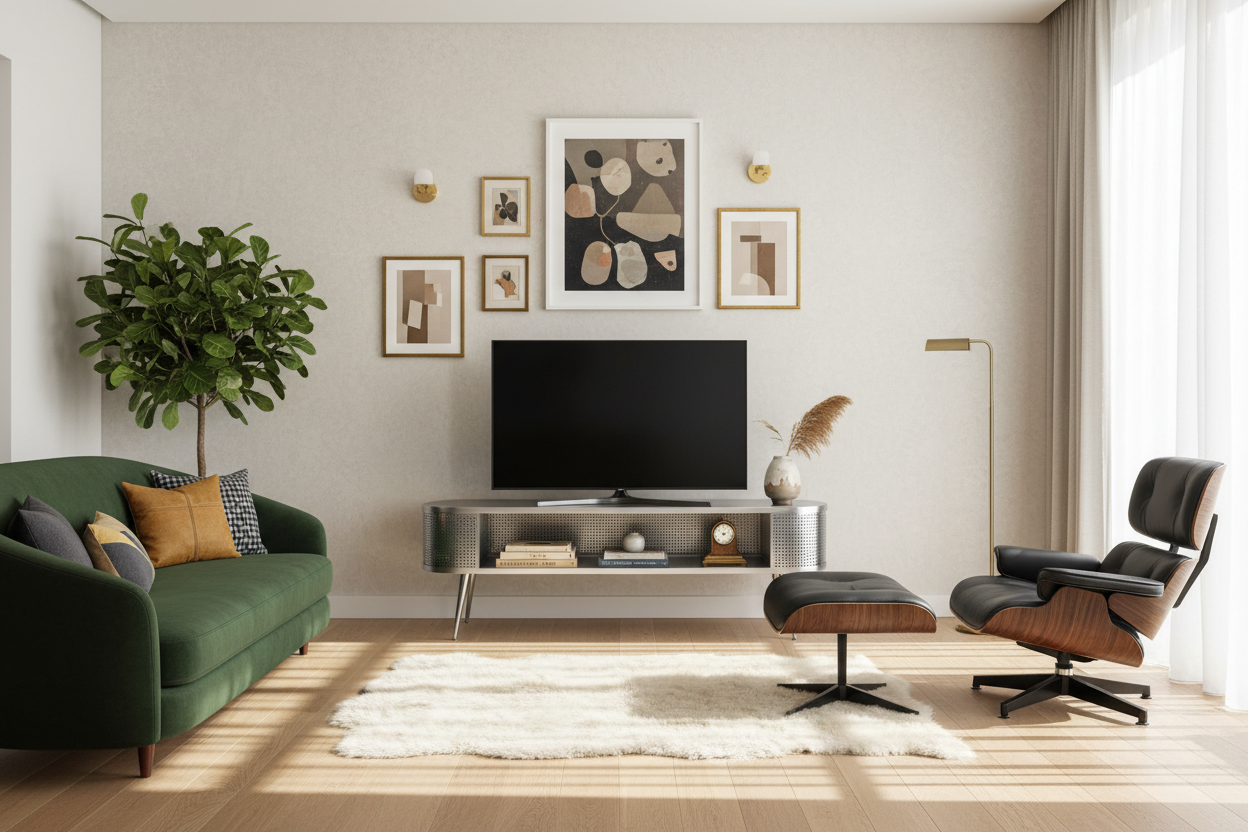
We have all been there: you finally mount that massive, sleek flat-screen, but placing it over a generic particleboard console makes the whole room feel sterile. You crave character, but you also need something that can handle the reality of daily life. Enter the retro metal tv stand.
While it brings an undeniable dose of personality to a living room, styling a heavy metal piece requires a bit of finesse so your space does not end up looking like a high school locker room. In this guide, I will walk you through how to balance the visual weight of metal, manage your electronics, and decide if this aesthetic fits your home.
Quick Decision Guide
- Ventilation is a major plus: Metal cabinets naturally dissipate heat faster than solid wood, keeping your gaming consoles and receivers cool.
- Acoustics require attention: Thin metal doors can rattle against the frame if you place heavy bass speakers or subwoofers directly on the unit.
- Visual lightness: Many metal stands feature taller legs, creating negative space underneath that makes small living rooms feel larger.
- Texture pairing is non-negotiable: To prevent a cold atmosphere, you must introduce warm materials like leather, wool, or natural wood nearby.
Softening the Industrial Edge
Mastering Texture and Contrast
The biggest mistake I see when clients buy a vintage metal tv stand is failing to balance its industrial nature. Metal is inherently cold and visually hard. If you place it in a room with gray walls, a glass coffee table, and a sleek leather sofa, the space will feel uninviting.
To make it work, you need high-contrast textures. Frame the stand with a chunky wool rug or layer woven rattan baskets on the bottom shelves. Incorporating trailing houseplants, like a pothos or string of pearls, over the top edge breaks up the rigid, straight lines of the metal and brings organic warmth to the focal point of your room.
Space Planning and Proportion
Getting the Scale Right
Most North American living rooms are built around the television, meaning the console dictates the flow of the space. Retro metal pieces often have a distinct advantage here: they usually sit up on legs. This creates negative space between the floor and the cabinet, which allows the eye to travel further and makes tight suburban family rooms or narrow urban apartments feel less cramped.
However, pay close attention to the depth. While older vintage pieces were sometimes built deep to accommodate tube televisions, modern reproductions are often incredibly slim. Ensure you have at least 15 to 18 inches of depth if you plan to house standard AV receivers or large gaming consoles inside the closed doors.
Durability and Daily Maintenance
The Fingerprint and Dust Reality
A powder-coated metal surface is incredibly durable against everyday bumps and scrapes, making it a surprisingly resilient choice for homes with pets or young children. You will not have to worry about a sweaty glass leaving a permanent water ring like you would with a walnut veneer.
That said, dark metal finishes—especially matte black or deep olive greens—are notorious for showing dust and oily fingerprints. If you have toddlers who love to touch the furniture, you might find yourself wiping down the cabinet doors more frequently than you would with a textured wood grain.
Designer's Honest Take: Lessons from My Own Projects
A few years ago, I sourced an authentic, olive-green vintage metal tv stand for a client's mid-century modern loft in Chicago. Visually, it was stunning. It anchored the room and gave the exact lived-in, architectural vibe we were chasing.
Then, the client set up their home theater system. I learned the hard way that metal furniture and heavy bass do not mix well. Every time an action movie played, the metal doors vibrated violently against the frame, creating an unbearable rattling noise. We had to spend an afternoon retrofitting the interior with rubber dampeners and lining the door catches with felt tape to absorb the sound. It is a fantastic material, but if you are an audiophile, be prepared to make some acoustic modifications.
Frequently Asked Questions
How do I clean a retro metal tv stand?
Keep it simple. Use a damp microfiber cloth with a drop of mild dish soap to cut through fingerprint oils. Avoid abrasive sponges or harsh chemical cleaners, which can scratch the powder coating or strip the patina off a genuine vintage piece.
Will a metal console scratch my wood floors?
Yes, metal legs can easily gouge hardwood or luxury vinyl plank flooring if dragged. Always apply thick, heavy-duty felt pads to the bottom of the legs before placing the unit, and check them annually to ensure they haven't worn through.
Is this style good for small spaces?
Absolutely. Because metal is structurally strong, the frames and legs can be much thinner than wood while holding the same amount of weight. This slimmer silhouette, combined with the negative space underneath, keeps small rooms from feeling visually heavy.


Leave a comment
This site is protected by hCaptcha and the hCaptcha Privacy Policy and Terms of Service apply.