










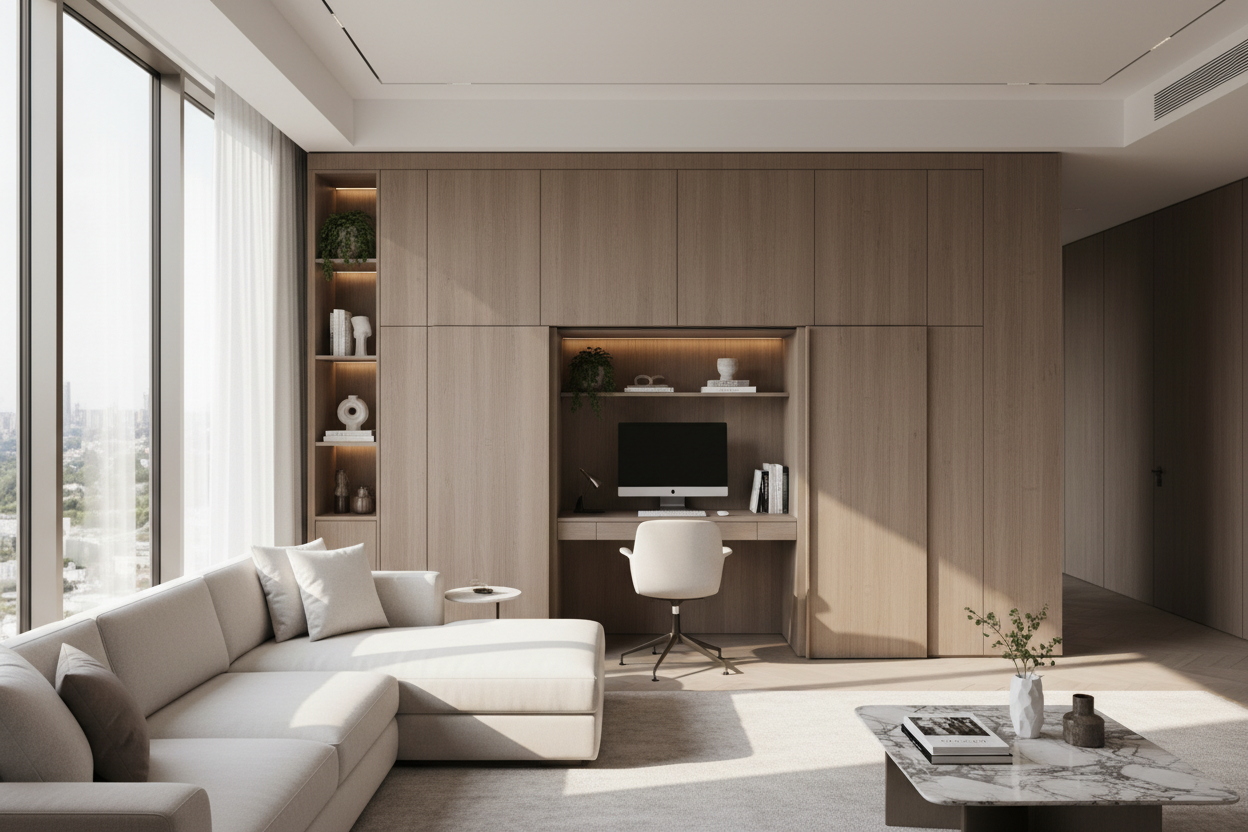
The modern home often demands a duality that creates visual tension: we need a fully functional workspace, yet we crave a sanctuary free from the stress of unfinished tasks. The challenge isn't just finding a table; it is understanding how to hide a desk in living room layouts without disrupting the sophisticated aesthetic you have curated. When a workspace encroaches on a relaxation zone, the key is to prioritize pieces that whisper 'design' rather than shout 'deadline'.
Quick Decision Guide: Strategies for Concealment
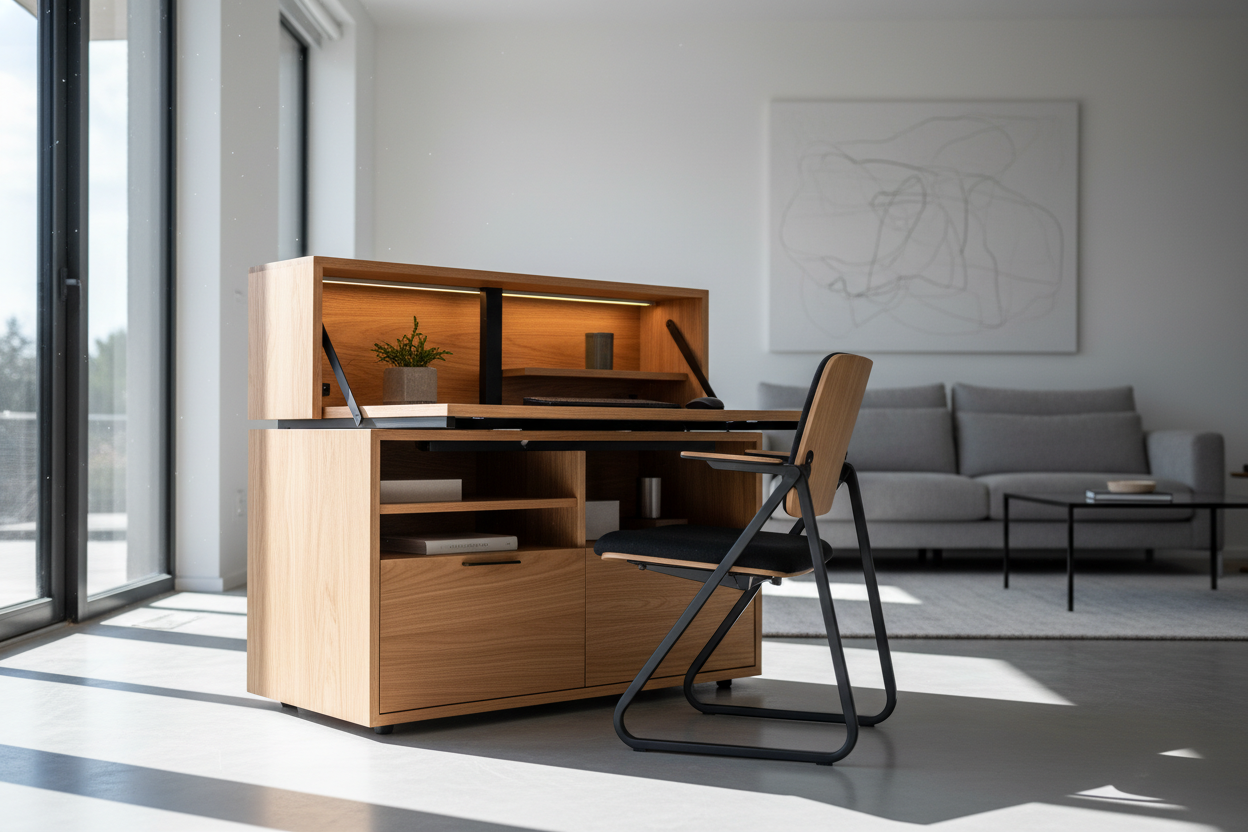
- The Chameleon Piece: Opt for secretary desks or armoires where the work surface physically folds away, hiding clutter instantly.
- The Sofa Anchor: Place a console-style desk directly behind a floating sofa to break the line of sight from the seating area.
- Material Continuity: Ensure the desk finish (e.g., walnut, oak, lacquer) matches existing joinery to make it feel like built-in architecture rather than added furniture.
- Vertical Integration: Utilize alcoves or shelving units where the desk is merely one shelf in a larger, decorative composition.
Selecting Furniture with the Right Silhouette
When curating furniture to solve the problem of how to hide a desk, the silhouette is paramount. A standard office desk is characterized by heavy legs and cable grommets. To avoid this, look for 'leggy' designs with slender profiles that mimic console tables. These allow light to pass through, maintaining the room's sense of spaciousness.
The Secretary Desk and Armoire
For a truly hidden solution, the secretary desk is a classic for a reason. However, material quality is critical here. Avoid particle board with faux-wood laminates; the hinges on drop-down fronts undergo significant stress. Look for solid wood construction or high-grade veneer over plywood. A solid oak secretary not only lasts longer but develops a patina that elevates the living room, whereas chipped laminate immediately signals 'temporary office'.
Space Planning and Visual Weight
Placement dictates visibility. A common error is pushing a desk into a corner facing the wall, which creates a 'timeout' corner vibe. Instead, consider floating the desk perpendicular to a wall or window. This commands the space like a library rather than a cubicle.
The 'Behind the Sofa' Technique
If your floor plan allows for a floating sofa, placing a desk against the sofa back is a brilliant way to address how to hide home office elements. The sofa back acts as a low wall, concealing the desktop surface and any papers upon it. From the rest of the room, only the decorative chair back and a styled lamp are visible. Ensure the desk height is slightly lower than the sofa frame for complete concealment.
Ergonomics vs. Aesthetics
Hiding a desk often means compromising on the massive ergonomic chairs found in corporate offices. To maintain a luxury look, select a dining or accent chair that offers lumbar support without the bulky plastic frame. Upholstered bucket chairs or mid-century modern designs with firm seating pads often bridge the gap between comfort and style effectively.
My Personal Take on how to hide a desk in living room
In a recent project for a client in a pre-war apartment, we decided to use a vintage armoire to hide the workspace. On paper, it was the perfect solution. However, I learned a valuable lesson about internal depth that I now check on every single project. We measured the laptop, but we didn't account for the HDMI cable protruding from the back of the monitor.
When we tried to close the beautiful mahogany doors, they bounced open because the cabling added two inches to the equipment depth. We had to hire a carpenter to cut a ventilation and cable relief port in the back panel of this antique piece—a nerve-wracking moment. The takeaway? When buying a cabinet to hide your tech, always measure your equipment with the cables plugged in, and ensure the furniture has at least three inches of clearance behind the gear for airflow and wiring.
Conclusion
Integrating a workspace into your main living area doesn't require sacrificing your design vision. By selecting furniture that prioritizes material integrity and employing smart layout tactics, you can create a space that functions hard by day and restores your peace by night. It is about making the functional invisible.
Frequently Asked Questions
What is the minimum depth for a functional living room desk?
For a laptop setup, a depth of 18-20 inches is sufficient and helps the piece look more like a console table. If you use an external monitor, aim for 24 inches to prevent eye strain, but be mindful that this deeper footprint is harder to disguise.
How do I handle lighting without making it look like an office?
Avoid cold, architectural task lamps. Instead, use table lamps with linen or silk shades that match your living room's ambient lighting. Ensure the bulb provides high lumens for work but has a warm color temperature (2700K-3000K).
Can I use a closet as a hidden desk?
Yes, often called a 'cloffice.' To make this work in a living room, remove the standard doors and install bi-fold or pocket doors. Treat the interior wall with wallpaper or contrasting paint so that when it is open, it looks like a deliberate design feature rather than a storage cupboard.

Leave a comment
This site is protected by hCaptcha and the hCaptcha Privacy Policy and Terms of Service apply.