










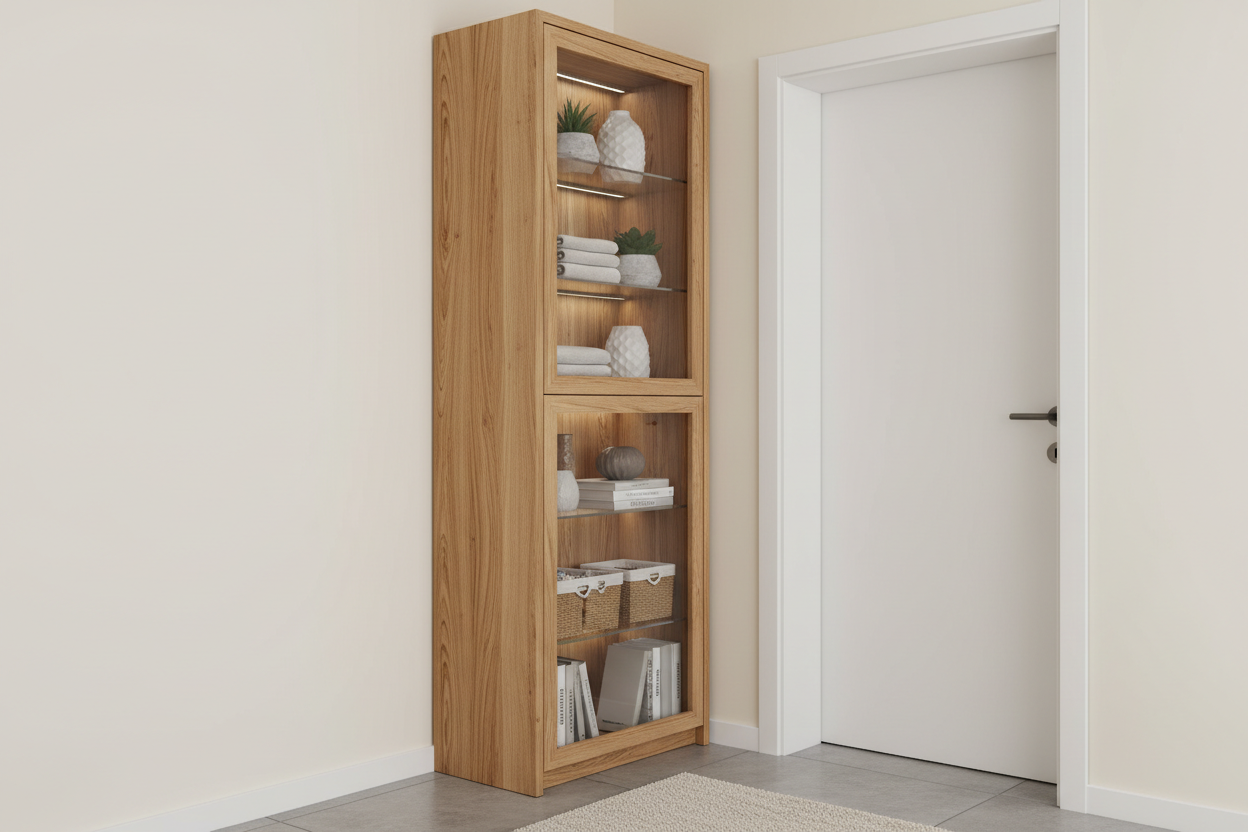
Finding storage in a cramped home often feels like a game of Tetris where the pieces just don't fit. You stare at that awkward six-inch gap between the vanity and the wall, or that sliver of space behind the door, knowing it could be useful, yet it remains empty. This is where a well-chosen narrow wooden cabinet transforms from a simple piece of furniture into a home organization savior. Unlike flimsy plastic bins or open wire racks, a wooden cabinet offers stability, aesthetic warmth, and the ability to hide clutter behind a polished facade.
Choosing the right unit involves more than just measuring the width. You have to consider the type of wood, the configuration of doors versus drawers, and how the finish interacts with your existing decor. A skinny wood cabinet might look perfect online, but if it blocks a light switch or interferes with a door swing, it becomes a nuisance rather than a solution. Let’s look at how to select, place, and style these slim storage heroes effectively.
Why Wood is the Superior Choice for Slim Furniture
When dealing with furniture that has a small footprint, stability is the primary concern. Tall, thin units are naturally more prone to wobbling than wide, low dressers. While metal can be sturdy, it often lacks warmth, and plastic is generally too lightweight to feel secure. A solid wood narrow cabinet provides the necessary heft to keep the unit grounded. The weight of the material itself lowers the center of gravity, making it less likely to tip when you pull open a drawer.
Beyond physics, there is the longevity factor. High-traffic areas like hallways and bathrooms—where these cabinets are most often used—expose furniture to bumps, vacuums, and moisture. A narrow wood storage cabinet made from oak, maple, or even high-quality plywood can withstand years of abuse. If it gets scratched, it can be sanded and refinished. Cheaper particle board alternatives often swell and crumble at the first sign of water damage or a chipped edge, turning your storage solution into trash within a year or two.
A Lesson Learned in a Tiny Bathroom
I learned the value of investing in quality materials the hard way. My first apartment had a bathroom with a pedestal sink and absolutely no counter space. Desperate for a place to put toothpaste and towels, I bought a cheap, laminate tower from a big-box store. It fit the space, but it was a disaster. Every time I opened the door, the whole unit swayed. Within six months, the steam from the shower caused the veneer at the bottom to peel away. I eventually replaced it with a vintage narrow wood cabinet with doors I found at a flea market. It was solid pine, heavy, and didn't budge when used. That piece not only solved the storage problem but actually made the bathroom look intentional and designed, rather than just cluttered.
Analyzing Your Storage Needs: Doors vs. Drawers
Once you have decided on the material, the next step is determining how you need the cabinet to function. The internal configuration dictates what you can store efficiently. A narrow wood cabinet with drawers is the ideal choice for loose, disorganized items. This is perfect for entryways where you need to drop keys, chargers, sunglasses, and mail. The drawers act as catch-alls that keep visual chaos off your surfaces. In a bathroom, drawers are essential for makeup, razors, and other small toiletries that would otherwise topple over on a shelf.
Conversely, if you are looking to store larger items, you should look for a narrow wood cabinet with doors. Shelving behind a door offers vertical flexibility. You can adjust the shelf heights to accommodate tall bottles of shampoo, stacks of fluffy towels, or bulk cleaning supplies. Doors are also excellent for visual tranquility; they create a smooth, unbroken surface that makes a small room feel larger. For many homeowners, a combination unit—featuring a drawer on top and a cabinet door below—offers the best of both worlds.
Measuring for the Perfect Fit
Fitting a slim wood storage cabinet into a tight alcove requires precise measuring, but many people forget to account for the obstacles that aren't at eye level. Baseboards are the most common culprit. You might measure the wall width as 12 inches, but if your baseboards are an inch thick, your actual clearance is less. You have two options: find a cabinet with legs that raise the body above the baseboard, or choose a unit slightly narrower than the wall-to-wall measurement.
You also need to check the swing radius. If you select a unit with a door, ensure there is enough clearance for it to open fully without hitting the toilet, the vanity, or the opposing wall. If the space is truly tight, consider a unit with a sliding door or an open-front design, though this sacrifices the ability to hide dust and clutter.
Style and Finish Options
Because these cabinets are small, they can serve as accents without overwhelming the room. You don't necessarily need to match your existing furniture perfectly. A natural finish skinny wood cabinet can add a touch of organic warmth to a stark, white-tiled bathroom. If your home leans towards a modern farmhouse aesthetic, a painted finish in sage green or navy blue can turn a utilitarian storage piece into a focal point.
For modern, minimalist spaces, look for a slim wood storage cabinet with hidden hardware or simple cutout handles. The lack of protruding knobs saves precious millimeters in tight corridors and prevents snagging on clothes as you walk by. Traditional spaces benefit from raised panel doors and classic brass hardware, which lend a sense of permanence and history to the piece.
Safety and Installation
Regardless of how heavy your solid wood narrow cabinet feels, anchoring it to the wall is non-negotiable. Tall, narrow furniture has a high center of gravity. If you load the top drawers with heavy items or if a child tries to climb it, the risk of tipping is real. Most quality furniture comes with an anti-tip kit. If yours didn't, a simple L-bracket attached to a wall stud or a heavy-duty toggle bolt in the drywall will secure the piece. This takes five minutes to install and ensures your clever storage solution remains safe.
Frequently Asked Questions
Can I use a wooden cabinet in a bathroom with a shower?
Yes, but you must ensure the wood is properly sealed. Solid wood can withstand humidity changes better than particle board, but it should have a water-resistant finish, such as polyurethane or marine-grade varnish, to prevent warping or mold growth.
What is the standard width for a narrow cabinet?
There isn't a single standard, but "narrow" usually refers to units between 10 and 18 inches wide. Some ultra-slim "skinny" models designed specifically for toilet-side storage can be as narrow as 6 to 8 inches.
How do I clean a narrow wood cabinet?
Dust regularly with a microfiber cloth to prevent buildup in corners or carvings. For deeper cleaning, use a wood-specific cleaner or a damp cloth with mild soap, wiping in the direction of the grain, and dry it immediately to prevent water spots.

Leave a comment
This site is protected by hCaptcha and the hCaptcha Privacy Policy and Terms of Service apply.