










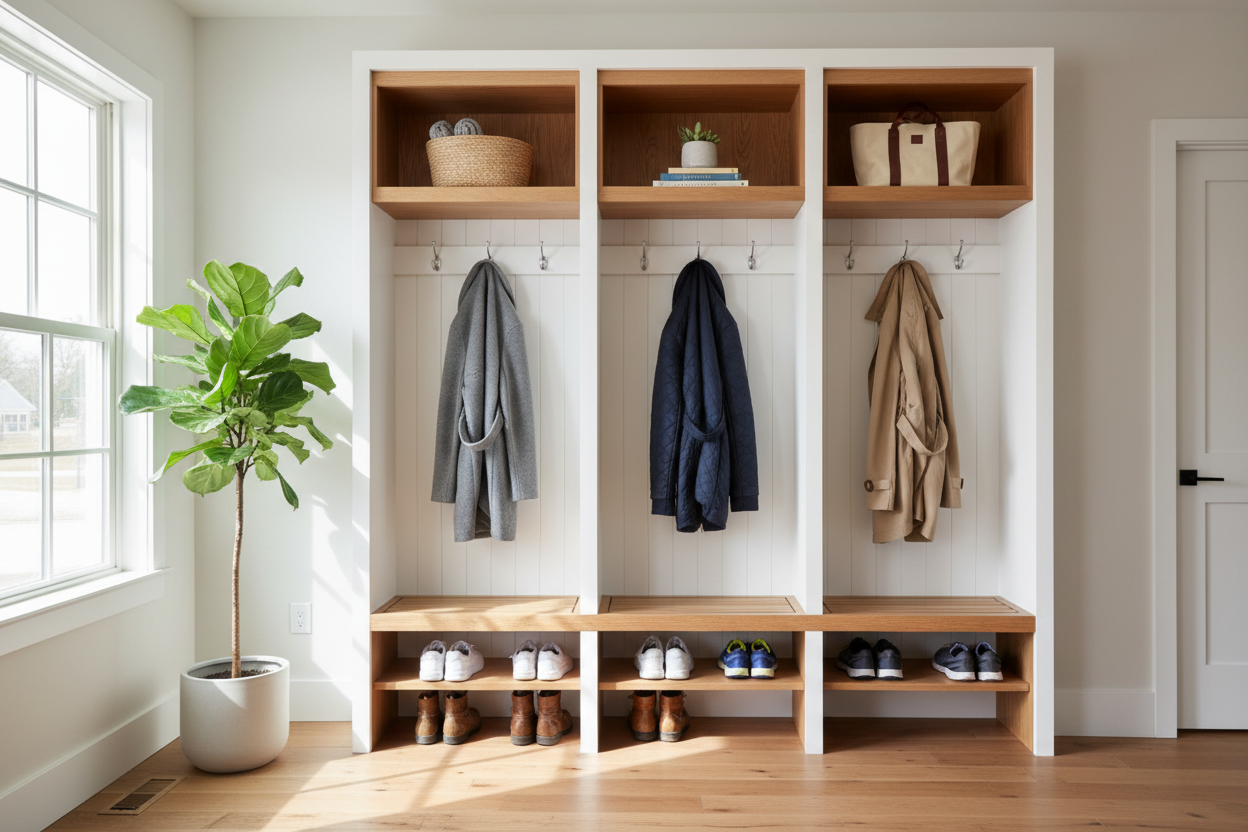
The foyer is the handshake of the home, yet it is often the most chaotic transition zone. You walk in, keys drop, coats land on the banister, and shoes pile up in a tripping hazard. The solution isn't just more bins; it is structural organization. A well-designed entryway locker brings architectural weight to a space while solving the clutter crisis. However, selecting the right unit requires more than just measuring width—it demands an understanding of ergonomics, material resilience, and visual weight.
Quick Decision Guide: Key Features to Look For
- Depth Considerations: Standard depth is 15-18 inches. Anything deeper than 20 inches will encroach on hallway flow; anything shallower than 12 inches won't hold a standard adult shoe.
- Bench Integration: An entryway locker with bench is essential for ergonomics. Look for a seat height of 18-20 inches.
- Material Durability: For high-traffic zones, opt for solid wood or high-pressure laminate (HPL) on the bench seat. Painted MDF will chip under the weight of metal zippers and wet boots.
- Hardware Quality: Ensure hooks are double-pronged and anchored into solid backing, not just thin paneling.
Mastering the Layout: Hallway Lockers for Home
When planning for lockers for entryway placement, the vertical volume is just as critical as the footprint. These are tall, imposing pieces of furniture. If you have 8-foot ceilings, a unit that stops at 6 feet can look stunted and unfinished. In these cases, I always recommend adding baskets or a top shelf to bridge the gap toward the ceiling, creating that coveted built-in aesthetic.
The "Mudroom" Effect in Tight Spaces
You do not need a dedicated room to have a mudroom. Entryway storage lockers can define a zone within an open floor plan. If you are working with a narrow corridor, look for hallway locker storage that utilizes verticality over depth. A recessed toe-kick is a subtle detail that allows you to stand closer to the unit without stubbing your toes, making the hallway feel wider than it actually is.
Materiality and Aesthetics
The difference between a locker that looks like a high school gym and one that looks like custom millwork lies in the finish and hardware. For a sophisticated look, avoid high-gloss metals. Instead, opt for an entryway locker cabinet in matte finishes—charcoal, sage green, or deep navy—paired with brushed brass or oil-rubbed bronze hardware.
The Bench Configuration
An entryway bench locker serves a dual purpose: storage and seating. The visual balance here is key. If the locker creates a "tower" on both sides of the bench, ensure the connecting bridge (the shelf above the bench) is substantial enough to tie the two sides together. This prevents the piece from looking like two separate wardrobes pushed against a wall.
Functionality: Hooks vs. Cubbies
In my design practice, I often see clients torn between open hooks and closed doors. An entryway locker system with doors offers a cleaner look (hiding the visual noise of colorful coats), but open lockers encourage use. Children, in particular, are less likely to open a door to hang a coat. A hybrid approach often works best: open hooks for daily wear, and upper closed cabinets for off-season storage.
Lessons from My Own Projects: The "Wet Boot" Reality
I learned a hard lesson early in my career while designing foyer lockers for a client in the Pacific Northwest. We installed a stunning, custom-painted unit with a matching painted bench seat. It looked editorial-ready on installation day.
Six months later, I returned for a follow-up. The vertical cabinetry was pristine, but the bench seat was a disaster. The grit from hiking boots and the moisture from raincoats had worn through the paint finish, leaving raw MDF exposed. It ruined the luxury feel entirely. Since then, my rule is strict: regardless of the cabinet color, the horizontal seat of any entryway locker storage unit must be a natural, sealed hardwood (like white oak or walnut) or a stone composite. It adds warmth, texture, and most importantly, it can take a beating without looking worn out.
Conclusion
Investing in entry way lockers is about reclaiming the serenity of your home's entrance. By prioritizing the right depth, durable materials for the seating area, and a style that complements your architecture, you turn a clutter magnet into a design statement. Measure twice, prioritize the bench material, and choose a layout that serves your lifestyle.
Frequently Asked Questions
What is the ideal depth for an entryway locker?
Ideally, you want between 15 and 18 inches. This accommodates coat hangers and shoe storage without protruding too far into the traffic path. If you choose a unit deeper than 20 inches, it may feel overwhelming in a standard hallway.
Should I choose open or closed lockers for a small foyer?
For small spaces, closed entryway storage locker units can sometimes make the room feel smaller and boxy. Open lockers with a bench create depth and visual airiness, though they require you to keep the contents relatively tidy.
How do I prevent my entryway locker from tipping over?
Because these units are tall and front-heavy (especially when loaded with coats), anchoring is non-negotiable. Always locate the studs in your wall and secure the unit at the top using heavy-duty L-brackets or a French cleat system.


Leave a comment
This site is protected by hCaptcha and the hCaptcha Privacy Policy and Terms of Service apply.