










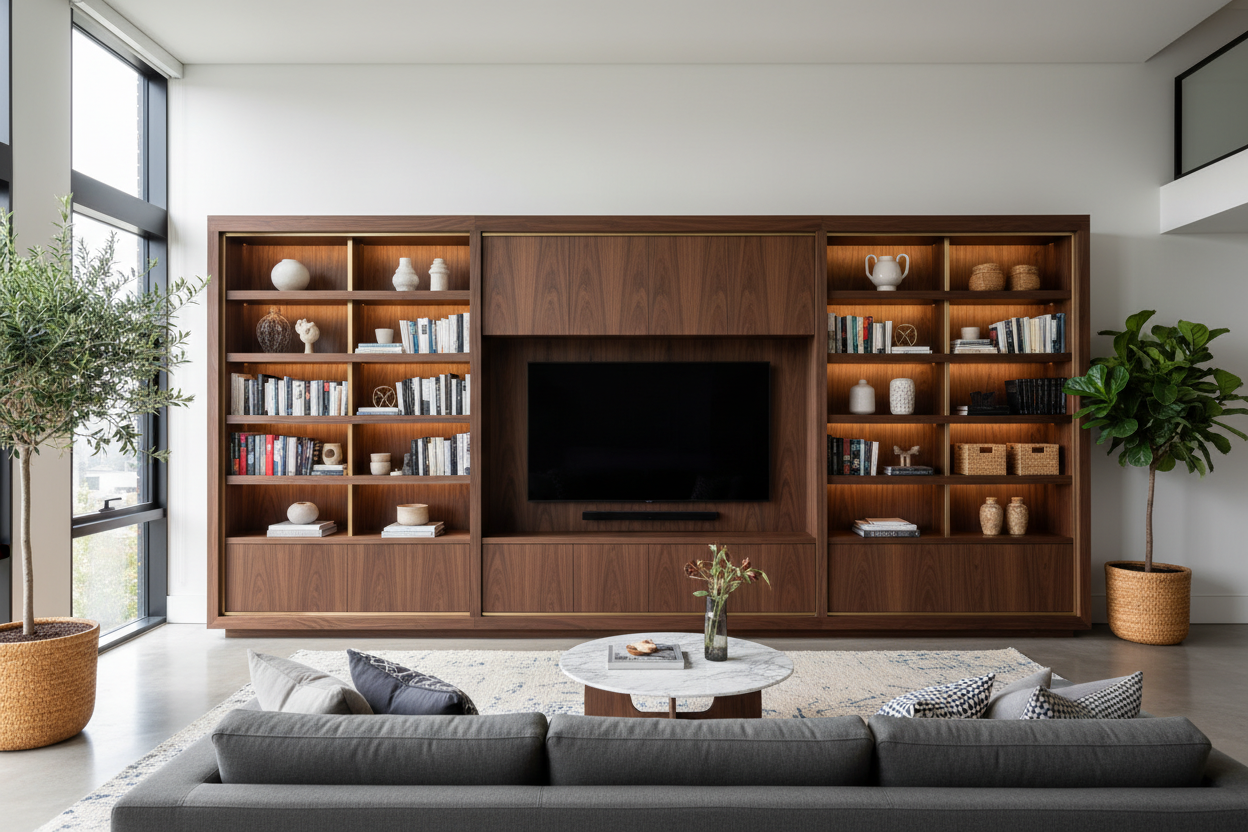
I spent three years staring at a TV that seemed to be hovering just inches above the floor on a particle board plank. It was fine for my first apartment, but in a real living room, it looked like a mistake. I finally swapped it for a proper cabinet for television, and honestly, I should have done it years ago. There is something about a substantial piece of furniture that makes a room feel finished rather than just 'furnished for now.'
- Standard low stands often leave too much dead space on your walls.
- A taller cabinet grounds the room and improves viewing angles.
- Enclosed storage is the only real way to hide the 'spaghetti' of tech cords.
- Solid wood options last a decade, while particle board sags under heavy screens.
The Problem With the 'Standard' Low-Profile Media Console
Most big-box retailers push these long, low-profile stands that sit about 18 inches off the ground. In a showroom, they look sleek. In a real home with 9-foot ceilings, they create what I call the 'bowling alley' effect. All your furniture is hugging the floor, leaving a massive desert of empty drywall above the screen. It makes the room feel squat and unfinished.
I realized that by keeping everything so low, I was actually making my small living room feel smaller. The eye just stops at the TV and stays there. Switching to a modern wall cabinet for living room storage changed the verticality of the space. It draws the eye up and fills that awkward gap between the floor and the ceiling, making the architecture of the room feel intentional.
Why a Cabinet for Television Fixes Your Room's Proportions
Proportion is everything. A 65-inch television is a massive black rectangle; if you put it on a spindly, lightweight stand, the whole setup looks top-heavy. You need a base with some visual weight to anchor that screen. A real cabinet provides depth—usually 16 to 20 inches—which gives the room a sense of permanence.
I've learned the hard way that cheap materials don't hold up to the heat and weight of modern tech. I once had a 'media center' that sagged nearly half an inch in the middle because the 1.5 lb density fiberboard couldn't handle a basic soundbar. Investing in a solid wood modern sideboard gives you a sturdy platform that won't warp or wobble when you walk past it.
How a Real Cabinet for TV Solves the Cord Chaos
Let's talk about the 'spaghetti'—that tangled mess of HDMI cables, power strips, and router wires that collects dust behind your TV. Open-shelf stands are a nightmare for anyone with even a hint of clutter anxiety. A proper cabinet for tv use allows you to shove all that chaos behind closed doors.
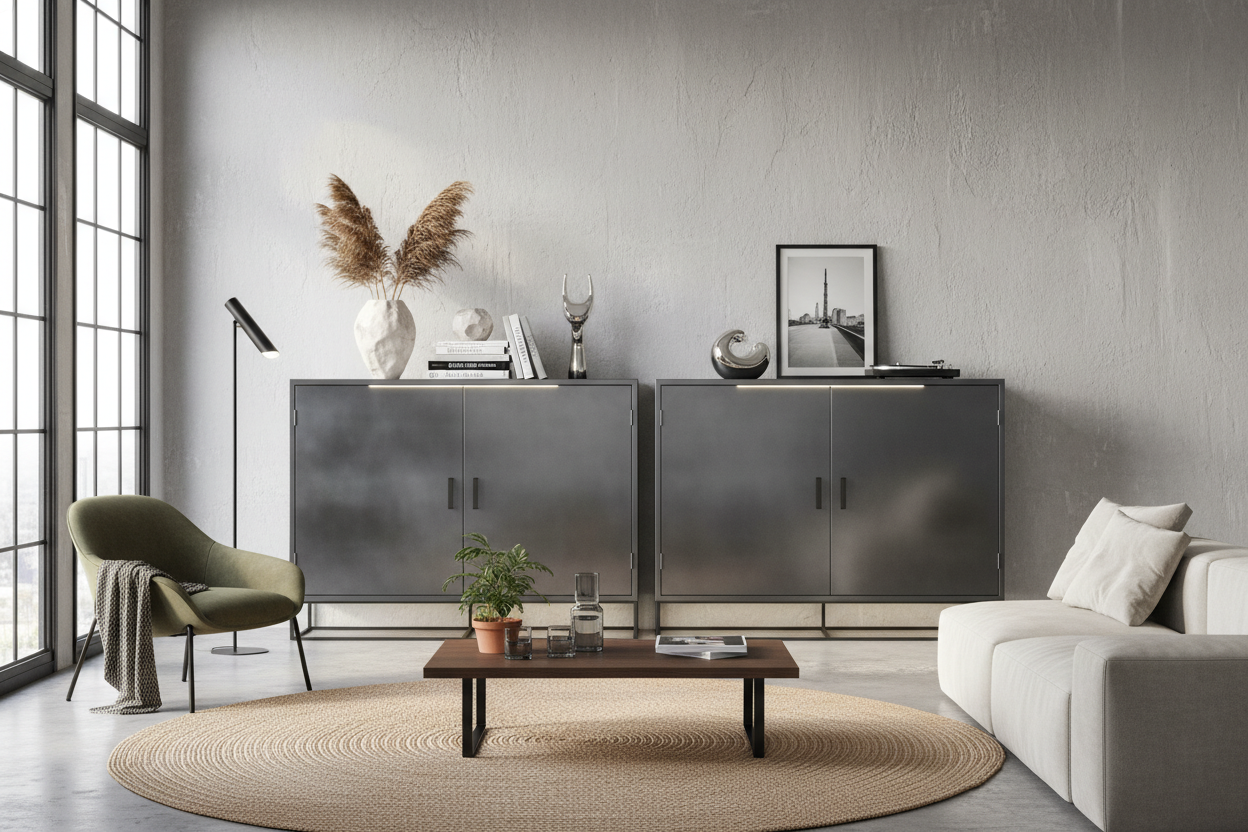
I use a large sideboard display buffet in my current setup. It has enough internal clearance to house my PlayStation, a mesh router, and a bulky surge protector without anything being visible from the sofa. Pro tip: if your cabinet doesn't have a pre-drilled hole in the back, a $10 hole saw attachment for your drill will fix that in thirty seconds. Just make sure you leave a little breathing room for heat-sensitive electronics like gaming consoles.
Styling the Top So It Doesn't Just Look Like a Tech Shrine
The goal is to make the TV part of the room, not the center of the universe. When you have a wide, flat surface on a cabinet, you can layer in decor that softens the tech. I like to place a tall vase on one side and a stack of coffee table books on the other. It breaks up the harsh horizontal line of the screen.
If you want the TV to disappear when it is off, consider a black cabinet with glass doors. The dark finish camouflages the black screen, making the whole unit look like a sophisticated library piece. For more specific layout ideas, I wrote a guide on how to style a display cabinet tv stand so it looks like a professional designer staged it.
The Verdict: Was the Floor Space Worth It?
People worry that a larger cabinet will 'eat' the room. In my experience, the opposite is true. Because the cabinet hides the clutter and fills the wall space properly, the room actually feels more organized and spacious. I traded a wobbly, cheap stand for a piece of furniture I’ll keep for ten years. The stability alone—knowing my TV won't tip if someone bumps the table—was worth every penny.
FAQ
How high should a TV cabinet be?
Ideally, you want the center of the screen at eye level when you are sitting on your sofa. For most people, that means a cabinet height between 24 and 30 inches, depending on how deep your cushions are.
Will my electronics overheat inside a closed cabinet?
If you're running a high-powered gaming console, you need airflow. I usually leave the cabinet door cracked an inch during long gaming sessions or remove the thin plywood back panel entirely to let heat escape.
Can I use a dining sideboard as a TV cabinet?
Absolutely. In fact, sideboards are often built better than 'media units' because they are designed to hold heavy sets of china. Just check the height to ensure you aren't craning your neck.


Leave a comment
This site is protected by hCaptcha and the hCaptcha Privacy Policy and Terms of Service apply.