










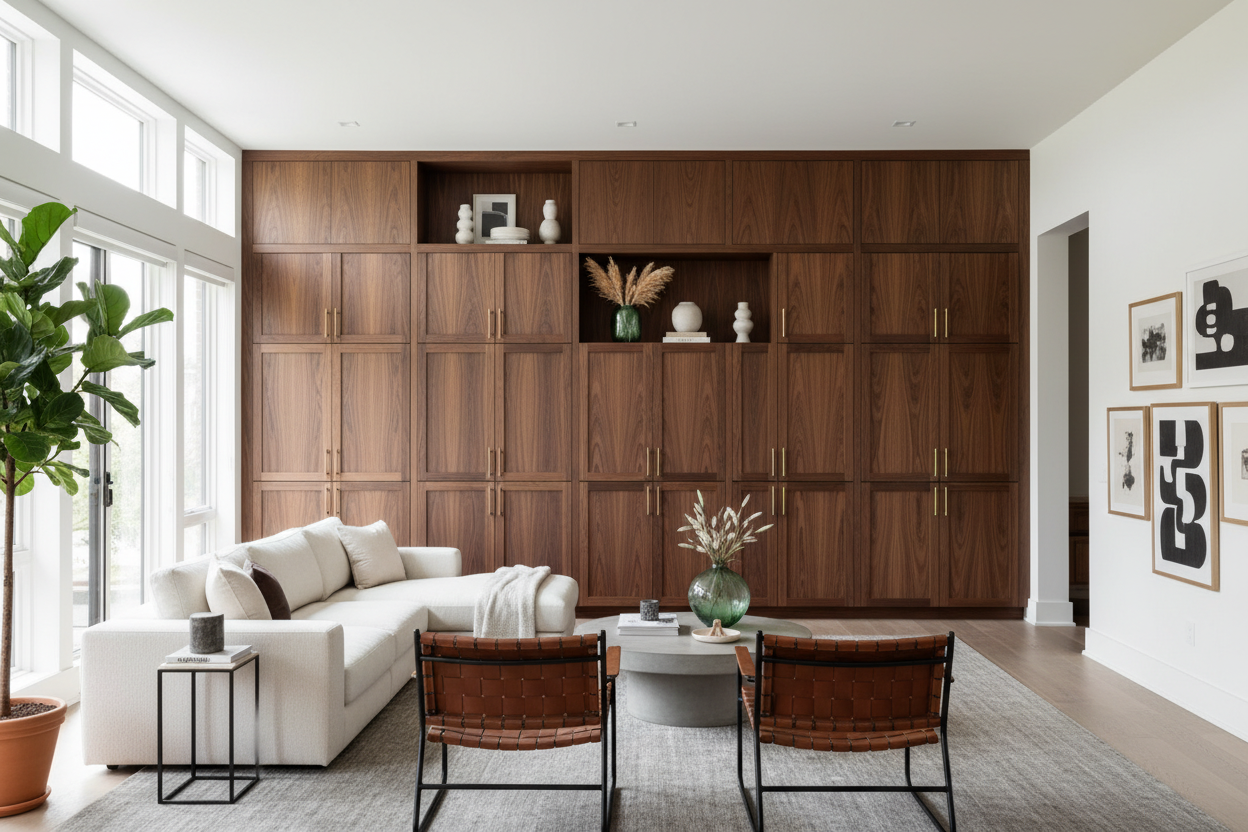
I have spent way too many late nights staring at 47 open browser tabs of sideboards and consoles, trying to figure out why my living room still feels like a cluttered mess. The culprit is almost always the same: we are buying furniture that is too shallow. You find a gorgeous piece online, it arrives, you go to put your favorite board games or that bulky air fryer inside, and the doors simply won't shut. You’re left with a half-inch gap that mocks your life choices.
The industry has a weird obsession with 12 to 15-inch depths. It looks sleek in a staged photo, but in a real house where people actually live, it is practically useless. That is why I have become an evangelist for the 20 inch deep storage cabinet. It is the secret weapon of functional interior design that nobody talks about because it is not as 'dainty' as a toothpick-legged console.
- Standard 15-inch cabinets are too shallow for most board games and kitchen appliances.
- A 20-inch depth fits oversized items without protruding too far into the room.
- Anything deeper than 24 inches becomes a 'black hole' where items are lost forever.
- Visual weight can be balanced by choosing pieces with legs or glass doors.
The Frustrating Reality of the 15-Inch Standard
Most 'stylish' furniture you see on Instagram is built for a world where people only own three paperbacks and a single ceramic vase. These pieces are usually 12 to 15 inches deep. While that works for a hallway where you just need to drop your keys, it fails miserably the moment you try to store real-life objects. I have seen so many people try to cram a standard 12x12 record sleeve into a 13-inch cabinet, only to realize the hinges take up an inch of space and the door won't latch.
It is not just about the items not fitting; it is about the visual frustration. When your storage is too shallow, you end up 'tetris-ing' your belongings. You’re stacking things vertically that should be horizontal, or you’re leaving items on the counter because they simply won't go away. We need to stop pretending that 14 inches of depth is enough for a household that actually functions.
Enter the 20 Inch Deep Storage Cabinet (The Goldilocks Zone)
The 20 deep storage cabinet is the holy grail of furniture dimensions. It is exactly five inches deeper than the standard, and those five inches change everything. It is deep enough to swallow a stack of oversized hoodies, a professional-grade blender, or a massive collection of board games, yet it doesn't feel like a massive wardrobe eating up your floor plan. It sits comfortably against a wall without making a standard 12x14 room feel cramped.
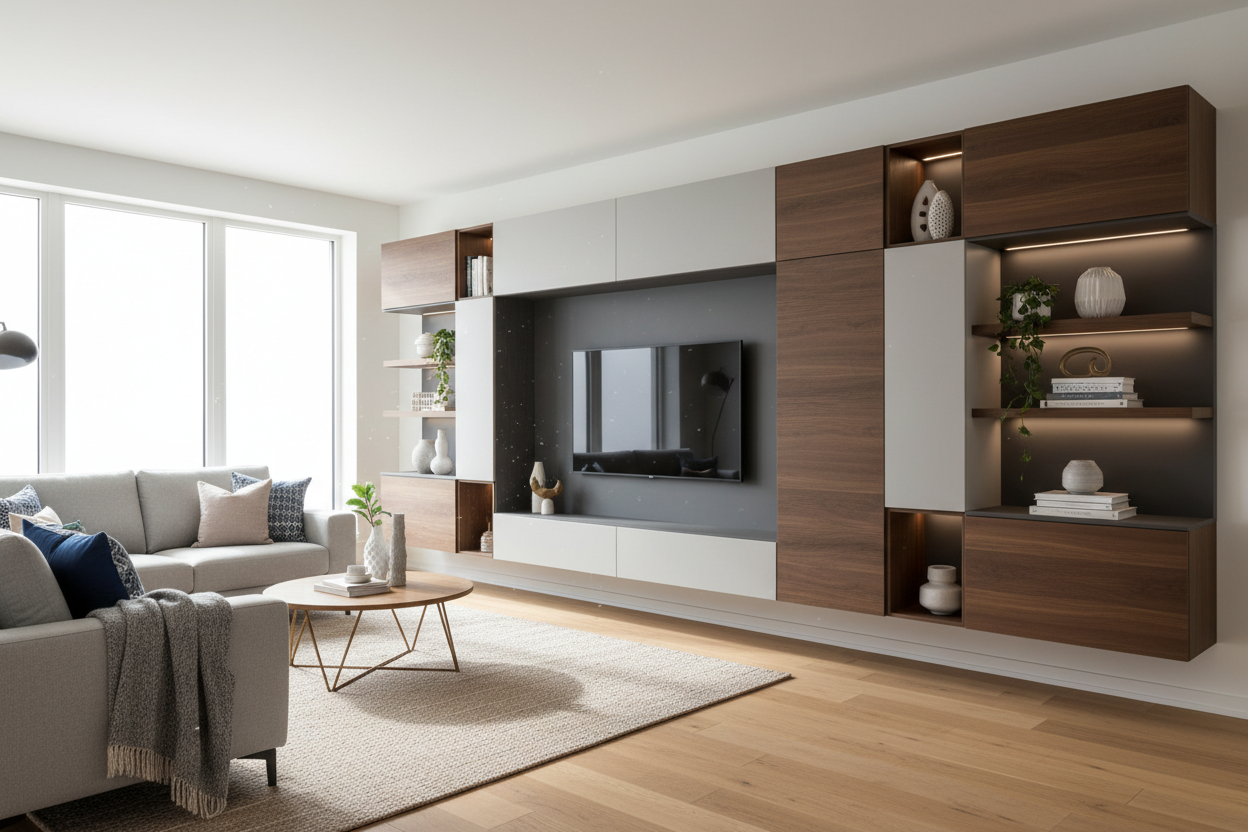
If you are worried about a deeper piece feeling too heavy in a small space, look for something with height and light colors. For example, a bright white storage cabinet with drawers can provide massive utility in an entryway or mudroom without feeling like a giant block of wood. The extra depth allows for drawers that actually pull out far enough to see what is in the back, which is a luxury you don't get with shallow pieces.
What Actually Fits in a 20 Deep Storage Cabinet?
If you are wondering why those extra few inches matter, here is the rapid-fire list of things that fit comfortably in a 20-inch depth but struggle in a 15-inch one:
- Standard board game boxes (like Ticket to Ride or Catan) placed flat.
- A KitchenAid stand mixer (usually 14-15 inches deep, needing breathing room).
- Vinyl record crates with the sleeves facing forward.
- Oversized coffee table books that usually hang off the edge of bookshelves.
- Large storage bins from Target or IKEA that are 18 inches deep.
Why You Shouldn't Go Any Deeper Than This
You might be thinking, 'If 20 inches is good, isn't 24 or 30 inches better?' Absolutely not. This is where you hit the 'black hole' effect. Standard kitchen base cabinets are 24 inches deep, and we all know what happens there—you find a jar of pesto from 2019 because it got pushed to the back. In a living room or bedroom, deep storage is a trap that creates more clutter than it solves.
Once you go past 20 inches, you start needing to unstack three rows of items just to find one cord or one specific book. It becomes a chore to keep organized. 20 inches is the limit because you can still reach the back of the shelf comfortably without needing to move everything in front. It keeps your items accessible while still hiding the bulk.
How to Style These Chunkier Pieces So They Don't Look Like Refrigerators
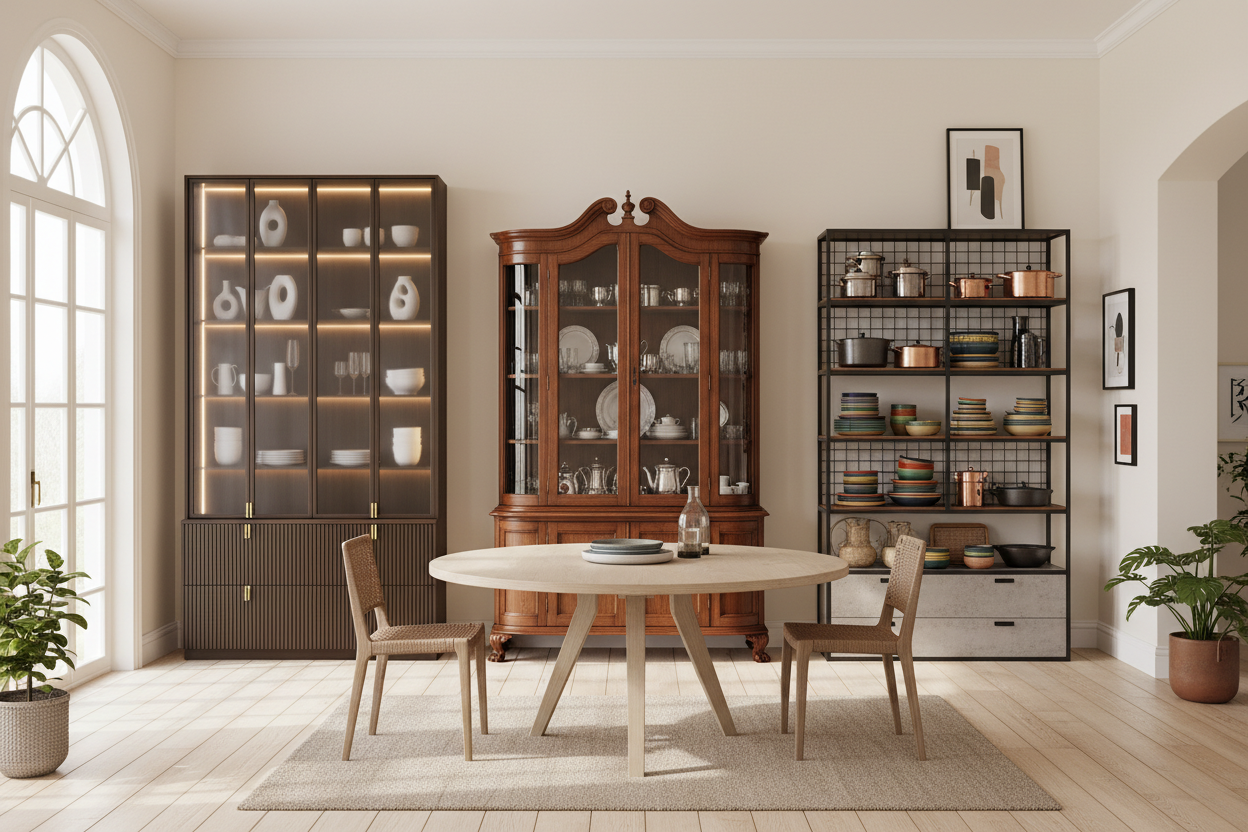
The main complaint about deeper furniture is that it can look 'heavy.' If you put a solid wood, 20-inch deep block on the floor, it’s going to look like a mini-fridge. To fix this, you need to play with visual weight. Look for pieces with 'legs'—even just 4 to 6 inches of clearance off the floor makes a deep cabinet look like it is floating, which lightens the entire room.
Another trick is to use transparency. A black cabinet with glass doors provides that 20-inch depth you need for storage but breaks up the solid mass with windowpane fronts. You get the function of a deep unit with the airy feel of a display case. It’s the easiest way to hide your 'ugly' storage in baskets on the bottom shelves while keeping the top looking curated.
My Personal Lesson in Depth
I once bought a gorgeous mid-century sideboard that was only 14 inches deep. I loved it—until I tried to put my printer inside. The printer fit, but the power cord stuck out the back, meaning I couldn't push the cabinet flush against the wall. I ended up with a 3-inch gap behind the furniture that just collected dust and cat toys. I eventually swapped it for a 20-inch unit, and suddenly, the printer, the paper, and all the ugly tech cords disappeared completely. I lost 6 inches of floor space, but I gained a room that actually looked clean.
Frequently Asked Questions
Will a 20-inch cabinet block my hallway?
Standard hallways are 36 inches wide. A 20-inch cabinet leaves you 16 inches of walking space, which is too tight. Keep these pieces in living rooms, bedrooms, or wide entryways where you have at least 48 inches of total width to work with.
Do I need to anchor a 20-inch deep cabinet to the wall?
Yes. Even though they are deeper and theoretically more stable than shallow pieces, any cabinet over 30 inches tall should be anchored, especially if you’re loading it with heavy items like mixers or books.
Can I use a kitchen cabinet as a 20-inch storage solution?
Most kitchen cabinets are 24 inches deep, but you can find 'vanity' depth cabinets that are 21 inches. They work great, but you’ll often have to add your own decorative top and legs to make them look like furniture rather than a kitchen leftover.

Leave a comment
This site is protected by hCaptcha and the hCaptcha Privacy Policy and Terms of Service apply.