










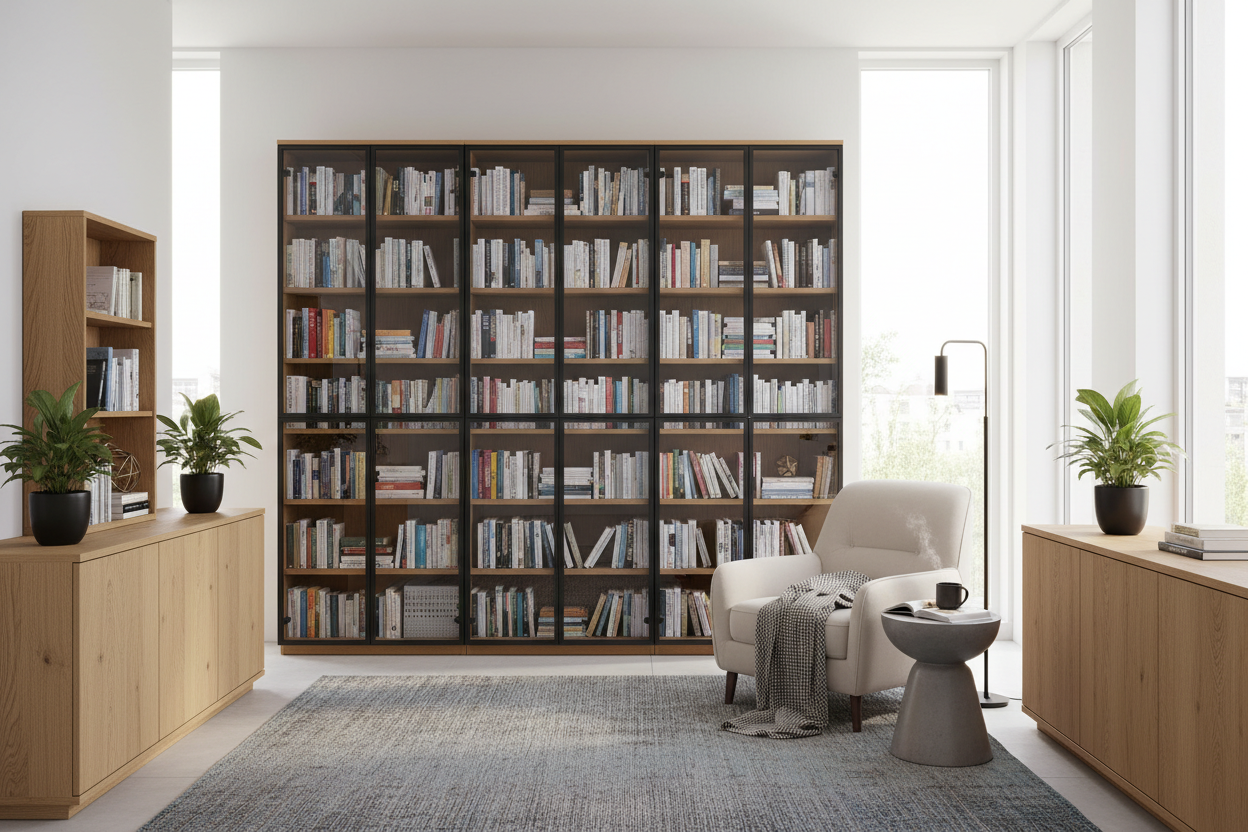
Open shelving has dominated interior design trends for years, offering that breezy, accessible look we see in magazines. But anyone who actually lives with a substantial collection of books knows the dirty secret of open shelves: the dust. If you are tired of spending your weekends wiping down individual spines or watching your favorite hardcovers turn gray along the top edge, an enclosed bookcase is the only logical evolution for your home library. It shifts the focus from constant maintenance to actual preservation, creating a micro-environment that keeps your collection crisp, clean, and safe from household hazards.
I learned this lesson the hard way after moving into a pre-war apartment with drafty windows and a very fluffy cat. For years, I relied on standard open pine shelving. I noticed that my vintage paperbacks were starting to warp slightly from the humidity fluctuations, and the amount of pet dander settling on the rough deckle edges of my hardcovers was heartbreaking. Switching to a barrister-style unit completely changed my relationship with my collection. I wasn't just storing books anymore; I was curating them. The barrier provided by the glass meant I could stop worrying about the cat clawing the spines or the city grit settling on the pages. It turned a chaotic pile of paper into a protected exhibit.
The Functional Benefits of Enclosed Book Storage
Beyond the obvious reduction in dusting duties, putting your library behind doors offers significant protection against environmental stressors. Paper is organic; it reacts to its surroundings. An enclosed book storage solution acts as a buffer against rapid changes in temperature and humidity, which are the primary causes of foxing (those brown spots on old paper) and warping. While a cabinet isn't a humidor, it stabilizes the air around the books much better than an open shelf exposed to an AC vent or a radiator.
Pests are another often-overlooked threat. Silverfish and booklice thrive in dark, dusty, undisturbed corners. By sealing off the entry points, you make it significantly harder for these insects to set up camp in your bindings. If you have pets, the benefits are even more immediate. A solid enclosed bookcase cabinet stops a chewing puppy or a scratching cat dead in their tracks, ensuring your first editions don't become chew toys.
Choosing the Right Style for Your Space
When you start shopping, you will quickly realize that "enclosed" doesn't mean monolithic. The market is full of variations that suit different aesthetic preferences and spatial constraints. The most classic option is the barrister bookcase. Originally designed for traveling lawyers, these feature modular sections with glass doors that lift up and slide back. They are fantastic because you can add height over time as your collection grows, and the mechanism is incredibly satisfying to use.
For a more modern or farmhouse aesthetic, you might look for a single-piece cabinet with hinged glass doors. These often provide a clearer view of the contents since they lack the heavy horizontal lines of modular units. If you have a particularly valuable collection or messy items you want to hide, consider a hybrid enclosed bookcase cabinet. These usually feature solid wood doors on the bottom half for storing unsightly items—like board games, cables, or paperwork—while the top half features glass panes for displaying your best reads.
Solutions for Tight Quarters
Living in a smaller footprint doesn't mean you are resigned to wall-mounted floating shelves. A small enclosed bookcase can actually make a room feel larger. Glass reflects light, and being able to see through the doors prevents the piece from feeling like a heavy block of wood eating up the room's volume. Look for "curio" style cabinets or narrow towers. These vertical units utilize height rather than floor width, giving you ample storage without encroaching on your walking paths.
When placing a unit in a small room, consider the door swing. Standard hinged doors require clearance to open fully. If space is at a premium, sliding doors are a lifesaver. They glide horizontally, meaning you can place a coffee table or armchair just inches away from the bookcase without blocking access to your novels.
Glass Options and UV Protection
Not all glass is created equal. If your library room gets a lot of natural sunlight, standard glass panes might not be enough. UV rays are the enemy of book covers, causing vibrant reds and blues to fade into a dull wash within a few years. Many high-end enclosed bookshelves now come with UV-filtering glass, similar to museum glazing. If you find a vintage piece you love that lacks this feature, you can easily apply a clear UV-blocking window film to the glass panels yourself. It is an inexpensive hack that adds decades to the life of your book jackets.
For those who find clear glass too revealing—perhaps your book collection is well-loved and tattered rather than pristine—textured or seeded glass offers a compromise. It obscures the details of the contents while still keeping the airy feel of glass. This allows you to treat the bookcase as storage rather than a display case, reducing the pressure to color-code your spines or arrange everything by height.
Styling Your Cabinet
Because an enclosed case frames your books, how you arrange them matters more than on an open shelf. The frame draws the eye. Avoid jamming books in cover-to-cover. Leave some breathing room. Alternate between vertical stacking and horizontal piles to create visual interest. You can use the protected space to display other delicate items alongside your books, such as dried flowers, vintage cameras, or fragile pottery that would otherwise be at risk on an open surface.
Lighting can also elevate the look. Since the cabinet is enclosed, it can become a bit dark inside. installing simple battery-operated puck lights or LED strips under the shelves can turn your library into a glowing focal point in the evening. This creates a cozy atmosphere and highlights the titles you are most proud of.
Maintenance and Care
While you won't be dusting the books often, you will need to clean the glass. Use a microfiber cloth and an ammonia-free cleaner to avoid damaging the wood finish surrounding the panes. If you choose a unit with sliding doors, keep the tracks free of grit to ensure they glide smoothly. Occasionally, open the doors on a dry, breezy day to let the air circulate. While protection is good, you want to ensure stale air doesn't get trapped inside indefinitely, especially if you live in a high-humidity climate.
Investing in enclosed storage is eventually a commitment to the longevity of your library. It signals that these objects are valuable to you, worthy of protection, and meant to be kept for the long haul. Whether you choose a sleek modern metal cabinet or a heavy antique oak case, the result is a cleaner, safer, and more beautiful home for your stories.
Frequently Asked Questions
Do enclosed bookcases trap humidity and damage books?
They can if placed in a damp environment, but generally, they stabilize humidity rather than trap it. To be safe, avoid placing the bookcase against a damp exterior wall and open the doors occasionally on dry days to allow for air exchange.
Is tempered glass necessary for bookshelf doors?
Tempered glass is highly recommended for safety, especially if you have children or pets, as it shatters into dull pebbles rather than jagged shards if broken. However, standard glass is common in vintage pieces and is fine for adult-only households if treated with care.
Can I convert an open bookshelf into an enclosed one?
Yes, adding doors to an open unit is a common DIY project, though it requires precise measuring and hinge installation. Alternatively, you can install tension rods with fabric curtains for a "soft" enclosed look that protects against sunlight and some dust, though it won't offer the same level of seal as wood or glass doors.

Leave a comment
This site is protected by hCaptcha and the hCaptcha Privacy Policy and Terms of Service apply.