










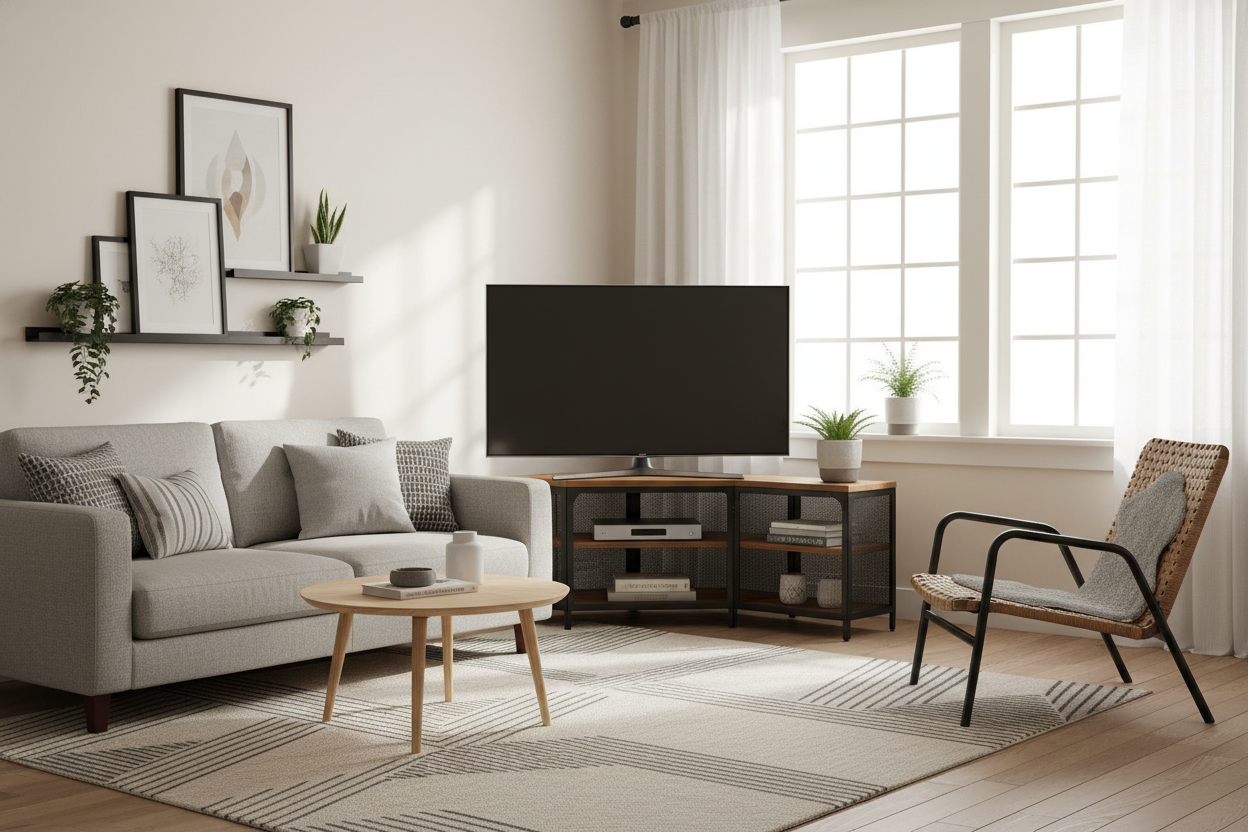
I have lived in five apartments in six years. Each one had a 'problem corner'—usually a spot where a radiator, a window, and a door frame converged to make a standard TV setup feel like a puzzle with missing pieces. I spent weeks staring at 47 tabs of mid-century consoles that would never fit before I finally gave in and looked at a corner entertainment center ikea offered. I used to think corner units were for dorm rooms, but I was wrong.
Quick Takeaways
- Corner units reclaim floor space that usually goes to waste in L-shaped rooms.
- The 'dead zone' behind the unit is actually a goldmine for hiding messy cable bundles.
- Always measure your TV's actual width, not the screen size, to avoid awkward overhang.
- Factory finishes on these units are surprisingly durable if you skip the DIY paint jobs.
The Moment You Realize a Flat Console Won't Work
We’ve all tried it. You buy that beautiful 70-inch linear console, center it on the only long wall you have, and then realize your sofa has to be shoved against the kitchen island for you to actually see the screen. It ruins the flow of the room and makes your living space feel like a waiting room. In my last place, the fireplace was so off-center that a standard console blocked the main hallway entirely. I was literally shimming past my TV to get to the bathroom.
That's when the realization hits: you aren't failing at interior design; you're just fighting the geometry of your house. Moving the TV to the corner opens up the entire floor plan. It stops the furniture from 'clinching' the room and allows for a much more natural conversation circle around a coffee table.
Why Finding a Corner Entertainment Center IKEA Makes Is So Hard
If you search the IKEA catalog for 'corner TV stand,' you might be disappointed. They don't always label them that way because they prefer modular systems. The stigma is that corner units look like bulky, honey-oak relics from a 1994 basement. But if you look at the BESTÅ or even some of the HEMNES configurations, you can find pieces that tuck into a 90-degree angle without looking like a heavy triangle of particle board.
The trick is finding a unit with a narrow enough footprint that it doesn't jut out four feet into the room. Most people make the mistake of buying something too deep. You want a unit that hugs the walls, providing just enough surface area for the TV base while keeping the floor clear for your rug and walking paths.
The Measurements You Cannot Afford to Guess
Measurement error is the death of small-space design. When shopping for a corner entertainment stand ikea sells, you need to measure the distance from the corner to the nearest door frame or window on both walls. Don't just guess. If your TV is a 55-inch model, the actual width is usually around 48 inches. If your unit is only 40 inches wide, those screen edges are going to hang over into empty space, which looks cheap and is a magnet for getting bumped by a vacuum.
How to Style a Corner Entertainment Stand IKEA Sells
The beauty of an angled unit is the 'triangle of silence' behind it. This is where you hide the power strips, the router, and that tangled mess of HDMI cables that usually ruins the vibe. Use adhesive cable clips along the back of the IKEA unit to keep everything tight. Because the unit is angled, you have more depth in the center than a flat console, making it perfect for deeper components like older gaming consoles or bulky receivers.
When it comes to the top, keep it minimal. The angle already creates a lot of visual lines. If you pile it high with photos and candles, it starts to look like a shrine. A single medium-sized plant or one stack of coffee table books is enough. You want the unit to disappear into the corner, not scream for attention.
A Warning Before You Try to Customize It
I know the 'IKEA Hack' TikToks make it look easy. You think you’ll just sand down the laminate, slap on some sage green paint, and add brass legs. Stop. I actually regret hacking my IKEA entertainment stand because the structural integrity of these angled units depends on the factory tension. Once you start drilling new holes for fancy legs or using heavy wet paint on particle board, the whole thing can start to sag or wobble.
If you want a custom look, change the knobs or add a glass top. Don't mess with the geometry. These pieces are engineered to hold the weight of a TV at a specific balance point. If you compromise that, you’re one accidental bump away from a shattered screen.
When to Give Up on the Corner Entirely
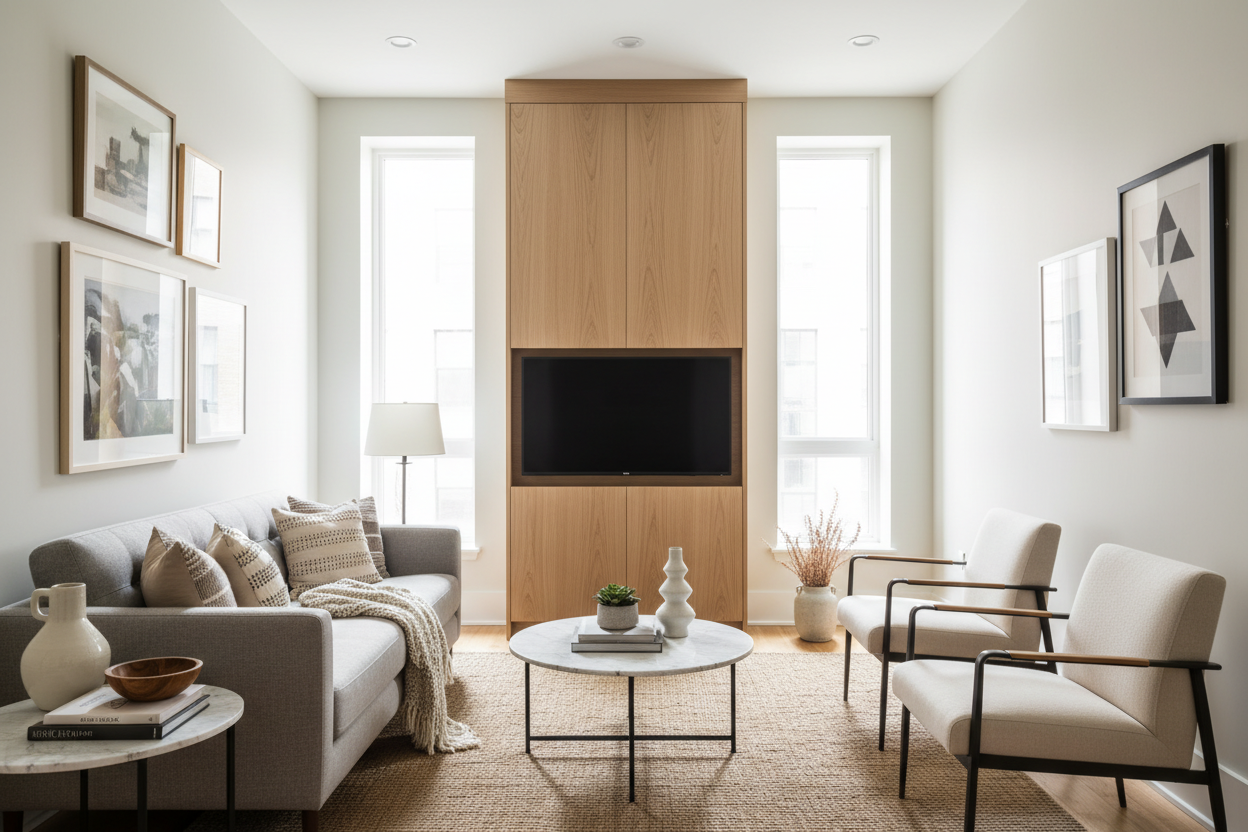
Sometimes the corner just isn't the answer. If your room is exceptionally narrow, an angled unit might actually pinch the space more than a slim flat one would. If you find that the viewing angle from your primary seat is more than 45 degrees, your neck is going to hate you within a week. In those cases, a freestanding entertainment center floated off the wall can act as a room divider, which is often a better use of space.
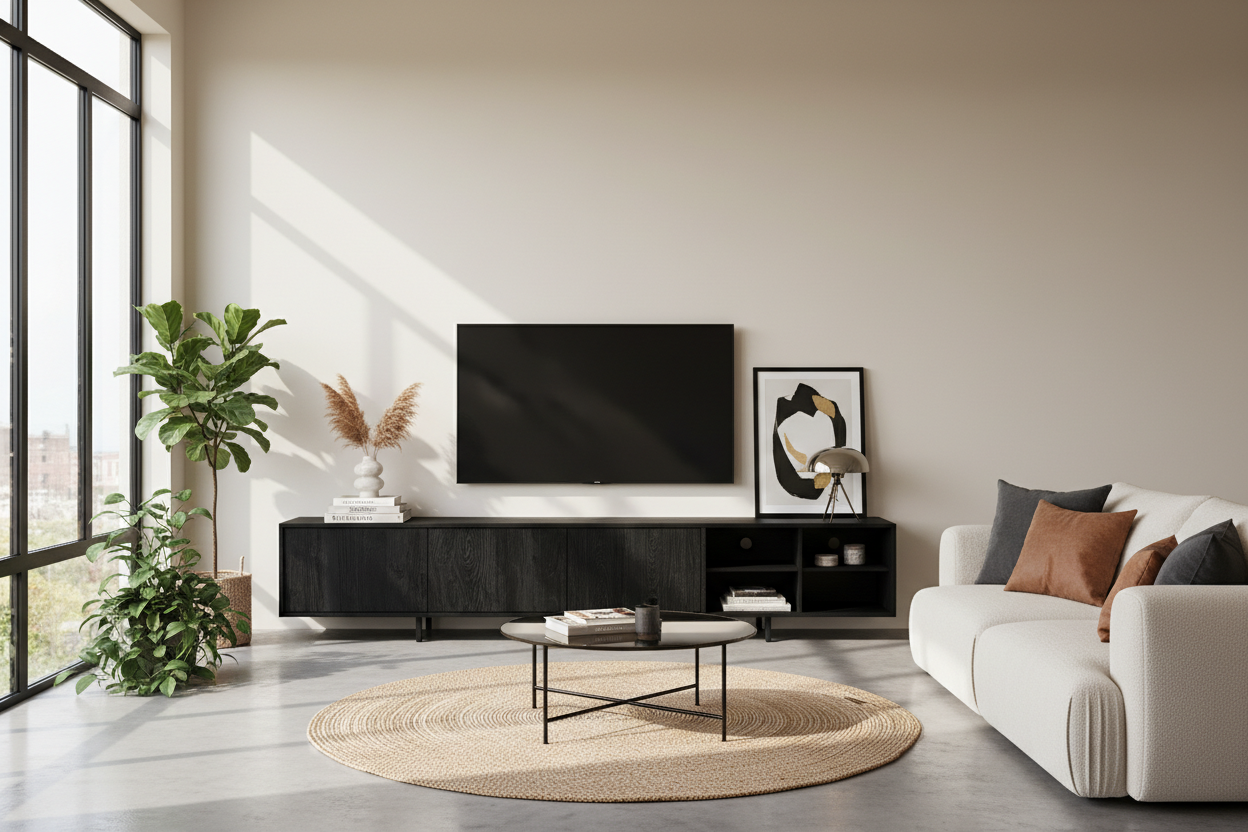
If you have a long, clear wall and the corner setup feels forced, don't be afraid to pivot. A sleek, modern black entertainment center placed on a flat wall can ground a room and provide much better storage for books and media than a corner unit ever will. Listen to your room—it usually tells you where the TV wants to go.
FAQ
Will a 65-inch TV fit on an IKEA corner unit?
Usually, no. Most dedicated corner units are designed for TVs up to 50 or 55 inches. A 65-inch screen is roughly 57 inches wide, which will likely overhang the sides and look unstable.
How do I hide the gap behind the corner stand?
You don't need to hide it! Use that space for cable management. If the gap bothers you from a side view, place a tall floor plant like a snake plant next to the unit to mask the transition.
Are IKEA corner units hard to assemble?
They are slightly more annoying than a standard dresser because of the 45-degree angles, but if you've built a BILLY bookcase, you can handle this. Just don't over-tighten the cams.

Leave a comment
This site is protected by hCaptcha and the hCaptcha Privacy Policy and Terms of Service apply.