










I used to sit on my sofa wrapped in three blankets, staring at my thermostat like it was a high-stakes poker game. It is 62 degrees in the living room, but the thought of heating the entire three-bedroom house just to watch a movie felt like lighting money on fire. That is when I finally caved and looked into fireplace television consoles.
I was skeptical at first. I thought these were just for people who live in log cabins or those weirdly staged model homes. But after a winter of shivering through 'Succession' reruns, I realized that my standard mid-century stand was doing nothing for my comfort levels or my utility bill.
Quick Takeaways
- Zone heating allows you to warm the room you are in while lowering the main thermostat.
- Integrated units are significantly safer and more stable than cheap, portable space heaters.
- Most units provide enough heat for about 400 square feet of living space.
- Modern designs effectively hide routers, consoles, and the inevitable 'cable spaghetti.'
The 'Freezing While Binge-Watching' Dilemma
There is a specific kind of misery that comes from being cold in your own home. You do not want to turn the central heat up to 72 because you know that bill is coming in three weeks. So, you grab a blanket, then another, and suddenly you are a human burrito who cannot reach the remote.
Drafty living rooms are the enemy of relaxation. I found that I was avoiding my living room entirely during January and February, retreating to my bedroom just because it was smaller and easier to keep warm. That is a lot of square footage to waste just because of a chill. I needed a localized heat source that did not look like a plastic radiator from a 1990s dorm room.
Why I Chose a Fireplace Media Cabinet Over a Space Heater
Portable space heaters are a design nightmare. They sit on the floor, you trip over the cord, and they always look like a temporary fix. When I started looking at fireplace media consoles, the appeal was the permanence. It is a piece of furniture first, and a heater second.
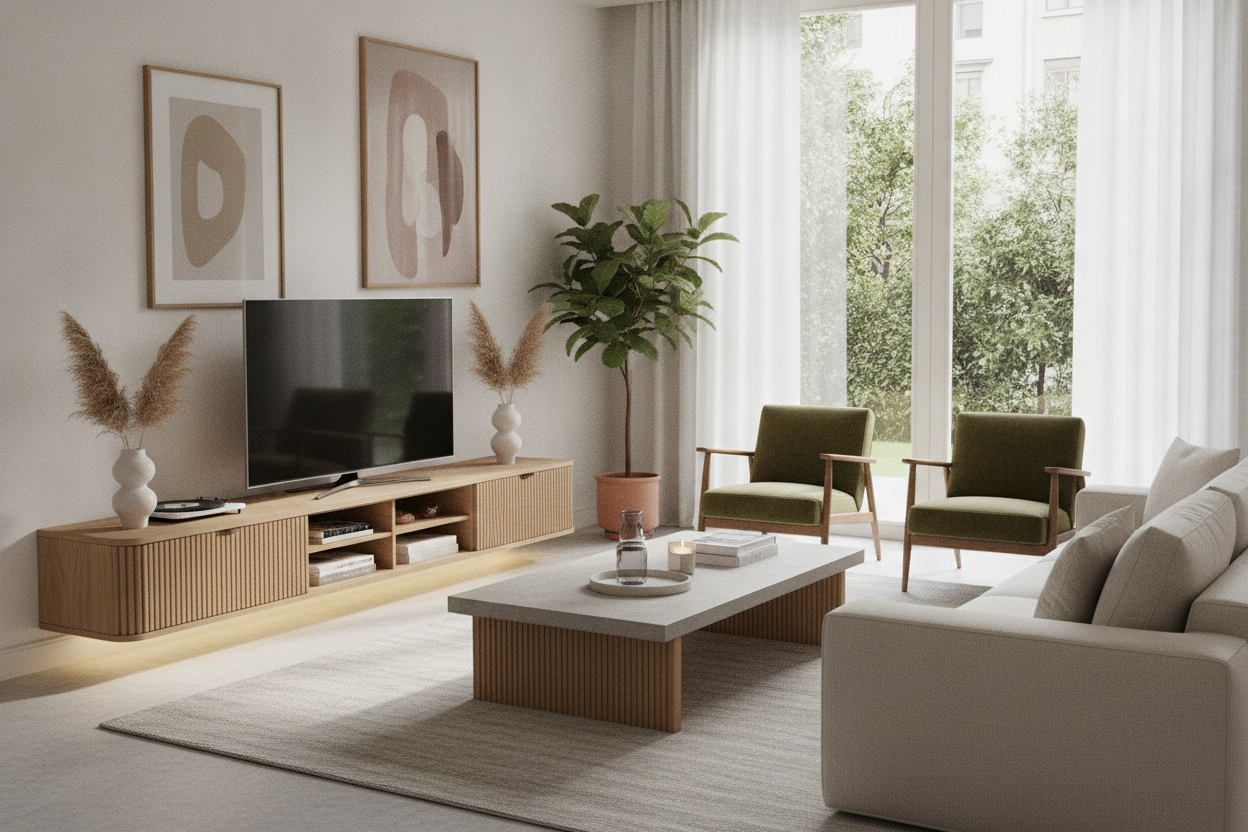
Switching from a flimsy, open-shelf stand to a substantial cabinet for television made the whole room feel anchored. A fireplace media cabinet integrates the heating element into the wood frame, so you are not losing floor space. Plus, my cat can no longer knock over a glowing orange heater while chasing a laser pointer. It is cleaner, safer, and infinitely more intentional than a standalone unit.
Do Fireplace Television Consoles Actually Put Out Real Heat?
Let’s talk numbers because 'cozy' doesn't pay the bills. Most of these units run on a standard 120V outlet and put out around 4,600 to 5,200 BTUs. In plain English: it is designed to heat a room up to 400 square feet. If you have 20-foot vaulted ceilings and a giant open floor plan, this is not going to be your primary heat source. It is a supplement.
In my 14x16 living room, it’s a powerhouse. Within fifteen minutes, the air feels noticeably crisper and warmer. I usually keep the house thermostat at 64 and let the console bring the living room up to a toasty 70. One thing I learned the hard way? Make sure you have a dedicated outlet. These draw a lot of power, and plugging one into a cheap power strip with your TV and Xbox is a recipe for a tripped breaker.
Hiding the Tech Clutter (Because Cozy Doesn't Mean Messy)
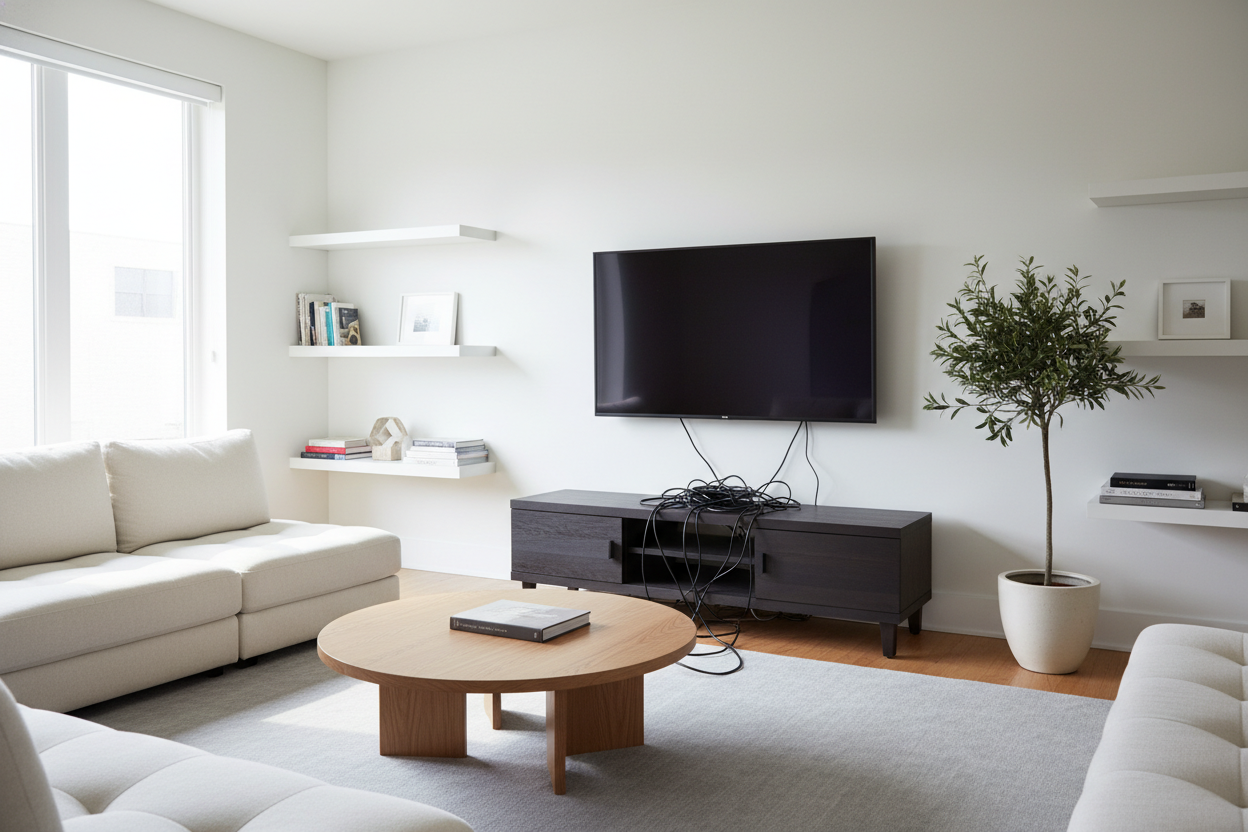
The best part about fireplace media consoles isn't actually the fire—it's the storage. My old stand was basically a glass shelf that showcased every dusty wire I owned. Most fireplace units are built with 'wire management' (aka holes in the back) and deep cabinets.
If you have a lot of gear that needs a remote signal, you might look at a black cabinet with glass doors. It keeps the dust out but lets the infrared signal through. I personally went with solid doors because I wanted the router and the messy nest of HDMI cables completely out of sight. There is something incredibly satisfying about having a flickering flame on one side and a hidden, organized tech hub on the other.
3 Things to Check Before You Hit 'Add to Cart'
First, measure your TV's actual width, not the screen size. A 65-inch TV is usually about 57 inches wide. You want at least a few inches of clearance on either side so it doesn't look top-heavy. A wide media console with electric fireplace heater is usually the best bet for larger screens because it provides a stable visual base.
Second, check the weight limit. Fireplace inserts are heavy, and adding a 60-pound TV on top requires a sturdy frame. Look for kiln-dried wood or high-density MDF; avoid the super thin particle board that bows under pressure. Lastly, look for a unit with 'flame-only' settings. Sometimes you want the vibe of a fire in July without the 5,000 BTUs of heat hitting your face.
FAQ
Can I put my TV directly on the console?
Yes, as long as you stay within the weight limit. The heat is blown outward from the front or bottom of the unit, not upward, so your electronics stay perfectly safe and cool.
Do I need a chimney or venting?
Nope. These are 100% electric. No smoke, no soot, and no carbon monoxide worries. You just plug it into a standard wall outlet and you are good to go.
Are the flames realistic?
It depends on the price point. Higher-end units use LED technology and mirrors to create a 3D effect. Cheaper ones can look a bit like a screensaver, so check the reviews for 'flame realism' before buying.

Leave a comment
This site is protected by hCaptcha and the hCaptcha Privacy Policy and Terms of Service apply.