










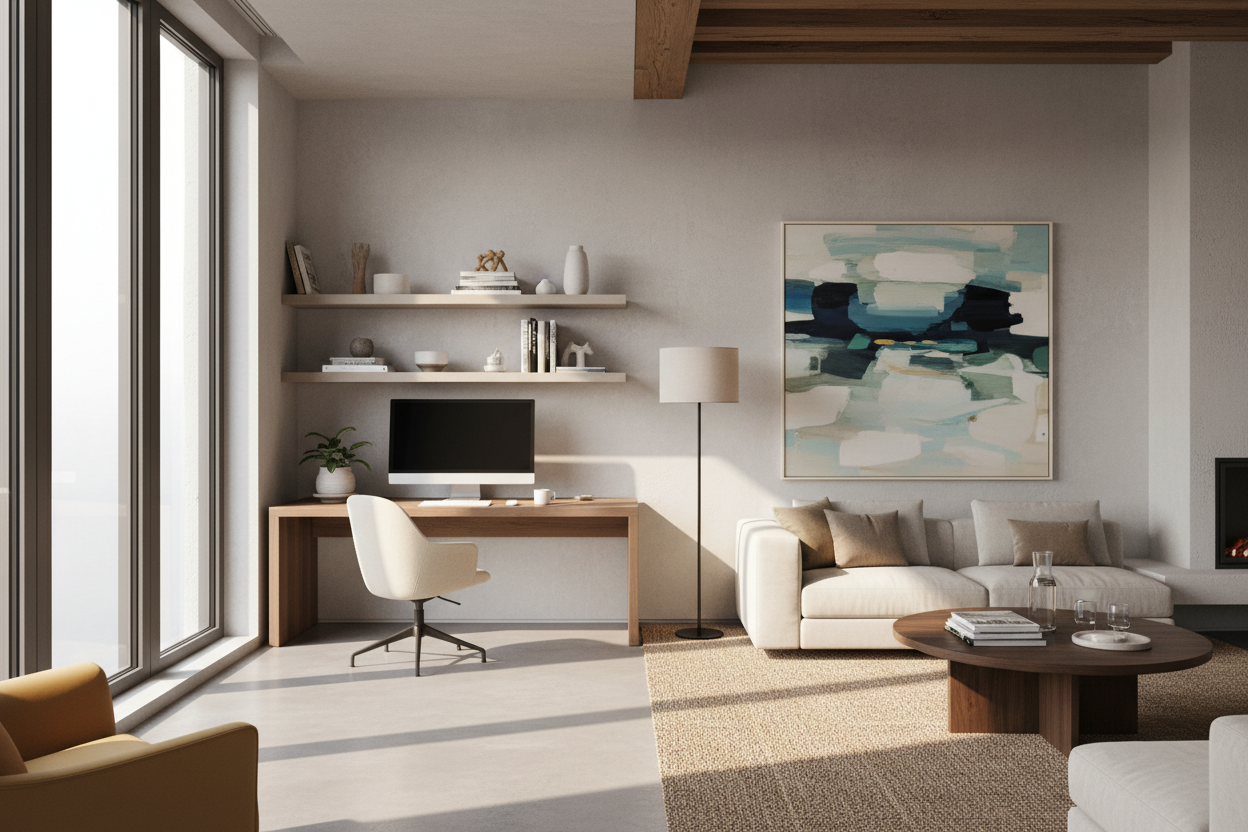
We have all been there: balancing a laptop on a pile of mail at the dining table, pretending it is a sustainable setup. The reality is that shoehorning a desk into a leftover corner rarely results in a room you actually want to use. Building a dedicated workspace home requires more than just buying a trendy chair; it demands careful attention to visual weight, proportion, and traffic flow. Whether you have an entire spare bedroom or just a modest alcove in a living room, this guide will walk you through the structural rules of creating a functional, beautiful area that actually supports your daily routine.
Quick Decision Guide
- Prioritize desk depth over width: Aim for at least 24 inches of depth to accommodate a laptop, monitor, and keyboard comfortably without causing eye strain.
- Mind your clearances: Leave a minimum of 36 inches behind your desk chair to allow for easy push-back and movement.
- Anchor with a rug: Use a low-pile area rug to define the zone in open-concept layouts, establishing a clear psychological boundary.
- Invest in ergonomics first: Allocate the bulk of your budget to a highly adjustable chair; save money on the desk itself if necessary.
Mapping Out Your Work From Home Space
When plotting out a work from home space, the biggest mistake I see is ignoring the room's natural traffic flow. Shoving a desk against a blank wall might seem like a space-saver, but staring at drywall for eight hours a day is a fast track to burnout.
The 'Command Position'
Whenever possible, float your desk facing the door or a window. This layout reduces glare on your screen and gives you a broader visual field. If you are carving out a work from home office space in a larger living area, use an open-backed bookshelf or a tall potted plant as a subtle room divider. This creates negative space that separates your professional duties from your evening relaxation.
Ergonomics in the WFH Workspace
Aesthetically pleasing furniture is wonderful, but an eight-hour shift requires serious physical support. A successful wfh workspace marries beautiful silhouettes with rigid ergonomic standards.
Nailing the Proportions
Standard desk height is around 29 to 30 inches, which is actually too high for many people unless they use an adjustable chair and a footrest. Your feet should rest flat on the floor with your knees at a 90-degree angle. When sourcing seating for a workspace at home, look for adjustable seat depth and lumbar support. Upholstered dining chairs look fantastic in architectural photos, but they lack the structural support necessary for a full workday.
Blending Your Work From Home Workspace With Existing Decor
If your setup shares a room with your living or sleeping area, visual harmony is crucial. A bulky, black laminate corporate desk will instantly clash with a soft, transitional living room design.
Managing Visual Weight
To keep a wfh space from dominating a room, opt for pieces with lighter visual weight. A desk with slender metal legs or a glass top allows light to pass through, making the footprint feel smaller. Pair it with a chair in a fabric that echoes your sofa or curtains, tying the work from home workspace seamlessly into the broader residential design.
Lessons from My Own Projects
Early in my career, I designed what I thought was the ultimate work from home work space for my own apartment. I bought a stunning, vintage mid-century modern teak desk. It had incredible lines, warm wood tones, and fit the room perfectly. What I failed to measure was the knee clearance.
The desk had a deep center drawer, meaning I couldn't cross my legs or pull my chair in close enough to type comfortably. I spent a year hunched forward, dealing with terrible shoulder pain just because I prioritized the silhouette over the function. I learned the hard way that vintage desks were often built for pen-and-paper tasks, not dual monitors and ergonomic chairs. Now, I always test the clearance—aiming for at least 24 inches of vertical space for the legs—before approving a desk for any client.
Frequently Asked Questions
How much space do I actually need for a workspace home?
You can create a highly functional setup in an area as small as 4x4 feet. The key is utilizing vertical space with wall-mounted shelving and choosing a desk with a compact footprint but adequate depth (at least 20 to 24 inches).
What lighting is best for a work from home space?
Layered lighting is essential. Rely on indirect natural light during the day to reduce eye strain, and add an adjustable task lamp on your desk. Avoid overhead recessed lighting directly above your screen, as it casts harsh shadows and creates glare.
How do I hide messy cords in an open room?
Cable management is non-negotiable for a clean look. Mount a surge protector to the underside of your desk, use adhesive cable clips along the back legs, and route everything through a single, braided sleeve to the wall outlet.


Leave a comment
This site is protected by hCaptcha and the hCaptcha Privacy Policy and Terms of Service apply.