










I spent years living in a state of 'closet denial.' My apartment looked tidy on the surface, but if you dared to open the cabinet under my TV or the wardrobe in the hallway, you’d be buried under a literal avalanche of tangled charging cables, half-finished craft projects, and shoes I hadn't worn since 2019. I was a professional at shoving things out of sight, which meant I was also a professional at forgetting I owned them. Everything changed when I finally ditched the heavy doors and embraced open storage furniture.
Quick Takeaways
- Open shelving forces you to curate your belongings rather than hoard them.
- Use the 80/20 rule: 80% hidden in baskets, 20% displayed beautifully.
- White finishes help large units disappear into the wall to prevent visual overwhelm.
- Small entryways benefit most from the 'airy' look of open frames.
The 'Out of Sight, Out of Mind' Trap
Closed cabinets are the ultimate enablers for disorganized people. When you can just shut a door on a mess, there is zero incentive to actually clean it. For me, my old armoire was a black hole where items went to die. I’d buy a second hammer because I couldn't find the first one buried under a pile of junk mail and old magazines.
Switching to open storage furniture options was like exposure therapy for my home. Suddenly, my habits were on display. I couldn't just throw a wad of receipts onto a shelf because I’d have to stare at them while eating dinner. It forced me to edit. If something wasn't useful or beautiful enough to be seen, it didn't deserve the shelf space. It’s a brutal way to declutter, but it’s the only thing that actually stuck.
Why I Started Small (And You Should Too)
Don't go ripping the doors off your kitchen cabinets on day one. That’s a recipe for a breakdown. I started with a small open storage cabinet in my entryway—a high-traffic 'drop zone' that was always a disaster. Previously, I had a chest with drawers that just became a graveyard for junk mail and loose change.
The open unit changed the energy of the room. I picked a slim, 32-inch wide frame that didn't eat up the hallway's walking path. Because everything was visible, I was naturally more inclined to set my keys in their designated ceramic bowl rather than just tossing them somewhere into the abyss. It turns out, when you can see the 'home' for an object, you're 50% more likely to actually put it back.
The Great Debate: Warm Wood vs. Blending In
Choosing the right material is where most people trip up. If you want the furniture to feel like a piece of architecture, go for a wooden open shelf cabinet. I have a solid mango wood unit in my office that feels substantial and grounded. The natural grain adds warmth to a room that otherwise feels a bit sterile with all the tech and cables. Just be prepared: wood has 'visual weight,' so it will dominate a small room.
If you're worried about the space feeling cluttered, grab a white open storage cabinet. I use one in my bedroom against a white wall, and it's a total magician's trick. Because the colors match, the frame virtually disappears, leaving only the items on the shelves to 'float.' It makes an 80-inch tall unit feel half its size. It’s the best way to get massive amounts of storage without making your bedroom feel like a warehouse.
The 80/20 Rule for Exposed Shelving
The biggest fear people have with open shelving is that it will look like a messy dorm room. Here is how you make this airy storage actually work: the 80/20 rule. You cannot just line up 50 random items and expect it to look good. You need to hide the 'ugly' stuff in plain sight.
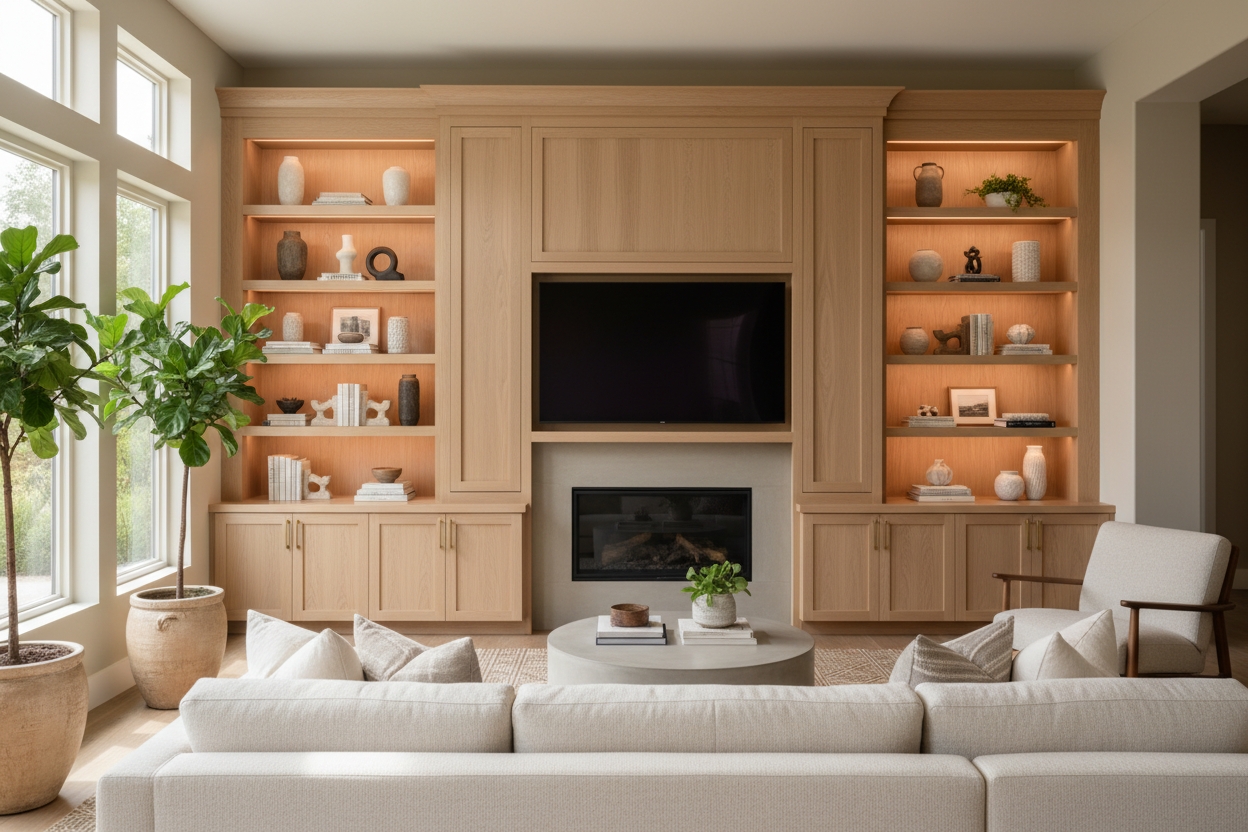
I use textured seagrass baskets for 80% of the shelf real estate. This is where the batteries, manuals, and dog leashes live. The remaining 20% is for the 'hero' objects—a stack of coffee table books, a single sculptural vase, or a trailing pothos plant. This balance provides the visual 'breathing room' your eyes need to keep from feeling overwhelmed by the contents.
Where Open Storage Makes the Most Sense
Bathrooms are the unsung heroes of this trend. There is something incredibly satisfying about seeing a stack of clean, white towels on an open shelf. It’s a designer secret to display storage that makes a standard bathroom feel like a high-end hotel. Plus, you’ll never have a guest awkwardly hunting through your medicine cabinet for a spare roll of TP.
I’ve also found that guest rooms are much more welcoming with open units. When friends stay over, they feel weird digging through drawers to find where you keep the extra blankets or the hairdryer. An open shelf says, 'Here is everything you need, help yourself.' It removes that weird barrier of being a guest in someone else's house.
Frequently Asked Questions
Doesn't open storage get incredibly dusty?
Yes, more than closed cabinets. I hit mine with a goat-hair duster once a week. It takes about 90 seconds. If you hate dusting, stick to the basket method—it protects the items inside from the worst of the fallout.
Is open furniture cheaper than closed cabinets?
Usually, yes. You aren't paying for the labor of hanging doors, aligning hinges, or installing drawer slides. You can often get a much higher-quality material—like solid wood instead of MDF—for the same price because the construction is simpler.
Can I mix open and closed storage?
Absolutely. In fact, a 'hybrid' piece with two doors at the bottom and three open shelves at the top is the 'gateway drug' to this style. It gives you a place to hide the truly hideous stuff while still forcing you to keep the top half curated.

Leave a comment
This site is protected by hCaptcha and the hCaptcha Privacy Policy and Terms of Service apply.