










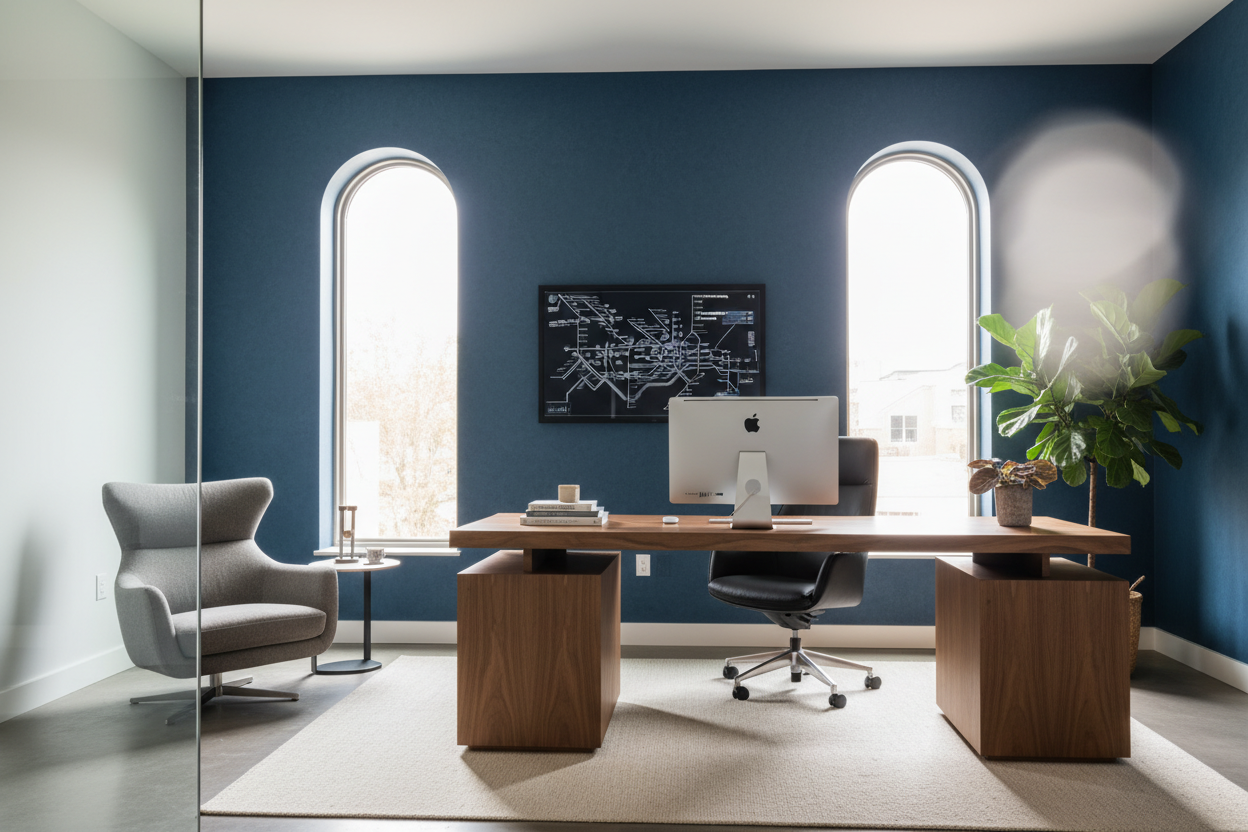
In the world of interior design, legitimacy is often communicated through permanence. While you might have the legal paperwork filed, the physical address for home office functionality within your floor plan often gets treated like a temporary guest. We frequently see homeowners attempting to run six-figure businesses from a laptop perched on a kitchen island, creating a disconnect between their professional stature and their physical environment.
Your workspace requires a designated 'address' within your home—a specific zone that commands respect, fosters focus, and signals to the rest of the household (and your video conference clients) that work is happening. It is time to move away from makeshift setups and establish a design footprint that mirrors your professional ambition.
Quick Decision Guide: Establishing the Zone
Before purchasing a single piece of furniture, you must evaluate where this 'internal address' should reside. Here are the non-negotiable factors for a high-functioning workspace:
- Acoustic Isolation: Does the location buffer household noise? Look for rooms with plush textiles or install acoustic panels.
- Natural Light Control: Can you manage glare on screens? North-facing windows offer the most consistent ambient light.
- Traffic Flow: Is the space away from the kitchen or main entry? High-traffic zones destroy deep work focus.
- Visual Backdrop: What is visible behind you? This is your virtual 'curb appeal' during calls.
- Ergonomic Footprint: Is there enough square footage for a chair to swivel and recline without hitting a wall?
Zoning: The Physical Home Office Address
When we talk about the 'address' of a room, we refer to its fixed location and purpose within the architectural layout. A common error is floating a desk in the middle of a multi-purpose room without grounding it. To create a sense of permanence, the furniture placement needs to feel intentional, not transient.
The Command Position
Ideally, your desk should face the entrance of the room—a concept known in design psychology as the 'command position.' This reduces subconscious anxiety about what is happening behind you. If your home office address is technically a corner of the master bedroom, use a high-backed console or a freestanding bookshelf to create a physical partition. This visual barrier psychologically separates 'rest' from 'revenue.'
Styling the "Public" Face of Your Office
Even if you utilize a separate home office mailing address for billing and legal purposes, your visual address is what clients see on Zoom or Teams. This creates an immediate impression of your brand's quality.
Curating the Backdrop
Avoid the 'white wall interrogation' look. A sophisticated backdrop includes texture and depth. Consider a matte finish paint in a moody charcoal or sage green to absorb excess light and reduce on-camera glare. Open shelving styled with books and architectural objects adds intellectual weight to the space. However, ensure the shelving is curated; clutter reads as disorganization to a client.
Materiality and Tactile Comfort
Since this is a space for sustained use, the materials must age well. We are seeing a shift away from cold glass desks, which attract fingerprints and feel sterile, toward solid woods like walnut or white oak. Wood adds warmth and improves room acoustics by dampening sound reflection—a crucial detail if your home office address is in a home with high ceilings or hardwood floors.
Lessons from My Own Projects
I learned the importance of 'addressing' a workspace the hard way during a project for a tech consultant in a minimalist loft. We initially positioned his desk facing a stunning floor-to-ceiling window to capture the view. It looked incredible in photos.
However, two weeks later, he called me in frustration. The direct sunlight was blinding him from 9:00 AM to 11:00 AM, and the heat radiation from the glass made the workspace uncomfortable. Furthermore, because the desk was 'floating' in the open plan, he felt exposed every time his partner walked by to get coffee. We had to completely reorient the layout, anchoring the desk against a structural pillar and adding sheer solar shades. The lesson? A beautiful location means nothing if the functionality doesn't support the work. The 'address' had to move five feet to the left to actually function.
Conclusion
Treating your workspace with the same design consideration as a formal living room or master suite changes how you interact with your work. By establishing a proper physical address for your daily tasks—grounded by ergonomic furniture and thoughtful layout—you elevate your productivity and your professional image. Stop visiting your work; move in properly.
Frequently Asked Questions
How much space do I strictly need for a functional home office?
At a minimum, you need a footprint of about 60 inches by 84 inches. This accommodates a standard 48-inch desk and allows 36 inches of clearance behind the chair for movement. Anything less will feel claustrophobic and limit your chair choice.
Can I use a dining chair instead of an office chair to save space?
From a design perspective, it looks better, but for health, it is a mistake. Dining chairs lack lumbar support and adjustability. If you need aesthetics, look for 'executive dining chairs' or mid-century modern task chairs that hide their ergonomic features within upholstered silhouettes.
How do I separate my home office address from my living space visually?
Rug layering is the most effective tool for this. Placing a distinct, low-pile rug under your desk setup visually zones the floor plan, signaling that this specific square footage is for work, distinct from the surrounding living area.


Leave a comment
This site is protected by hCaptcha and the hCaptcha Privacy Policy and Terms of Service apply.