










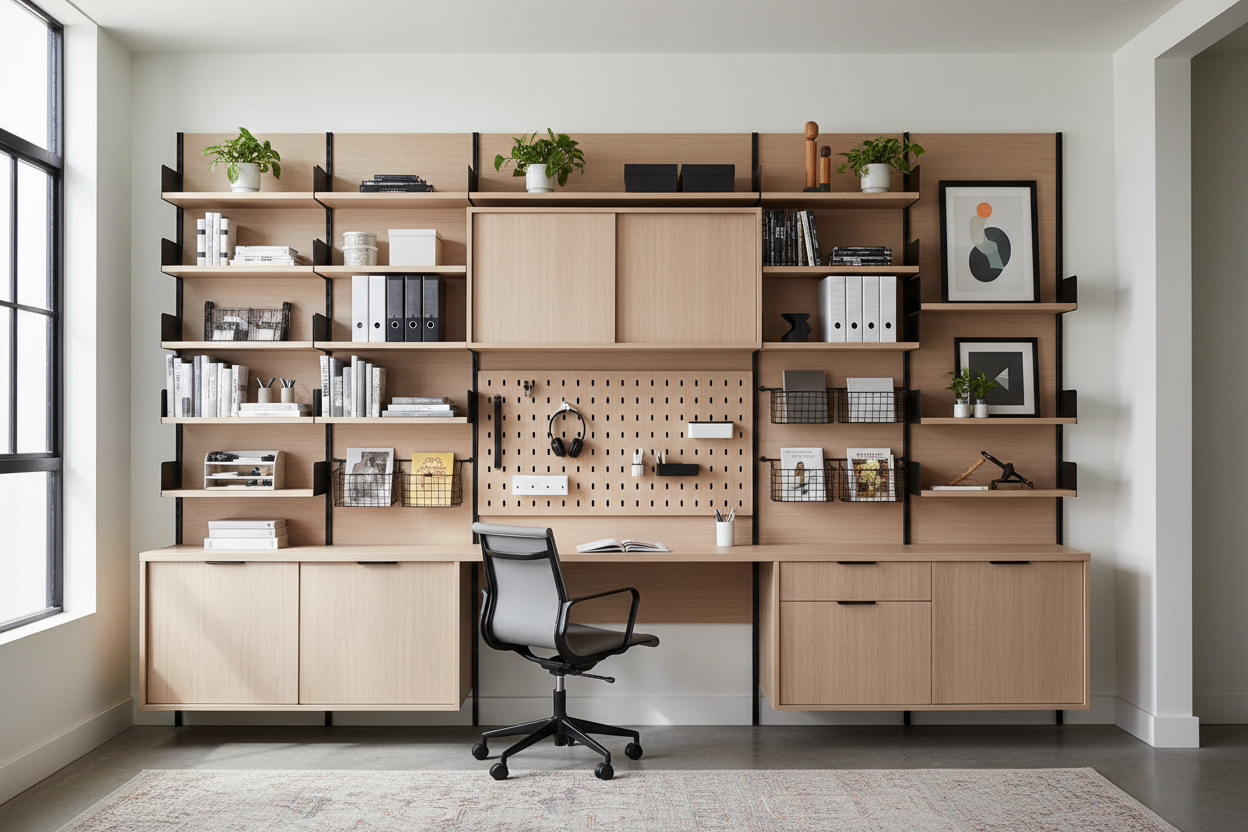
There is a specific kind of fatigue that sets in when you sit down to work and have to shove a pile of paperwork aside just to find a spot for your coffee. As a designer, I see this constantly: clients invest in beautiful mahogany desks but neglect the vertical plane, resulting in a cramped, stressful environment. The solution isn't a bigger desk; it is strategic office wall organization.
Key Features to Look For
- Modularity: Look for an office wall organization system that allows you to adjust shelf heights or bin placements as your workflow changes.
- Weight Capacity: Verify the load-bearing limits, especially for a wall mounted desk organizer intended to hold heavy manuals or tech hardware.
- Material Integrity: Solid wood and powder-coated steel offer longevity compared to particle board, which may bow under humidity or weight.
- Ergonomics: The best wall organizer is one that keeps daily essentials within arm's reach without forcing you to stand up.
Structuring Your Vertical Real Estate
When planning a home office wall organization system, treat the wall above your desk as prime real estate. The goal is to move items off the horizontal surface while maintaining visual balance.
The "Active" vs. "Passive" Zones
I always advise clients to categorize their office supply wall organizer needs into zones. The immediate 18 inches above your desk is the "Active Zone." Here, a wall organizer for desk accessories—like pens, current files, or charging cables—should reside. Use a hanging office organizer or a sleek rail system here.
Higher up is the "Passive Zone." This is where office wall storage for reference books, archival boxes, or decorative objects belongs. Using office wall shelves in this upper tier draws the eye upward, making the room feel larger while keeping rarely used items out of the way.
Material Selection: Balancing Aesthetics and Function
The material you choose defines the vibe of the room. For a corporate or industrial look, a metal modern office wall organizer or a grid-based office wall mount system works best. These are incredibly durable and often magnetic, adding another layer of utility.
However, for a home office wall organizer, you might want to soften the look. I often specify wood or fabric-wrapped hanging wall organizer for office setups. A felt wall hanging office organizer not only stores papers but also acts as acoustic dampening—a subtle detail that improves call quality in echo-prone rooms.
Modular vs. Fixed Systems
A modular office wall organizer is generally the superior investment. Fixed office wall bins or shelves limit you to a specific configuration. Modular office wall storage systems, such as pegboards or track-based wall organizers for home office, allow you to swap a shelf for a hanging cup or a magazine rack instantly. This adaptability is crucial because the way we work evolves over time.
Integration with Small Spaces
In compact urban apartments, a wall mounted office storage unit can actually replace furniture. I have designed nooks where a fold-down wall desk organizer serves as the primary workstation. When utilizing small office wall organizer solutions, utilize the full height of the wall. Tall, narrow office wall hangers or vertical filing systems prevent the room from feeling closed in.
Lessons from My Own Projects
I want to share a specific realization I had while designing a high-traffic creative studio. We installed a stunning, transparent acrylic wall organization system for home office use. It looked incredible in the photos. However, within three weeks, it looked terrible in person.
Why? Because clear acrylic shows everything. Every smudge, every speck of dust inside the bin, and the chaotic visual noise of mismatched pens and crumpled receipts were on full display. I learned that while open office wall organizers are accessible, opaque storage is often necessary for mental clarity. Now, I always mix open shelving with opaque wall storage for office supplies. If you can see the mess, you haven't really organized it; you've just hung it up. Also, a practical tip: if you are installing a heavy hanging organizer for office files, do not trust the included drywall anchors. Always buy your own high-toggle anchors or drill directly into the studs.
Conclusion
Transforming your workspace isn't just about buying bins; it's about curating a flow that supports your daily tasks. By selecting the right office wall organization systems, you clear your physical space, which invariably clears your mental space. Look at your walls today—there is potential waiting there.
Frequently Asked Questions
How high should I mount my above desk wall organizer?
Ideally, the bottom of your lowest wall organizer for office supplies should be 15 to 20 inches above the desk surface. This allows enough clearance for your monitor and laptop while keeping essentials within seated reach.
What is the best wall organizer for a rental property?
For renters, look for a lightweight hanging wall organizer office system that utilizes command strips or requires minimal pin-holes. Fabric office wall hangers or cork-based systems are excellent choices that cause little to no damage.
Can office wall storage systems handle heavy binders?
Yes, but installation is key. A standard office wall mount organizer screwed into drywall anchors can usually hold 10-20 lbs. For heavy binders, you must mount the wall storage systems for office use directly into the wall studs, which can support 50+ lbs per bracket.

Leave a comment
This site is protected by hCaptcha and the hCaptcha Privacy Policy and Terms of Service apply.