










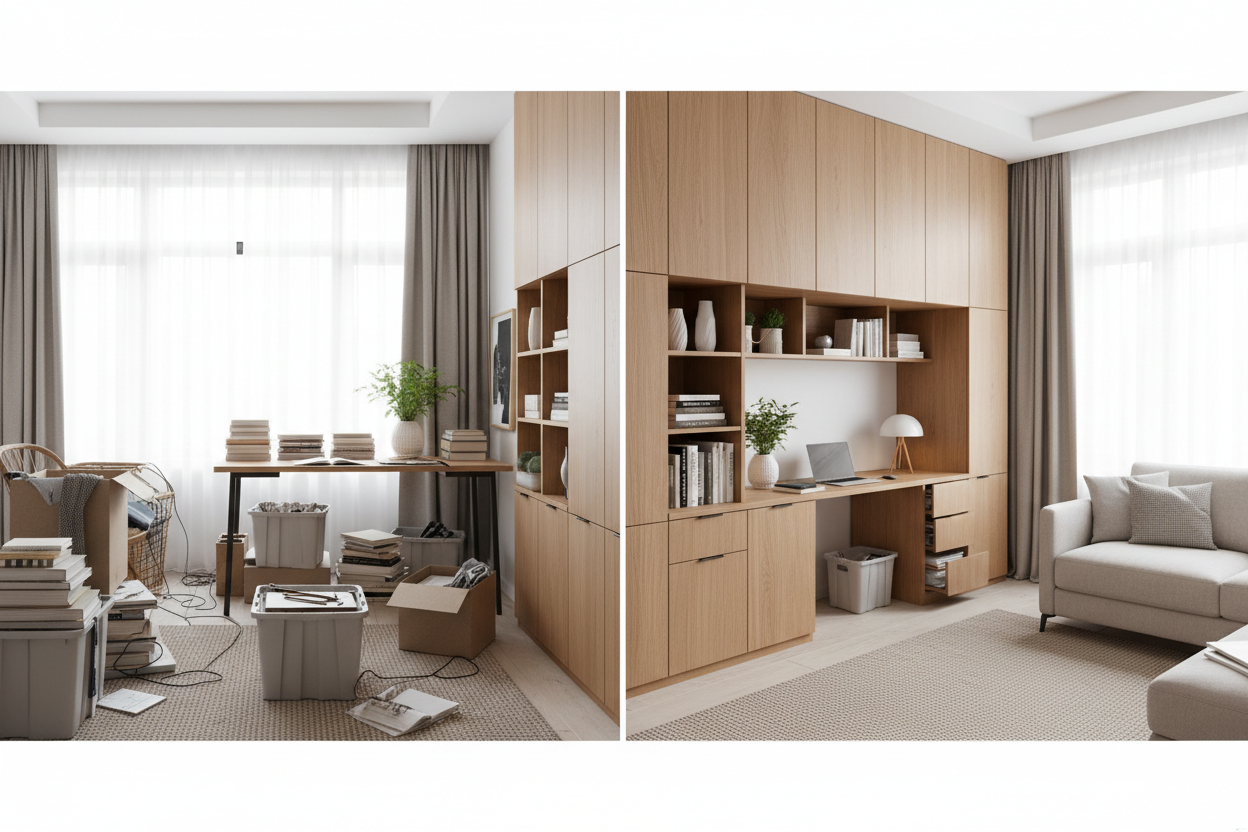
Walking into a disorganized room instantly spikes stress levels. You look around and see piles of books, scattered electronics, or linens that don't have a home. The immediate solution isn't just to throw things away, but to integrate proper furniture that hides the mess while enhancing the decor. Finding the right storage cabinets for room organization is the most effective way to transform a chaotic area into a functional sanctuary. The key is balancing the cabinet's footprint with its internal capacity, ensuring it fits the physical space without dominating the visual flow of the room.
I learned this lesson the hard way in my own home office. For years, I relied on flimsy plastic bins and open bookshelves. I convinced myself that seeing everything meant I was organized. The reality was quite the opposite; the visual noise was distracting, and dust accumulation was a nightmare. I eventually bit the bullet and purchased a set of floor-to-ceiling wooden cabinets with solid doors. The difference was immediate. Not only did the room look larger because the clutter was concealed, but my productivity also improved because I wasn't constantly staring at stacks of paper. That experience taught me that closed storage isn't just about hiding things; it's about curating your environment.
Assessing Your Space and Storage Needs
Before you even look at a catalog or visit a furniture store, you need a realistic assessment of what you own. Buying a cabinet because it looks nice, only to find it doesn't fit your oversized binders or winter blankets, is a common frustration. Grab a tape measure and map out the floor area, but don't forget to look up. Vertical space is often the most underutilized asset in a home.
Consider the traffic flow. If you are placing room storage cabinets in a narrow hallway or a small bedroom, swinging doors might block the path. In these instances, sliding doors or tambour doors are superior choices. Conversely, in a large living room, wide-swinging doors can add a sense of grandeur and allow for easier access to the contents. You also need to account for obstructions like baseboards, outlets, and vents. A cabinet that sits flush against the wall is ideal, but if you have thick baseboards, you might need a unit with legs that are inset or a cutout back.
Material Selection and Durability
The material of your cabinet dictates its longevity and how much weight it can hold. Particleboard is affordable and lightweight, making it a popular choice for temporary setups or low-traffic areas. However, it tends to sag under heavy loads and doesn't handle moisture well. If you are storing heavy textbooks, tools, or kitchen equipment, particleboard shelves often bow over time.
Solid wood or high-grade plywood offering wood veneers provides significantly better structural integrity. These materials can support heavy loads without warping and generally age better, developing a patina rather than peeling. Metal cabinets offer a different aesthetic, leaning towards industrial or modern styles. They are incredibly durable and impervious to moisture, making them excellent choices for basements, garages, or humid climates. When selecting storage cabinets for room aesthetics, consider how the texture of the material plays with your existing furniture. A sleek metal unit might look jarring in a rustic farmhouse bedroom, just as a distressed wood cabinet might clash with a minimalist, high-gloss living room.
Functionality: Shelves, Drawers, and Hybrids
Not all storage needs are created equal. A cabinet with fixed shelves limits what you can store. Adjustable shelving is almost a non-negotiable feature for versatile organization. This allows you to customize the interior height to fit tall vases on one level and short stacks of paper on another. This flexibility maximizes the internal volume of the unit so you aren't wasting air space above short items.
Drawers add another layer of utility. While shelves are great for stacking, drawers are superior for loose items that tend to get lost in the back of a deep cupboard. Many modern room storage cabinets feature a hybrid design—drawers on the bottom for socks, cables, or office supplies, and shelves on top for larger items. This combination often provides the best of both worlds, keeping small chaos contained while offering bulk storage.
The Role of Aesthetics in Storage
Utility does not have to come at the expense of style. Your storage solution should act as a piece of furniture that contributes to the room's design language. Low-profile cabinets can double as media consoles or window seats, adding dual functionality. Tall, narrow cabinets can draw the eye upward, making low ceilings feel higher.
Pay attention to hardware. The handles and knobs are like the jewelry of the cabinet. Swapping out generic factory knobs for brushed brass or matte black handles can instantly upgrade a budget-friendly piece to look like a custom installation. If you are trying to minimize visual clutter, look for push-to-open mechanisms that eliminate hardware entirely for a seamless facade.
Safety and Installation
A crucial, often overlooked aspect of adding storage furniture is safety. Tall cabinets, especially when loaded with heavy items on upper shelves, can become top-heavy. Anchoring these units to the wall is essential, particularly in homes with children or pets. Most reputable manufacturers include anti-tip kits. If yours doesn't, hardware stores sell simple L-bracket kits that take minutes to install but provide necessary peace of mind.
Floor leveling is another installation factor. Few floors are perfectly flat. If your cabinet has adjustable feet, take the time to use a level during setup. A cabinet that rocks or leans will eventually weaken at the joints, and doors will fail to close properly. If the unit lacks adjustable feet, simple wooden or plastic shims can correct the angle and ensure the doors align perfectly.
Ultimately, the goal is to create a space that serves you. By carefully selecting the right size, material, and configuration, you turn storage from a boring necessity into a design feature that simplifies your daily life.
Frequently Asked Questions
How deep should a storage cabinet be for a standard room?
Standard depth usually ranges between 12 to 18 inches for general living areas. A 12-inch depth is perfect for books and small items without encroaching on floor space, while 18 to 24 inches is better for bulky items like linens or wardrobe storage, provided you have the walking room to accommodate it.
Can I paint laminate or plastic cabinets to match my room?
Yes, but it requires specific preparation. You must clean the surface thoroughly, sand it lightly to create a grip, and use a primer specifically designed for non-porous surfaces before applying your topcoat. Standard wall paint will likely peel off without this bonding primer.
What is the best way to organize the inside of a deep cabinet?
Deep cabinets can easily become black holes where items disappear. Using pull-out bins, baskets, or installing aftermarket sliding drawers is the best way to keep back-of-cabinet items accessible. Labeling these bins further ensures that family members know exactly where items belong.


Leave a comment
This site is protected by hCaptcha and the hCaptcha Privacy Policy and Terms of Service apply.