










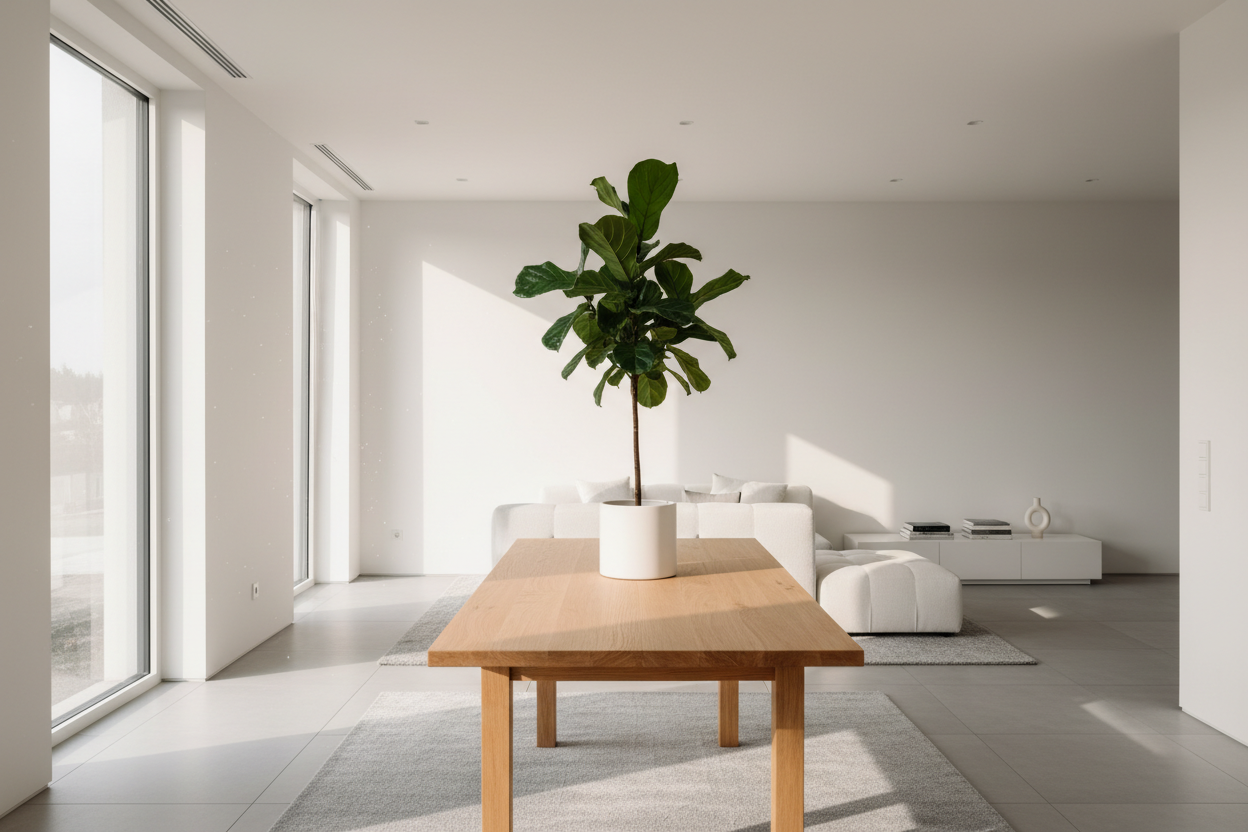
Finding the perfect balance between clean lines and inviting warmth is the holy grail of interior design, and a wood table modern aesthetic is often the exact element required to bridge that gap. You might be looking at a room filled with glass, steel, and monochrome textiles, feeling that despite the sleekness, the space lacks a soul. A modern wood table solves this immediately. It introduces organic texture without sacrificing the geometric simplicity that defines contemporary living. It anchors a dining room or workspace, serving not just as a surface, but as a focal point that softens the industrial edge of modern architecture.
The Intersection of Organic Texture and Geometric Form
Modern design often gets a bad reputation for feeling sterile or museum-like. When you introduce natural timber into a minimalist setting, the grain patterns disrupt the monotony of solid colors and smooth synthetics. The key to this look is the form factor. Unlike rustic farmhouse tables which rely on bulk and rough-hewn edges, a modern wood table relies on precision. We are talking about tapered legs, chamfered edges, and a silhouette that looks light enough to float but is sturdy enough to last a lifetime.
The visual weight of the piece dictates how the rest of the room feels. A heavy, blocky walnut table creates a sense of permanence and gravity, perfect for large, open-plan dining areas that need definition. Conversely, a light ash or white oak table with spindled legs draws from Scandinavian influences, keeping the light flowing through the room and making tight urban apartments feel more spacious. The material is traditional, but the execution is strictly contemporary.
A Lesson Learned from My Own Dining Room
Years ago, I made the mistake of chasing a purely aesthetic trend without considering livability. I purchased a stunning glass and chrome dining table. It looked incredible in photos—architectural, barely there, and undeniably modern. Living with it was a different story. Every fingerprint screamed for attention, the acoustics were terrible (clattering silverware on glass is a sound that haunts me), and the room felt perpetually cold.
I eventually swapped it for a solid white oak table with a matte, water-based finish. The transformation was instant. The room sounded quieter because wood absorbs sound. The tactile experience of resting your arms on warm timber during a long dinner conversation completely changed how we used the space. We lingered longer. The table developed a patina over time—a small dent here from a dropped toy, a slight darkening of the grain in the center. Far from ruining the piece, these imperfections made it feel like a genuine part of our home rather than a showroom display. That experience taught me that furniture must serve the human, not just the eye.
Selecting the Right Timber for a Modern Look
Not all lumber fits the modern brief. The species of wood you choose will dramatically alter the color palette and mood of your interior. Understanding the behavior and look of these woods helps avoid buyer's remorse.
Walnut
This is arguably the standard-bearer for mid-century modern design. Its rich, chocolate tones and often dramatic grain patterns exude luxury. Walnut works exceptionally well in rooms with cooler tones—think grey walls or concrete floors—because the warmth of the wood counterbalances the chill of the surroundings. It is softer than oak, however, so it requires a bit more care regarding scratches.
White Oak and Ash
If your taste leans toward Japandi or Scandinavian styles, these lighter woods are the answer. They possess a tight grain and a pale, wheat-like color that reflects light. White oak is incredibly dense and durable, making it a practical choice for families. A wood table modern designers often recommend for smaller spaces is almost always crafted from these lighter species to prevent the room from feeling cluttered.
Teak
Teak is often associated with outdoor furniture, but vintage Danish modern tables are frequently made from this oil-rich wood. It has a golden-brown hue and is practically impervious to rot, though it can be difficult to find new, sustainably sourced teak today. If you find a vintage piece, the durability is unmatched.
Solid Wood vs. Veneer: The Stability Debate
There is a misconception that "solid wood" is always superior. While solid timber allows for refinishing down the road, it is also a living material. It expands and contracts with humidity changes. In a modern home with aggressive HVAC systems, a wide solid plank can warp or crack if not constructed with allowances for movement.
High-quality wood veneer over a stable substrate (like plywood or MDF) is often the engineering solution for very sleek, thin-profile modern tables. It allows for designs that would be structurally impossible or prohibitively expensive with solid wood. If you are looking at a table with a complex geometric base or an exceptionally thin top, veneer might actually be the superior structural choice. The trade-off is that you cannot sand it down deeply if it gets damaged, so coasters and placemats become non-negotiable.
Styling Around the Table
Once the table is in place, the chairs you pair with it define the final era of the look. A common error is matching the wood of the chairs exactly to the table. This can look dated and heavy. Instead, look for contrast. If you have a heavy walnut table, consider matte black metal chairs or upholstered seating to break up the wood tones. If your table is a light oak, a dark leather chair creates a striking, sophisticated silhouette.
Lighting is the partner to your table. A linear suspension light hanging low over a rectangular wood table reinforces the modern lines. The light pooling on the wood grain brings out the depth of the material that flat overhead lighting washes out. This interplay between light and texture is what elevates a simple dining setup into a designed experience.
Maintenance in the Modern Home
Modern finishes have come a long way. You no longer need to rely on high-gloss lacquers that look plastic and scratch easily. Look for tables with a hard-wax oil finish or a matte polyurethane conversion varnish. Hard-wax oil keeps the wood feeling like wood—you touch the timber, not a plastic coating—but it requires re-oiling once or twice a year. Polyurethane is maintenance-free but feels colder and is harder to spot-repair.
Regardless of the finish, sunlight is the silent modifier. Wood is photosensitive. Cherry darkens, walnut lightens, and oak creates an amber hue over time. If you leave a centerpiece in the middle of your table for the first six months, you will likely find a permanent outline when you move it. Rotate your decor regularly to ensure the table ages evenly.
Frequently Asked Questions
Can I mix different wood tones in the same room?
Yes, mixing wood tones creates a layered, curated look rather than a "catalog" feel. The trick is to keep the undertones consistent; mix warm woods with other warm woods, or cool with cool. Alternatively, use high contrast (like very dark walnut with pale oak) to make the difference intentional rather than accidental.
How do I protect a modern wood table from heat rings?
Prevention is the only true cure. Modern finishes are resistant, but extreme heat from a pot can melt the finish or blanch the wood fibers underneath. Always use trivets or thick placemats for serving dishes, and ensure your finish is rated for dining use if you plan on eating directly off the surface.
Is a live-edge table considered modern?
Live-edge tables can fit a modern aesthetic if the base is sleek and the slab is not overly rustic or knotty. Pairing a clean, relatively straight live-edge slab with geometric metal legs bridges the gap between organic modernism and industrial design.

Leave a comment
This site is protected by hCaptcha and the hCaptcha Privacy Policy and Terms of Service apply.