










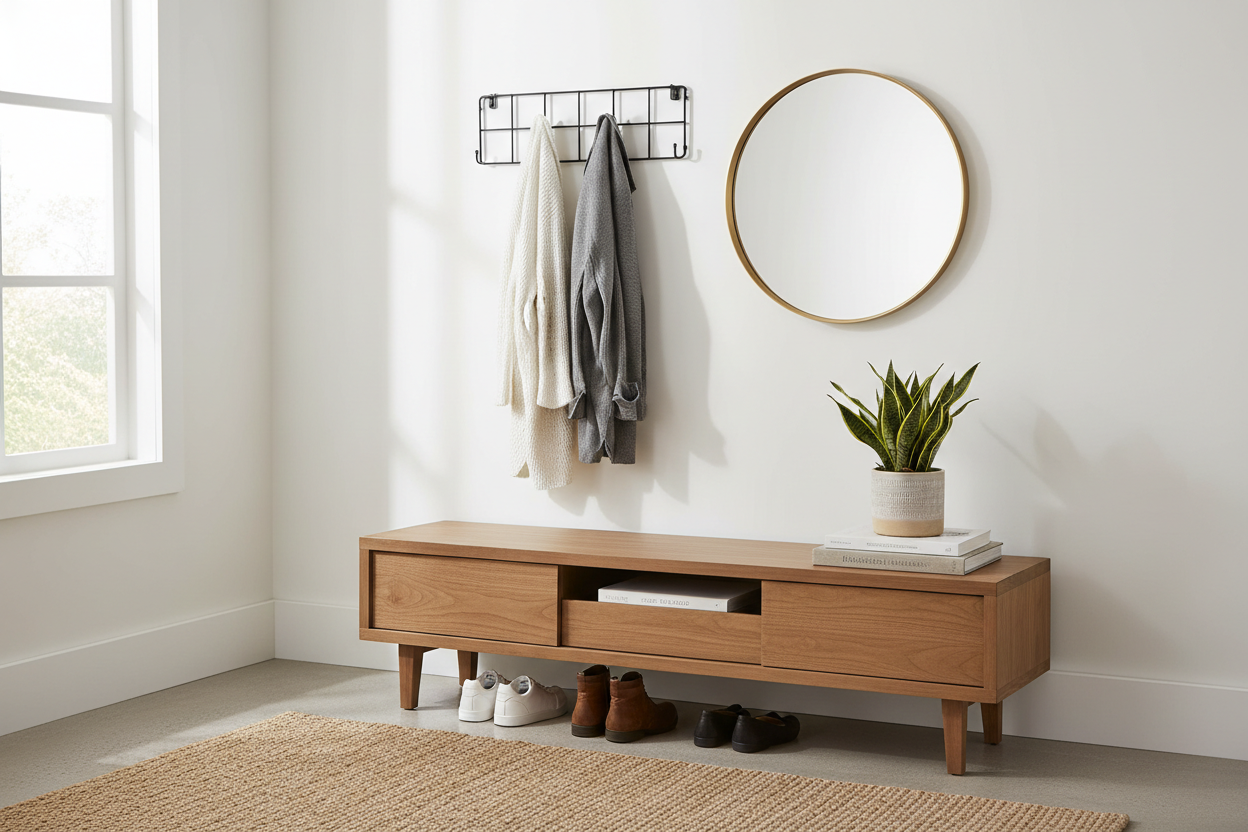
Your front door is more than just a threshold; it is the handshake of your home. It sets the expectation for everything that lies beyond. Yet, in many houses, this critical transition zone becomes a chaotic landing strip for tossed keys, scattered mail, and a mountain of shoes. The solution often isn't a massive renovation or a custom-built mudroom, but a singular, well-chosen piece of furniture. Integrating an accent bench for entryway organization doesn't just solve the clutter problem—it anchors the space, providing a moment of pause before you rush out or settle in.
Finding the right seating requires balancing the visual weight of the piece with the practical realities of your daily life. A delicate, spindly velvet seat might look stunning in a magazine, but if you have two large dogs and three kids dragging muddy boots through the door, that velvet won't survive the week. Conversely, a heavy, solid wood chest might offer great storage but could make a narrow hallway feel like a dungeon. You have to find the sweet spot where utility meets design.
Defining the Purpose of Your Bench
Before pulling out the measuring tape, look at how you currently use your foyer. Is it a high-traffic highway or a decorative prelude to the living room? If your primary goal is to have a place to sit while tying laces, comfort and height are your main priorities. You will want a cushion that is firm but forgiving, and a seat height standard to a dining chair, usually around 18 to 20 inches.
However, if the goal is concealing mess, you need to look at entryway and accent benches that feature internal storage. Flip-top benches are fantastic for hiding away winter scarves, dog leashes, or reusable grocery bags that otherwise clutter doorknobs. For households that battle the shoe apocalypse, look for benches with an open shelf or cubbies underneath. This encourages family members to kick off their shoes and tuck them away immediately, keeping the walkway clear.
Sizing and Scale: Don't Block the Flow
Nothing ruins the functionality of a foyer faster than furniture that obstructs the path. I learned this lesson the hard way in my first apartment. I fell in love with a vintage church pew that was full of character but far too deep for my narrow hall. Every time I came in with groceries, I bruised my shin. It was a beautiful mistake that I had to sell three months later.
To avoid my shin-bruising error, measure your available width and depth carefully. You generally want to leave at least 30 to 36 inches of walking clearance in front of the bench. If your entryway is tight, look for a shallow depth profile—something around 14 to 16 inches deep. Lengthwise, the bench should be proportional to the wall it sits against. A tiny bench on a massive wall looks lost, while a bench that touches the door trim looks cramped. Aim to leave about 6 to 12 inches of breathing room on either side of the furniture.
Material Matters: Durability vs. Aesthetics
The material you choose dictates the longevity of the piece. Entryways see high variation in temperature and moisture, especially if the door opens directly to the outside. Here is how different materials stack up:
- Solid Wood: The workhorse of entryway furniture. It is easy to wipe down, can handle heavy weight, and ages well. Scratches often add character rather than ruining the look.
- Performance Fabrics: If you want the softness of upholstery, opt for performance velvet or crypton fabrics. These resist stains and are easier to clean than standard cotton or linen.
- Leather and Faux Leather: These offer a sophisticated, masculine edge and are incredibly practical. Mud and dirt wipe right off, making them ideal for families with young children.
- Metal and Rattan: These materials add texture without visual bulk. They are excellent for smaller spaces because their open-frame designs allow light to pass through, keeping the area feeling airy.
- Acrylic: For the ultra-modern or dark space, an acrylic bench virtually disappears, providing function without visual clutter.
Styling Your Entryway Anchor
Once you have selected the perfect accent bench for entryway placement, the fun part begins: styling. A bench by itself can look stark. You need to integrate it into the vertical space. Placing a large mirror or a piece of oversized art above the bench draws the eye up and makes the ceiling feel higher. A mirror is particularly useful for a last-minute outfit check before leaving the house.
Textiles play a huge role in softening the look. If you chose a wooden bench, toss a sheepskin throw or a couple of lumbar pillows on it. This invites people to sit and introduces color or pattern to the area. Flanking the bench with a tall plant or a floor lamp can also frame the vignette, turning a simple seating area into a designed moment.
Mixing and Matching Styles
Don't feel pressured to match the bench perfectly to your staircase banister or the floor. In fact, a little contrast creates more interest. If you have dark hardwood floors, a light oak or painted bench will pop. If your home is very modern and linear, a bench with curved legs or a tufted top can add necessary softness. The world of entryway and accent benches is vast enough that you can find a piece that complements your home's architecture while standing out on its own merits.
The Storage Solution Strategy
If you opt for a bench with open space underneath, use baskets to keep things tidy. Woven seagrass or wire baskets can slide under the seat to hold shoes, effectively turning a simple bench into a storage powerhouse. This is a visual trick that designers use constantly: it hides the clutter while adding another layer of texture to the room. Ensure you measure the height clearance underneath the bench before buying baskets; you want them to slide in and out easily without scratching the underside of the seat.
Ultimately, the best bench is one that serves your specific lifestyle. Whether it is a place to drop your purse, a spot to put on rainboots, or simply a beautiful object that makes you smile when you walk in, this piece of furniture works hard to make your house feel like a home.
Frequently Asked Questions
What is the ideal height for an entryway bench?
Most standard benches range between 18 and 20 inches in height. This is similar to a dining chair, making it comfortable for an average adult to sit and put on shoes. If you are tall or have mobility issues, look for the higher end of that range to make standing up easier.
Can I use a bedroom end-of-bed bench in the entryway?
Absolutely, as long as the dimensions fit the space. Bedroom benches are often upholstered and can add a luxurious, cozy feel to a foyer. Just check the fabric's durability, as entryways see more dirt and traffic than a bedroom.
How much weight can a typical accent bench hold?
Weight capacity varies significantly by construction, usually ranging from 200 to 400 pounds. Always check the manufacturer's specifications, especially if two people might sit on it simultaneously to put on shoes. Solid wood and metal frame benches generally offer the highest support.

Leave a comment
This site is protected by hCaptcha and the hCaptcha Privacy Policy and Terms of Service apply.