










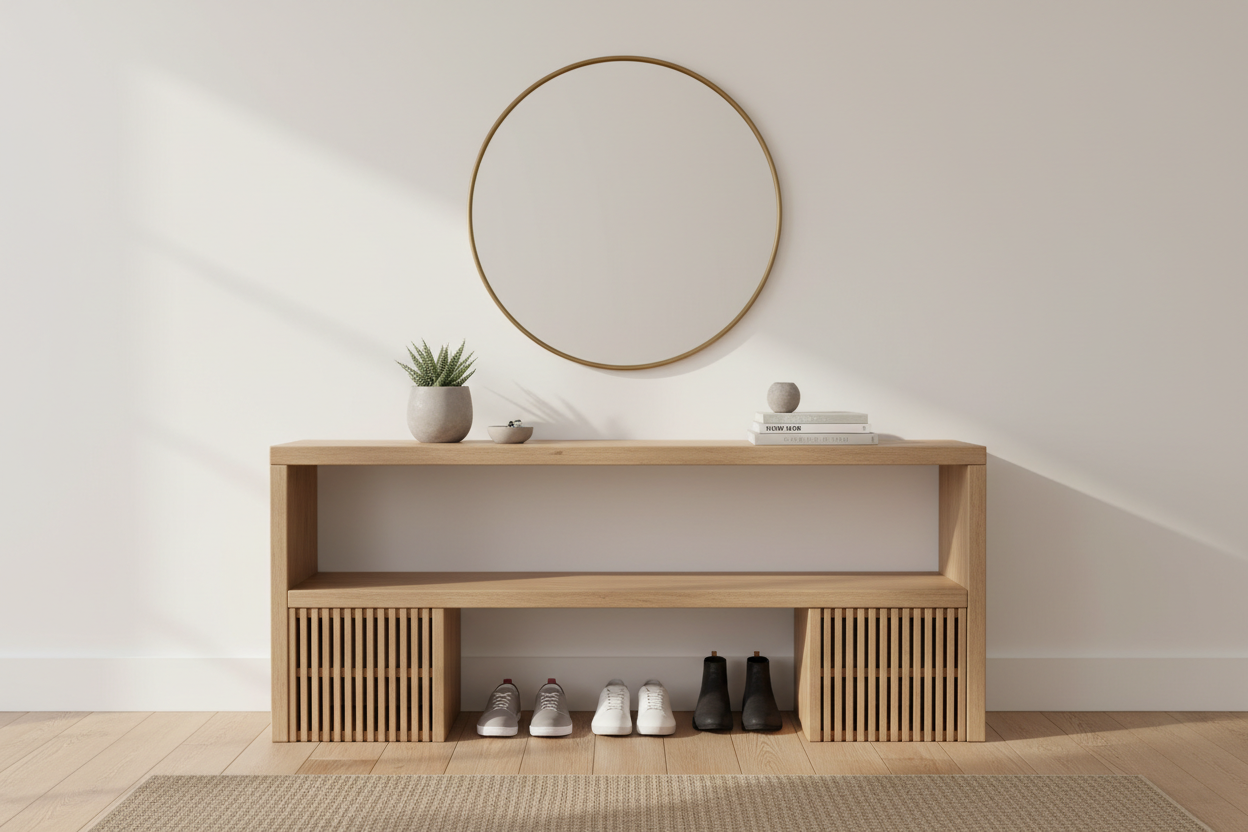
Walking through your front door should feel like a breath of fresh air, not an obstacle course of kicked-off sneakers and scattered mail. The foyer is the handshake of the home—it sets the tone for everything that follows. Yet, it is often the most neglected space, usually becoming a chaotic dumping ground rather than a functional design moment. The solution often lies in the right furniture pairing. Specifically, finding the balance between surface area and seating is the key to an organized drop zone.
Many homeowners struggle with the spatial geometry of hallways. You might look at a narrow corridor and wonder if you have room for an entryway table or bench, assuming you have to pick just one. Unless you are working with an incredibly tight vestibule, you rarely have to choose. By utilizing vertical space or clever layouts, you can usually accommodate both, transforming a barren hallway into a hub of efficiency.
The Art of the "Tuck-Under" Layout
If floor space is premium currency in your home, the most effective layout strategy is the console-and-tuck method. This involves selecting an entryway console table and bench pairing where the seating slides completely underneath the table when not in use. This keeps the walkway clear for traffic flow but ensures you have a place to sit and put on shoes when needed.
To make this work, measurements are critical. You need a console table that is open at the bottom—avoid shelves or crossbars near the floor that would block the bench. Ideally, you want about two to three inches of clearance on either side of the bench so it slides in easily without scratching the table legs. Backless benches or ottomans work best here. Visually, this creates a layered look that adds depth to the room without adding bulk.
Sets vs. Mixing and Matching
There are two schools of thought when sourcing these pieces: buying a pre-packaged entryway table and bench set or curating individual items. There is zero shame in opting for a set. Manufacturers design these specifically so the scale is correct. A matching bench and console table ensures that the wood stains coordinate and the metals don't clash. It is a "one-and-done" solution that guarantees a cohesive look.
However, if you want a more designer-forward aesthetic, mixing materials is the way to go. If you have a sleek, black metal console table, try pairing it with a warm, leather-upholstered bench. The contrast prevents the space from looking like a furniture showroom display. The goal is to make the combination look collected, not just purchased. If you go this route, keep an eye on visual weight. A chunky, heavy wood table needs a substantial bench to balance it out; a spindly, delicate table pairs better with a lightweight, airy seat.
The All-In-One Solution for High Traffic
Sometimes, separate pieces just result in more clutter. For families with kids or households that see a lot of foot traffic, a bench table combo entryway unit—often called a hall tree—might be the better functional choice. These are integrated pieces that combine hooks, a bench, and sometimes a shelf or cubbies into a single structure.
While these units are incredibly practical, they can sometimes look bulky. To keep the entryway feeling open, look for units with open backs or lighter wood tones. If you prefer separate pieces but need that heavy-duty functionality, prioritize an entrance table with shoe rack capabilities. Some industrial-style console tables come with wire mesh lower shelves that act as perfect shoe storage, while still leaving room for a small stool or bench to the side.
My Battle with the "Drop Zone"
I learned the importance of this furniture balance the hard way. In my previous home, I had a long, narrow hallway that I desperately wanted to style. I bought a gorgeous, deep antique dresser to serve as my catch-all. It looked beautiful, but it was a disaster functionally. There was no place to sit, so people would lean against the wall (scuffing the paint) to take off boots, and shoes ended up in a pile right in the middle of the walkway because the dresser had no open storage underneath.
I eventually swapped it out for a high-profile, shallow console table and placed two square ottomans underneath. The difference was immediate. The visual clutter vanished because the shoes could be tucked behind the ottomans, and having a dedicated place to sit stopped the wall-leaning habit. It taught me that in an entryway, function has to come before form, or you'll just end up with a pretty mess.
Styling Your Entry Way Table and Bench
Once you have your entryway bench and table set in place, the styling brings it to life. This is where you bridge the gap between utility and personality. Start with a focal point above the table—a large round mirror is a classic choice because it reflects light and makes a cramped hallway feel larger. It also gives you a spot for a final outfit check before leaving.
On the table itself, use the rule of three. A lamp for height and ambiance (essential for welcoming guests in the evening), a tray to corral keys and mail, and a decorative object or plant for life. If you are using a bench underneath, you can style it with a single throw pillow or a textured blanket to soften the hard lines of the table legs.
Maximizing Storage Without Sacrificing Style
If you are dealing with a serious volume of stuff, you need to get sneaky with storage. An entryway console table and bench setup can hide a lot of sins if you choose the right bench. Look for storage benches with flip-top lids. You can hide winter scarves, dog leashes, or reusable grocery bags inside the bench, keeping the console table surface clear for decor.
Another option is to flank the table. If you have a long wall, place the console table in the center and a small bench or stool on one side, with a tall plant or umbrella stand on the other. This asymmetrical arrangement feels modern and allows you to separate the "sitting zone" from the "mail drop zone," reducing the bottleneck when everyone comes home at once.
Frequently Asked Questions
How much space do I need for a console table and bench?
Ideally, you need a walkway of at least 36 inches wide after the furniture is in place to walk comfortably. A standard console table is 12-18 inches deep. If your hallway is tight, look for "slim" console tables that are under 10 inches deep and use a backless stool that tucks completely away.
Can I mix wood tones between the table and the bench?
Absolutely, and you often should. To make it work, ensure the undertones match (warm with warm, cool with cool). For example, a warm walnut table pairs beautifully with a lighter oak bench if they share the same golden undertone, or mix wood with painted finishes to avoid the clash entirely.
What is the standard height for an entryway table?
Most console tables stand between 30 and 36 inches high. If you plan to tuck a bench underneath, make sure the seat height of the bench is around 18-20 inches. This leaves enough gap for your legs and ensures the composition looks intentional, not cramped.


Leave a comment
This site is protected by hCaptcha and the hCaptcha Privacy Policy and Terms of Service apply.