










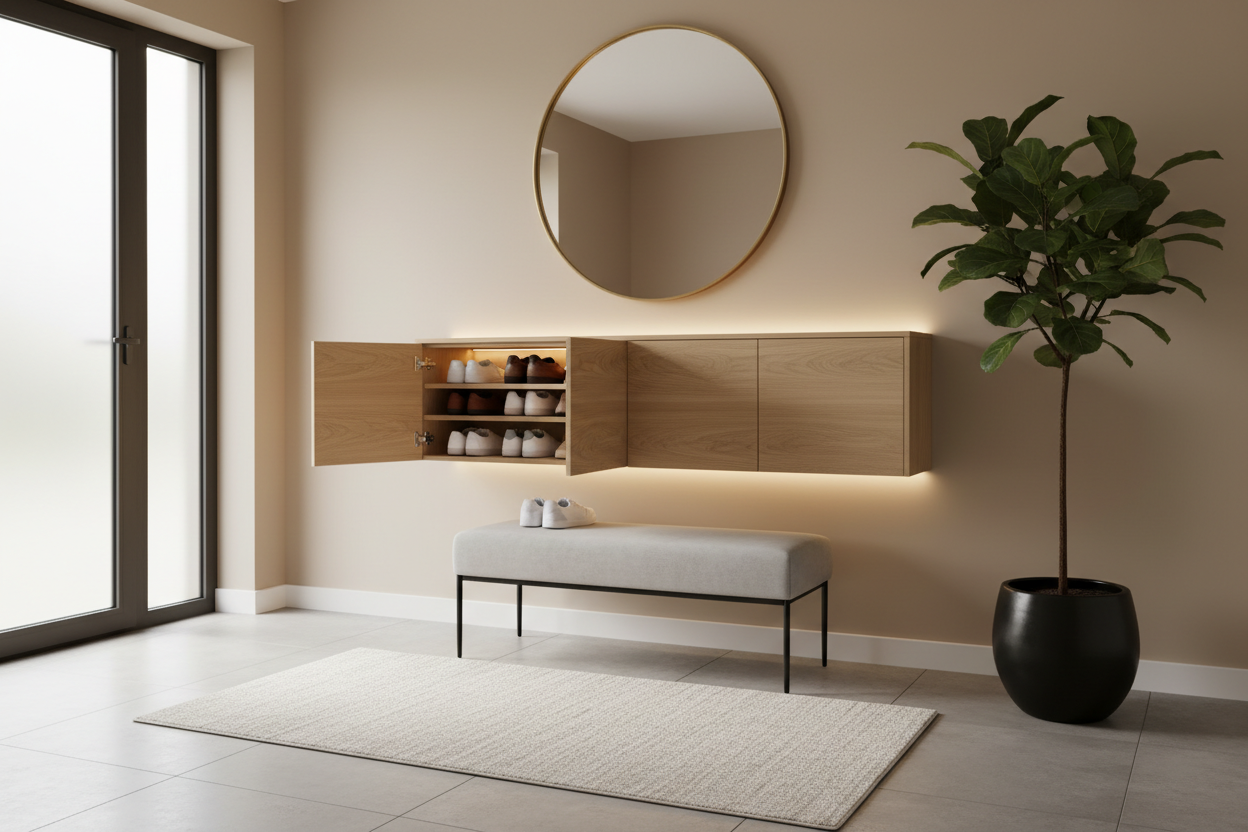
The moment you step through your front door, the battle against clutter begins. Keys land on the nearest flat surface, mail piles up, and accessories seem to multiply on the floor. If you are struggling to maintain order in the most high-traffic area of your home, the solution is rarely adding more floor furniture that blocks your path. Instead, the most effective fix is looking up. An entryway wall cabinet lifts your storage needs off the ground, clearing visual and physical space while keeping daily essentials concealed yet accessible.
Choosing the right storage involves understanding the dimensions of your space and the volume of items you need to hide. Unlike open shelving, which requires constant curation to look tidy, a cabinet with doors allows you to close the messy reality of life away. Whether you are dealing with a cramped apartment corridor or a spacious foyer, moving your storage vertically changes the flow of the room instantly.
My Battle with the Narrow Hallway
I learned the value of vertical storage the hard way in my first city apartment. The hallway was barely wide enough for two people to pass each other, yet I insisted on placing a traditional console table against the wall. For months, I found myself bruising my hip on the corner of that table or kicking the legs every time I carried groceries in. The space felt claustrophobic.
The dynamic changed completely when I removed the table and installed a shallow wall-mounted entryway cabinet. Suddenly, the floor was open. The room felt two feet wider, and I could easily sweep underneath it without moving heavy furniture. That cabinet became the designated drop zone for dog leashes and sunglasses, and because it was mounted at chest height, I stopped tossing things mindlessly onto a low surface. It forced a level of organization that floor furniture never did.
Why Floor Clearance Matters
The primary advantage of a wall-mounted entryway cabinet is the illusion of space. When the eye can see the floor extend all the way to the wall (or baseboard), the brain perceives the room as larger. In tight foyers, preserving floor real estate is crucial. Bulky dressers or tables eat up square footage and can make a grand entrance feel like a bottleneck.
Cleaning becomes significantly easier as well. Dust bunnies love to congregate around the legs of heavy furniture. With a floating cabinet, you can run a vacuum or mop underneath in seconds. This setup also prevents the common issue of items rolling under a heavy unit, never to be seen again.
Choosing the Right Dimensions for Your Hallway
Depth is the single most critical factor when selecting a hallway wall cabinet. Standard kitchen cabinets are usually 12 to 24 inches deep, which is often too intrusive for a narrow corridor. For an entryway, you generally want a profile that is slim—often between 8 to 12 inches deep.
You need enough depth to store mail, small baskets, or folded scarves, but not so much that the cabinet impedes traffic flow. If you plan to hang the cabinet in a particularly narrow spot, measure the swing of your front door. Ensure that when the door is fully open, it does not strike the cabinet. Sliding doors are a fantastic feature for these tight spaces, eliminating the need for clearance to swing a cabinet door open.
Modular Systems vs. Standalone Pieces
Depending on your storage requirements, you might look beyond a single box. An entryway wall unit offers a more comprehensive approach. These systems often combine closed cabinetry with open cubbies, hooks, and sometimes even a floating bench element. They work exceptionally well in larger mudrooms where you need to categorize items for different family members.
A modular unit allows you to customize the layout. You might place a closed cabinet high up for seasonal items like winter gloves, while keeping open hooks below for daily coats. This creates a dedicated station that handles everything from backpacks to car keys without consuming the floor space that a standalone wardrobe would.
Installation and Safety Considerations
Gravity is not a suggestion; it is a law. When you load a cabinet with paper, metal keys, and electronics, it becomes heavy quickly. You cannot rely on simple drywall anchors for an entryway wall cabinet. Securing the unit into wall studs is non-negotiable for safety. If the cabinet positioning does not align perfectly with your studs, use a French cleat system, which bridges the studs and provides a continuous rail for the cabinet to hang on.
Height placement is another variable that affects utility. A common mistake is mounting the cabinet too high, making the top shelf unusable for anyone under six feet tall. A good rule of thumb is to position the bottom of the cabinet about 36 to 42 inches off the floor. This mimics the height of a standard console table, allowing the top surface to serve as a display area for a lamp, a plant, or a framed photo, while keeping the contents within easy reach.
Styling Your Floating Storage
Once the mechanics are handled, the aesthetic integration brings the look together. A standalone box on a wall can look stark if not anchored visually. Adding a mirror directly above the unit draws the eye up and reflects light, brightening the entry. This combination creates a functional vanity station for a last-minute appearance check before leaving the house.
Under-cabinet lighting can also soften the look. A simple battery-operated LED strip attached to the bottom of the cabinet casts a warm glow on the floor, serving as a nightlight for the hallway. If you need extra utility, consider mounting decorative hooks on the wall immediately below the cabinet. This utilizes the dead space underneath for umbrellas or reusable grocery bags, turning a single cabinet into a high-functioning storage zone.
Material Selection and Durability
Entryways endure temperature fluctuations and occasional moisture from wet coats or umbrellas. While solid wood is durable and aesthetically pleasing, high-quality laminates or painted MDF (Medium Density Fiberboard) are often easier to wipe down and less susceptible to warping in drafty areas. Metal cabinets offer a modern, industrial look and are incredibly durable, though they can be noisy when tossing keys inside.
If you choose a wood finish, ensure it is sealed properly. This protects the surface from water rings if someone places a damp package or a coffee cup on top. For high-traffic family homes, a matte finish hides fingerprints better than high-gloss lacquer, keeping the entryway looking cleaner for longer.
Frequently Asked Questions
How much weight can a wall-mounted cabinet hold?
This depends entirely on the installation method and the cabinet's construction. A unit screwed directly into wall studs can typically support 50 to 100 pounds easily. However, if you use drywall anchors, the capacity drops significantly, often to less than 20 pounds, which is risky for cabinetry.
What is the ideal depth for a narrow hallway cabinet?
For tight corridors, aim for a depth of 8 to 10 inches. This provides enough space for keys, wallets, and mail without protruding into the walking path. Anything deeper than 12 inches may feel obstructive in a standard hallway width.
Can I install an entryway wall cabinet in a rental apartment?
Yes, but you will likely need to patch screw holes when you move out. Since these cabinets require stud mounting for safety, the holes will be significant. Always check your lease agreement regarding wall mountings, but most landlords consider filled and painted holes to be normal wear and tear.


Leave a comment
This site is protected by hCaptcha and the hCaptcha Privacy Policy and Terms of Service apply.