










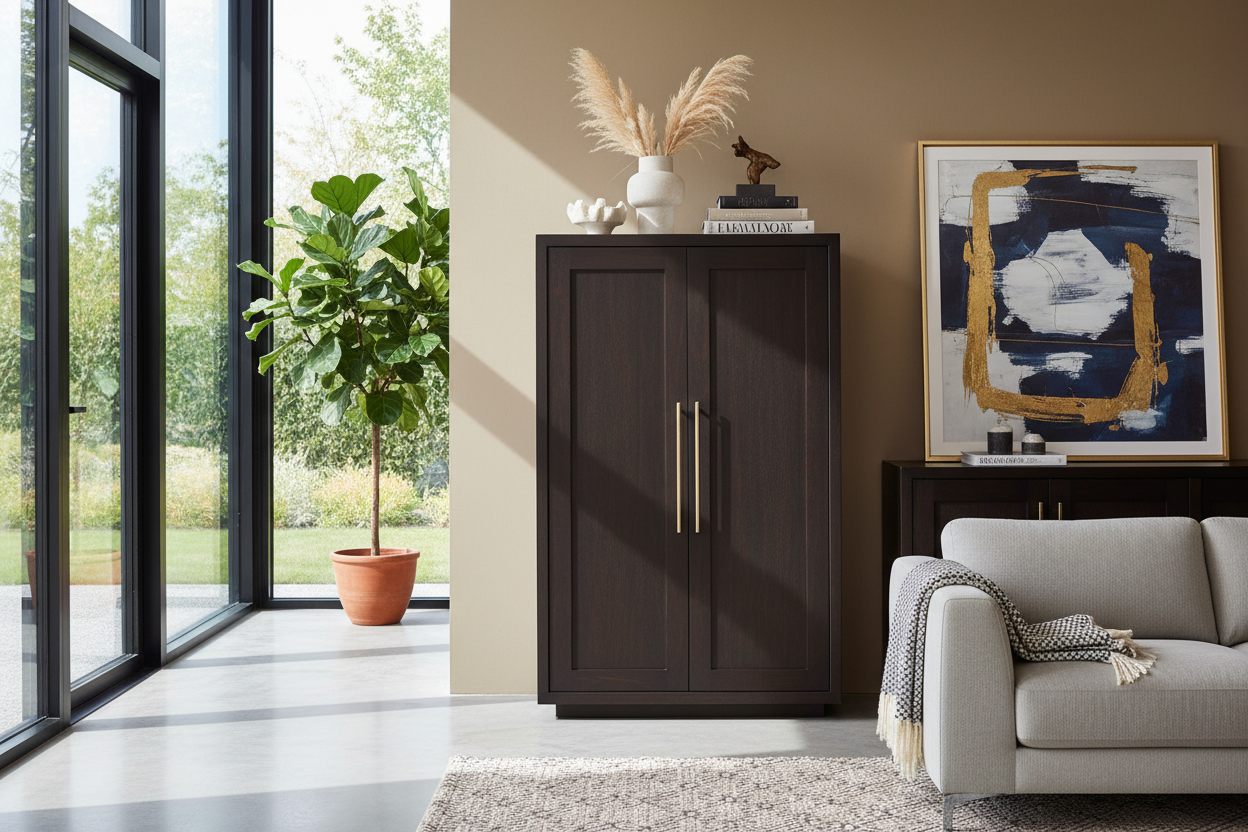
I constantly hear the same hesitation from clients: they desperately need closed storage to hide daily clutter, but they panic at the thought of bringing dark furniture into their home. There is a persistent design myth that a storage cabinet dark wood finish will instantly turn a bright, airy living room into a heavy, dated cave.
In reality, rich tones like walnut, espresso, and charcoal-stained oak are essential for grounding a room. Without them, spaces full of light neutrals often end up looking flat and sterile. By understanding scale, contrast, and visual weight, you can integrate these rich pieces into your home while maintaining a modern, inviting atmosphere.
Quick Decision Guide
- Mind the silhouette: Choose cabinets with legs rather than flush-to-the-floor bases to let light pass underneath and reduce visual bulk.
- Contrast is mandatory: Place dark wood against lighter walls or textured wallpapers to make the piece pop rather than recede into the shadows.
- Consider the undertones: Match the temperature of the wood. A cool espresso stain pairs well with crisp whites, while a warm walnut needs creamy or earthy backgrounds.
- Hardware matters: Swap out heavy, dark knobs for unlacquered brass or polished nickel to instantly modernize a traditional dark wood piece.
Proportion and Room Layout
The biggest mistake you can make with dark furniture is ignoring the scale of your room. Dark finishes carry more visual weight than light oaks or painted whites, meaning they naturally draw the eye and command attention.
Navigating Tight Footprints
If you are working with an apartment living room or a narrow hallway, you do not have to abandon rich finishes. A small dark wood cabinet works beautifully as an entryway drop zone or a compact bar station. To keep it from feeling oppressive, style the top with a highly reflective surface, like a leaning mirror or a metallic tray, which bounces light back into the space.
Maximizing Vertical Space
When floor space is at a premium, building upward is your best strategy. A tall dark wood cabinet provides massive amounts of concealed storage for board games, extra linens, or media equipment without eating up your square footage. Placing a dark wood tall cabinet in a room with standard 8-foot ceilings can actually draw the eye upward, creating the illusion of height, provided you leave negative space on either side of the piece.
Style and Coordination
Integrating dark wood into a modern aesthetic requires intentional layering. If everything in your room is dark, it feels heavy. If only one piece is dark, it looks like a mistake.
Creating Visual Echoes
To make a dark cabinet feel intentional, you need to echo its tone at least twice elsewhere in the room. This could be as simple as a dark bronze curtain rod, a charcoal throw pillow, or a walnut picture frame on the opposite wall. This technique creates a cohesive triangle of visual anchors, allowing the cabinet to feel integrated rather than isolated.
Lessons from My Own Projects
I love specifying rich, dark woods for my clients, but I always have a frank conversation about maintenance first. A few years ago, I placed a stunning, matte-blackened walnut cabinet in a sun-drenched Seattle living room. It looked phenomenal in our initial portfolio photos.
However, the homeowner quickly pointed out a major flaw: the dark, flat horizontal surfaces highlighted every single speck of dust the afternoon sun hit. I learned that if you are placing a dark piece directly in a sunbeam, you are committing to a daily dusting routine. Additionally, I realized that solid dark wood doors can look like a 'black hole' in a dimly lit room. Now, if the room lacks natural light, I specifically source cabinets with fluted wood detailing, rattan inserts, or glass upper doors to break up the heavy monolithic look.
Frequently Asked Questions
How do I keep dark wood furniture from looking dated?
Avoid ornate carvings and heavy, matching furniture sets. Pair a clean-lined dark wood cabinet with contemporary textiles, abstract art, and modern metal hardware to keep the aesthetic fresh and current.
What wall colors work best behind dark wood?
Warm whites, soft sage greens, and muted terracottas create beautiful contrast. Avoid dark, cool grays, which can make the wood look muddy and absorb too much light from the room.
Can I mix light and dark wood in the same room?
Absolutely. Mixing wood tones gives a room a curated, collected-over-time feel. The secret is ensuring the woods share a similar grain pattern or undertone, and using a unifying element like a large area rug to bridge the gap between a light oak floor and a dark walnut cabinet.


Leave a comment
This site is protected by hCaptcha and the hCaptcha Privacy Policy and Terms of Service apply.