










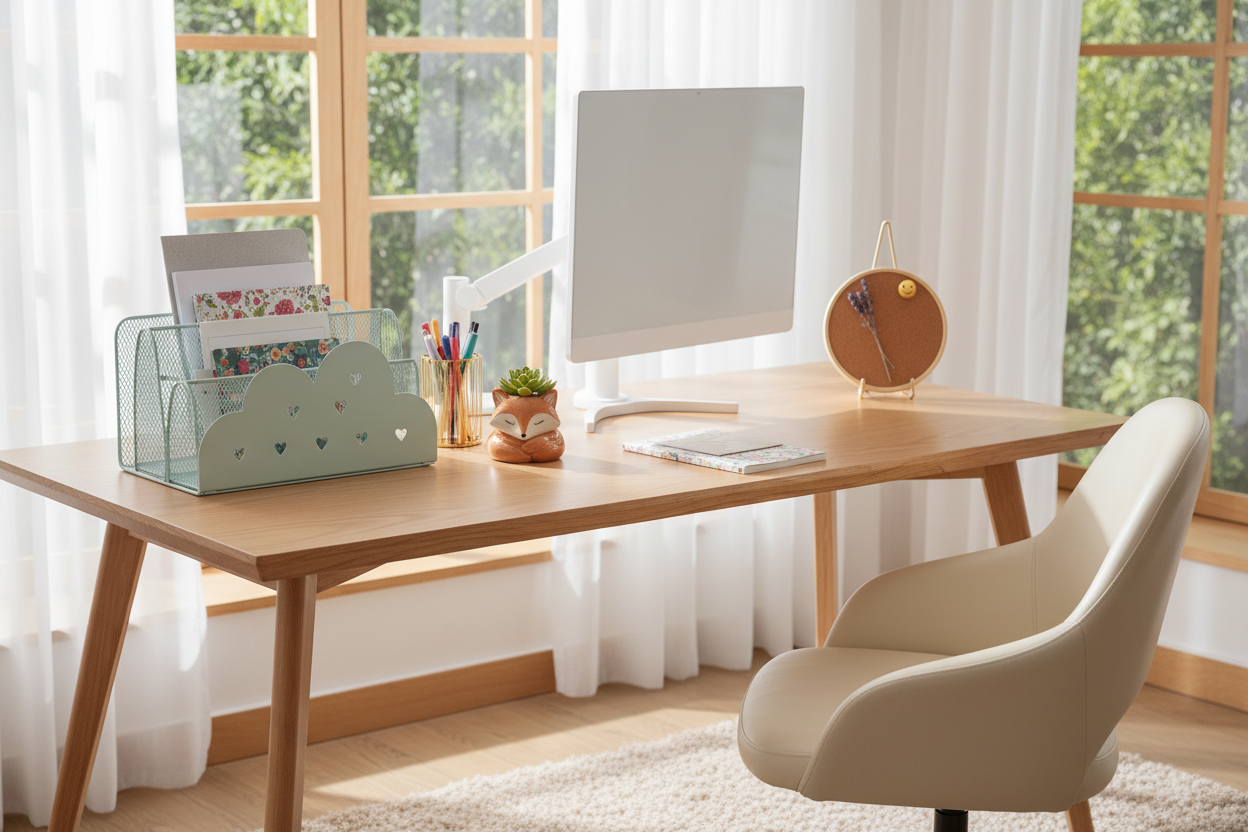
There is a specific tension that exists in home office design: the battle between necessary function and visual tranquility. We often sacrifice the latter for the former, resigning ourselves to utilitarian plastic bins that disrupt the flow of a carefully curated room. However, the right decorative desktop organizer does not merely store your essentials; it acts as an architectural element for your workspace, grounding your aesthetic while taming the chaos. It is the bridge between a cluttered surface and a clear mind.
Key Features to Consider Before Buying
- Material Integrity: Opt for solid wood, weighted metal, or high-grade acrylic over thin plastics to ensure the piece anchors the desk rather than sliding around.
- Scale & Proportion: Measure your available surface area; the organizer should occupy no more than 20% of your primary work zone to maintain negative space.
- Compartment Configuration: Ensure slot dimensions match your specific tools (e.g., horizontal slots for papers, vertical for notebooks).
- Surface Protection: Check the underside for felt or rubber backing to prevent damage to delicate desk finishes like lacquer or veneer.
Elevating the Aesthetic: Materiality and Texture
When selecting a desktop accessory, treat it as you would a piece of accent furniture. The material you choose dictates the visual weight of the desk. For a mid-century modern or Scandinavian workspace, a timber-based unit adds warmth and organic texture. If you are looking for a cute desk file organizer that feels sophisticated rather than juvenile, look for blonde oak or walnut finishes with clean, mitered edges.
Conversely, for industrial or glam interiors, metal wire or brass structures offer a lighter silhouette. They allow light to pass through, keeping the desk feeling airy. However, be wary of cheap alloys; look for powder-coated finishes or solid brass that will develop a patina over time.
The Art of the "Set" vs. Curated Pieces
A common impulse is to buy everything in a matching kit. While cute office organizer sets offer instant cohesion, they can sometimes make a space look like a corporate catalog. As a designer, I encourage mixing materials to create depth. For instance, pair a structured, leather-bound document tray with a ceramic or stone vessel for your writing implements.
If you do prefer a uniform look, ensure the set has enough variation in height and shape. A cute desktop file organizer combined with a low-profile tray creates a skyline effect on your desk, preventing the arrangement from looking flat or monotonous.
Function Meets Form: Small Scale Organization
The devil is in the details—specifically, paperclips, USB drives, and fountain pens. A cute stationery organizer is essential here, but functionality is paramount. Look for drawers with smooth glides or tiered compartments that allow for easy retrieval. In luxury design, we often repurpose items like jewelry boxes or tiered serving trays for this purpose, but a purpose-built organizer with velvet-lined drawers adds that tactile layer of luxury every time you reach for a stamp.
My Personal Take on decorative desktop organizer
In my years of styling home offices, I have learned a hard lesson that product photos never show you: the acoustic reality and surface damage. I once specified a stunning, heavy architectural concrete organizer for a client with a glass-top desk. It looked incredible, but the sound of grinding stone on glass every time it was nudged was unbearable, and it eventually left micro-scratches on the surface.
Now, my non-negotiable rule is to inspect the bottom. If I find a beautiful metal or stone piece that lacks protection, I immediately apply high-density felt pads before it ever touches a client's furniture. Furthermore, I avoid organizers with deep, sharp corners that are impossible to dust. If my hand can't fit in the cubby with a microfiber cloth, it’s not going on the desk. Practicality must sustain the aesthetic.
Conclusion
Your workspace is a reflection of your workflow. By selecting an organizer that respects both design principles and ergonomic needs, you transform a mundane necessity into a focal point. Invest in quality materials and thoughtful silhouettes to create a space that invites productivity.
Frequently Asked Questions
How do I stop my desk organizer from sliding when I open a drawer?
This is usually due to the item being too lightweight. Look for weighted organizers made of stone, heavy wood, or metal. Alternatively, applying small, clear silicone bumper pads to the bottom will provide the necessary grip without damaging your desktop.
Can I mix metal finishes on my desk accessories?
Absolutely. Mixing metals adds sophistication. A good rule of thumb is to choose a dominant metal (like brushed brass) and an accent metal (like matte black). Just ensure the undertones complement each other; mixing cool chrome with warm copper can sometimes create visual dissonance.
What is the best organizer style for a small writing desk?
For compact surfaces, verticality is key. Utilize a tiered sorter or a wall-mounted pocket system to keep the horizontal surface clear for writing. Avoid wide, sprawling sets that consume valuable elbow room.


Leave a comment
This site is protected by hCaptcha and the hCaptcha Privacy Policy and Terms of Service apply.