











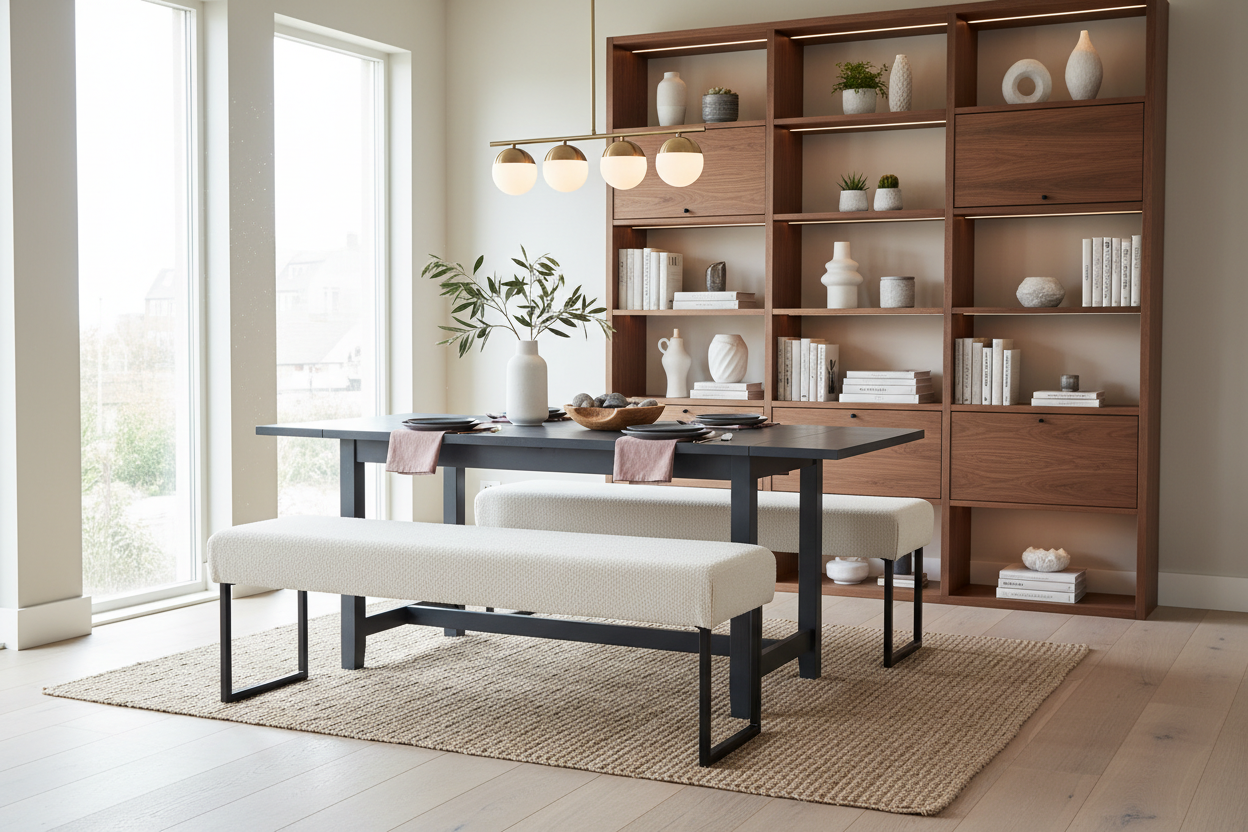
One of the most frequent dilemmas I encounter in residential projects is balancing spatial flow with adequate seating capacity. The traditional six-chair setup often feels rigid and consumes valuable circulation space. This is where a dining room table with bench ikea configuration becomes a strategic design asset. It is not merely a budget-friendly option; when executed correctly, it introduces a communal, relaxed silhouette that opens up a room. However, the line between a curated Scandinavian aesthetic and a college apartment look is thin. This guide explores how to select and style these pieces to achieve a sophisticated, cohesive interior.
Quick Decision Guide: What to Look For
- Scale and Clearance: Ensure the bench is at least 4-6 inches shorter than the table length (between legs) so it can be fully tucked away to maximize floor space.
- Material Integrity: Distinguish between solid wood options (like the SKOGSTA acacia) for longevity versus particleboard veneers (like LACK) which may chip under heavy daily use.
- Visual Weight: Pair heavy, blocky tables with lighter, spindled chairs opposite the bench to maintain visual balance.
- Ergonomics: If the bench is backless, prioritize it for "active" seating zones (kids or quick meals) rather than long dinner parties.
Curating the Material Palette
When selecting an ikea dining table and bench, the finish dictates the formality of the room. In my design practice, I often steer clients toward the solid wood lines. The visible grain in series like the MÖRBYLÅNGA adds organic texture that veneer options lack. If you are aiming for a 'Japandi' or minimalist aesthetic, the matte finish of these woods absorbs light beautifully, reducing glare.
Conversely, if you are working with a tighter footprint, an ikea kitchen table and bench in a lighter birch or ash veneer (such as the LISABO series) keeps the visual weight low. The floating effect of tapered legs helps the room feel larger, a crucial trick for urban apartments.
Space Planning and Layout Strategy
The primary advantage of a table with bench ikea setup is the ability to push the furniture closer to a wall than chairs would allow. Chairs require roughly 24-30 inches of pull-out space; a bench requires significantly less.
Defining the Zone
To elevate the look, anchor the dining set with a rug. However, a common mistake is choosing a rug that is too narrow. Ensure the rug extends at least 24 inches beyond the bench when it is in use. This prevents the 'perched on the edge' look and protects your flooring from the inevitable scooting motion of the bench.
Comfort and Customization
Let’s be honest about the ergonomics of an ikea bench dining set: hard wood is not conducive to four-hour dinner parties. To mitigate this without sacrificing style, I recommend custom seat pads. You don't need to stick to IKEA's stock cushions. Sourcing custom leather or high-performance velvet pads can instantly make a standard EKEDALEN bench look bespoke. This layering adds softness and introduces a secondary color to your palette.
My Personal Take on dining room table with bench ikea
I want to share a specific detail from a project I worked on last year that you won't find in the catalog description. We installed a solid pine IKEA bench for a client with two young children. While the aesthetic was perfect, we immediately noticed a functional quirk: the slide factor.
Because IKEA benches are often lightweight (especially the veneer models), they have a tendency to slide backward on hardwood floors when an adult sits down quickly. It feels unstable and cheapens the experience. My "unpolished" fix? I always apply heavy-duty, non-slip rubber grip pads to the feet—not the felt ones IKEA supplies. The felt protects the floor but turns the bench into a sled. The rubber grips lock the bench in place, giving it the substantial feel of a built-in banquette. Additionally, be aware that on the softer pine finishes, rivets on jeans will leave indentations over time. I view this as a patina of life, but if you want perfection, opt for the harder acacia wood options.
Conclusion
Creating a refined dining space with IKEA components is entirely possible if you pay attention to scale, material quality, and texture. By treating the bench as a flexible architectural element rather than just a seat, you can create a dining area that feels spacious, inviting, and intentionally designed.
Frequently Asked Questions
Can I mix different IKEA series for a table and bench?
Absolutely. In fact, as a designer, I encourage it. Matching sets can look flat. Try pairing a white modern table (like MELLTORP) with a warm wood bench to add depth and contrast.
How do I clean an upholstered IKEA bench?
If you choose an upholstered version like the EKEDALEN, I highly recommend applying a fabric protector spray (like Scotchgard) immediately after assembly. Most covers are machine washable, but spot cleaning is easier if the fabric is pre-treated.
What is the ideal table-to-bench ratio?
Ideally, the bench should run the length of the table but fit between the legs. For a standard 70-inch table, a bench around 55-60 inches provides ample seating for two adults or three children without looking crowded.

Leave a comment
This site is protected by hCaptcha and the hCaptcha Privacy Policy and Terms of Service apply.