










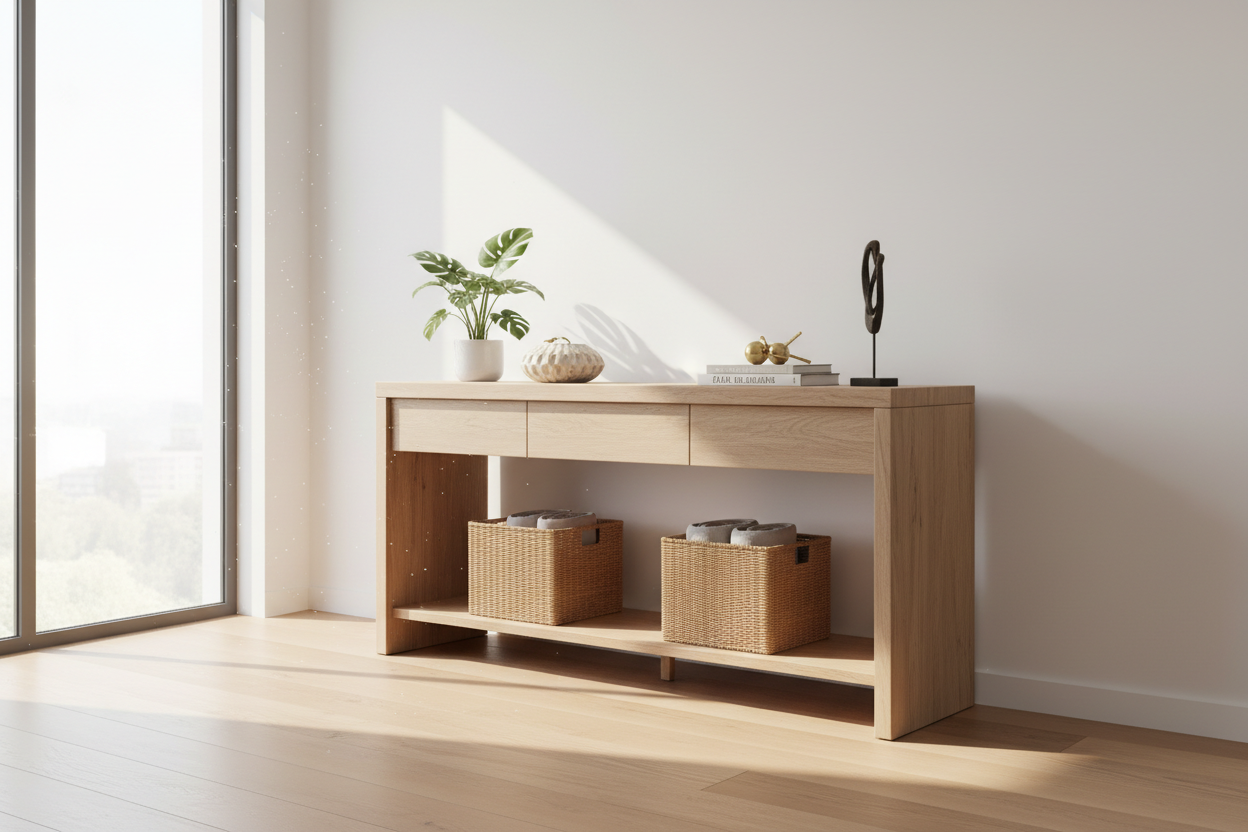
The moment you walk through your front door, your home should feel like a sanctuary, not a storage unit. Yet, for many of us, the foyer becomes a dumping ground for mail, keys, bags, and shoes. The solution isn't just a flat surface; it is maximizing vertical space with furniture that works double duty. An entryway table with shelves offers the perfect balance between a decorative landing strip and a functional storage system, allowing you to hide the clutter while displaying your personality.
Choosing the right piece requires looking beyond just the width and height. You need to consider how the negative space—the area between the shelves—can be utilized. Whether you are working with a sprawling foyer or a cramped corridor, the addition of a lower tier transforms a simple console into a command center for your daily life. It anchors the furniture visually and prevents the piece from looking top-heavy or flimsy in a high-traffic zone.
My Battle with the "Drop Zone"
I learned the value of extra tiers the hard way. In my previous apartment, I fell in love with a minimalist, floating console. It looked sleek in photos, but in practice, it was a disaster. Because there was no lower storage, shoes piled up underneath it in a messy heap, and the top surface became overcrowded because I had nowhere else to put the mail basket. It wasn't until I swapped it for a sturdy entryway table with shelf storage that the space finally made sense.
Suddenly, I had a designated spot for everything. The top remained clear for a lamp and a small tray for keys, while the bottom shelf housed two large wicker baskets—one for shoes and one for incoming packages. That simple shift from a single surface to a multi-tiered system changed my entire arrival routine. It stopped the clutter from migrating into the living room.
Why Vertical Storage Matters in Narrow Spaces
Hallways are notoriously difficult to furnish. You have limited floor space, so you cannot simply add a dresser or a deep cabinet without blocking the flow of traffic. This is where a hallway table with shelves shines. It maintains a slim profile—usually between 10 to 14 inches deep—while doubling or tripling your usable surface area.
By utilizing the lower levels, you draw the eye downward, which can actually make a narrow hall feel grounded rather than cluttered. A hallway table shelf creates a dedicated home for items that usually end up on the floor. If you have a radiator or a vent, a table with an open shelving structure allows for airflow while still reclaiming that space for storage.
Styling the Top vs. The Bottom
There is a distinct art to styling these tables to ensure they look curated rather than chaotic. The top surface is your "moment." This is where you place a mirror on the wall behind to reflect light, a table lamp for ambiance, and perhaps a small sculptural piece. It should remain relatively airy.
The lower section of an entryway table shelf is the workhorse. This is not the place for tiny trinkets that will gather dust or get kicked. Instead, think in terms of bulk and weight. Large coffee table books stacked horizontally work well here. Even better, use uniform bins or baskets. Baskets hide the ugly stuff (dog leashes, winter gloves, reusable grocery bags) while adding texture to the vignette. If your table has a middle shelf, that is the sweet spot for decorative objects that are too large for the top but too delicate for the bottom, like a ceramic bowl or a potted plant.
Selecting the Right Material for Durability
Your entryway sees more traffic than almost any other part of the house. People brush past furniture with grocery bags, wet coats, and muddy boots. Therefore, the material of your hallway table with shelf storage matters immensely. While glass tables look elegant and take up less visual weight, they are high-maintenance if you have children or pets. Fingerprints and dust show up instantly on glass shelves.
Solid wood or metal frames are generally superior choices for longevity. A rustic wood hallway table with shelves can hide dings and scratches, blending them into the character of the piece. If you prefer an industrial look, a metal frame with wood insets offers incredible stability. This is particularly important if you plan to store heavy items like textbooks or tools on the bottom shelf. You want a piece that won't wobble when you toss your keys onto it.
Measuring for the Perfect Fit
Before purchasing anything, get out the blue painter's tape. Mark the dimensions of the potential table on your floor. This is a crucial step that many skip. A hallway table with shelf capabilities might look small in a showroom with 20-foot ceilings, but it can easily choke a standard 36-inch wide hallway.
Ensure you have at least 30 to 36 inches of walking clearance passing the table. If your entryway is tight, look for a "demilune" (half-moon) shape. These have rounded edges, saving your hips from painful bruises when you rush out the door in the morning. Even with the curved shape, you can often find designs that include that essential lower shelf for stability and storage.
The "Landing Strip" Concept
Apartment Therapy popularized the concept of the landing strip, and your table is the core of this philosophy. To make your entryway table with shelves truly functional, pair it with wall-mounted hooks above. The table handles the items you set down, while the hooks handle the items you take off. This vertical integration turns a 4-foot wide section of wall into a full mudroom experience, even if you don't have a dedicated room for it.
Visual balance is key here. If you hang a heavy mirror or artwork above, the table needs to feel substantial enough to support it visually. A spindly table with no bottom shelf will look weak underneath a large mirror. The visual weight of the books or baskets on the lower shelf balances the composition, creating a pleasing symmetry that welcomes guests instantly.
Final Thoughts on Organization
Ultimately, the furniture you choose for your entrance dictates your habits. If you provide yourself with open surfaces, you will fill them with clutter. If you provide yourself with structured storage, like an entryway table with shelf space designated for specific categories, you encourage tidiness. It is about reducing the friction of putting things away. When the basket is right there on the lower shelf, dropping your scarf into it is just as easy as dropping it on the floor, but the result is a home that feels calm, collected, and intentionally designed.
Frequently Asked Questions
How tall should an entryway table be?
Standard console tables typically range from 30 to 36 inches in height. This places the surface at roughly the same level as your hand when your arm is bent, making it comfortable to drop keys or pick up mail without stooping. If you place the table behind a sofa, ensure it is no taller than the sofa back.
What should I put on the bottom shelf of a console table?
The bottom shelf is ideal for heavy or bulky items that anchor the piece visually. Large woven baskets for shoe storage, stacks of oversized art books, or a substantial ceramic vase are excellent choices. Avoid small knick-knacks, as they can look cluttered and are vulnerable to being kicked or bumped.
Can I use a hallway table in a narrow corridor?
Yes, but depth is the most critical measurement. Look for "slim" or "skinny" console tables that are 12 inches deep or less to ensure you don't obstruct the walkway. A table with open shelving rather than solid cabinet doors will also help the hallway feel wider by allowing you to see the wall through the furniture.


Leave a comment
This site is protected by hCaptcha and the hCaptcha Privacy Policy and Terms of Service apply.