










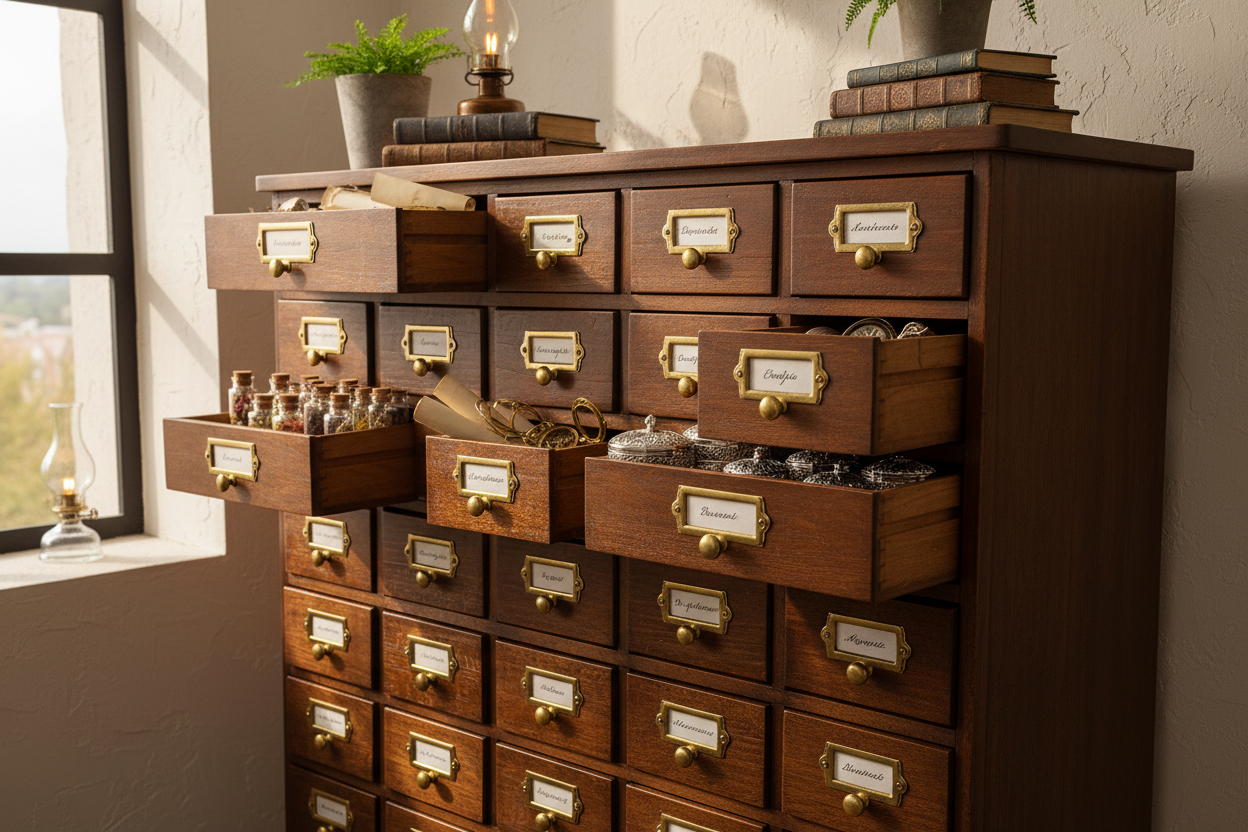
We all have that one category of items that refuses to be organized. For some, it is a mountain of crafting supplies like beads and bobbins; for others, it is an endless tangle of charging cables, batteries, and stray screws. The solution often isn't another plastic bin or a generic bookshelf. The most effective, and arguably most beautiful, answer to this problem is a small drawer wood cabinet. These pieces, often reminiscent of old library card catalogs or apothecary chests, offer a unique combination of micro-organization and aesthetic warmth that modern furniture rarely achieves.
The Enduring Appeal of Many Tiny Compartments
There is a specific psychological satisfaction in having a dedicated slot for everything. A wood cabinet with small drawers operates on the principle of separation. Instead of digging through a large junk drawer where paperclips mix with postage stamps, you gain the ability to categorize your life down to the smallest detail. This style of furniture was originally designed for pharmacists, librarians, and machinists who needed instant access to thousands of tiny, distinct items without searching.
Bringing this concept into a modern home changes the flow of a room. It turns clutter, which usually generates stress, into a curated collection. Visually, the repetition of drawer faces and hardware creates a rhythm that feels orderly and intentional. Whether you choose a tall, slender unit for a narrow hallway or a squat, wide chest for a desktop, the impact is immediate. The mess disappears behind a facade of solid timber and brass.
My Experience with the "Impossible" Collection
A few years ago, I inherited a massive collection of vintage fountain pen parts. Nibs, feeds, converters, and tiny ink sacs took over my entire desk. I tried tackle boxes, but they looked industrial and cold in my study. I eventually hunted down a vintage oak machinist chest—essentially a heavy-duty wood cabinet with small drawers lined in green felt.
The transformation was profound. Not only did I reclaim my workspace, but the act of working became more enjoyable. Pulling open a smooth, wooden drawer to select a specific nib felt ceremonial. It stopped being just "storage" and became part of the hobby itself. The wood breathed, the drawers had a satisfying weight to them, and the piece itself became a conversation starter. It taught me that the vessel you keep your tools in matters just as much as the tools themselves.
Identifying Quality Construction
When you begin shopping for a small drawer wood cabinet, you will quickly notice a divide in quality. Because these pieces require significant labor to manufacture—fitting twenty drawers takes much longer than fitting two—cheap reproductions often cut corners. You want to look closely at the joinery. Dovetail joints on the drawer boxes are the gold standard, indicating the piece was built to withstand decades of opening and closing.
Pay attention to the glide mechanism. Traditional apothecary chests usually feature wood-on-wood runners. While this is historically accurate, it requires the wood to be well-seasoned. If the manufacturer used green or low-quality timber, those small drawers will swell and bind in humid weather. High-quality pieces often use waxed hardwood runners or even hidden metal glides in modern iterations to ensure smooth operation. Check the drawer bottoms as well; flimsy cardboard bottoms will bow under the weight of even light items like batteries or jewelry.
The Role of Hardware
The handles and label holders are the jewelry of the piece. On a unit with fifteen or twenty compartments, the hardware defines the look. Cup pulls are traditional and ergonomic, allowing you to hook a finger in and slide the drawer out easily. Card holders are almost essential for a wood cabinet with small drawers if you plan to use it for genuine organization. Being able to slip a small hand-written label into a brass frame saves you from opening six different drawers to find a single AAA battery.
Versatile Placement in the Home
These cabinets are surprisingly versatile chameleons. In an entryway, a console-height unit serves as a catch-all for keys, wallets, sunglasses, and dog walking supplies. Each family member can be assigned a row, preventing the morning scramble for essentials. The natural grain of the wood adds a grounding element to the space, welcoming guests with warmth rather than the chaotic visual of a coat rack.
In the kitchen, they function beautifully as tea stations or spice racks. Standard spice jars often fit perfectly into apothecary-sized drawers. Laying them flat with the labels facing up allows you to scan your inventory instantly. Just ensure the cabinet is sealed properly if it sits near the stove, as cooking grease can be difficult to clean off raw or matte-finished wood.
Maintenance and Care for Multiple Drawers
Owning a piece of furniture with moving parts requires a bit of upkeep. The most common issue owners face with a small drawer wood cabinet is friction. Wood expands and contracts with the seasons. A drawer that slides perfectly in January might stick in July.
Force is never the answer. If a drawer binds, remove it and rub a block of paraffin wax or even a simple uncolored candle along the runners and the bottom edges of the drawer sides. This traditional lubrication method protects the wood and restores that silky, gliding feel. Avoid using oil-based lubricants like WD-40, which can soak into the wood fibers, cause swelling, and eventually attract dust that turns into a sticky grit.
Cleaning involves dusting the many crevices created by the drawer fronts. A soft paintbrush is often more effective than a cloth for getting into the corners of recessed panels and around intricate hardware. Regular waxing of the exterior protects the finish and keeps the grain looking rich, ensuring your organizational centerpiece remains an heirloom for the next generation.



Leave a comment
This site is protected by hCaptcha and the hCaptcha Privacy Policy and Terms of Service apply.