










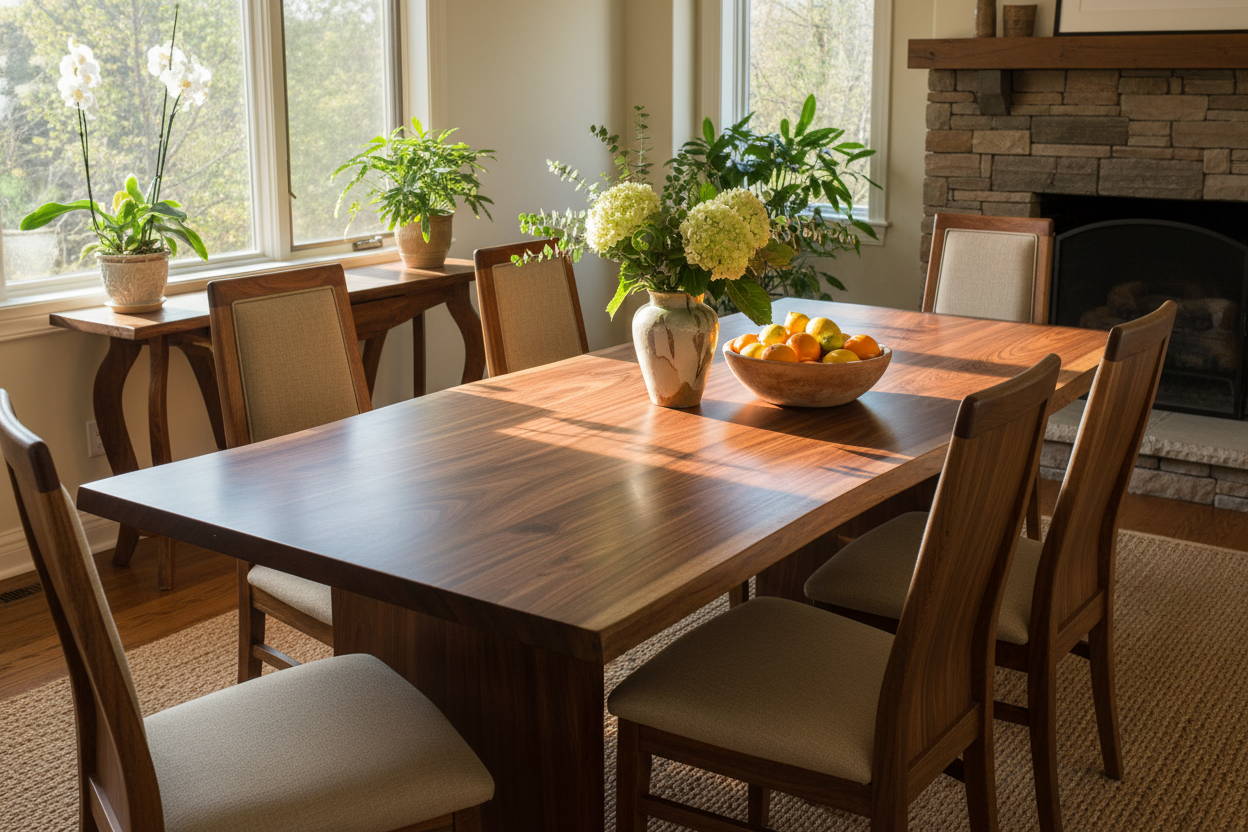
There is a distinct sound a plate makes when you set it down on a plastic-veneered particle board table—a hollow, shallow clatter. Compare that to the deep, resonant thud of placing a dish on a real wood dining set. The difference isn't just auditory; it is structural, financial, and emotional. Choosing furniture for the heart of your home goes beyond picking a color that matches the curtains. It is about selecting a foundation for decades of family gatherings, homework sessions, and holiday feasts.
Many shoppers hesitate at the price tag of solid wood dining table sets, wondering if the investment is truly justified. The short answer is yes. Unlike composite materials that chip, swell with moisture, and eventually end up in a landfill, solid lumber offers reparability and longevity. If you scratch a veneer table, you often have to replace it. If you scratch a solid wood table, you have a Saturday afternoon project that leaves the piece looking better than before.
My Journey from Flat-Pack to Solid Oak
I learned this lesson the hard way in my mid-twenties. I bought a trendy, budget-friendly dining set that looked great in the showroom. It had a sleek, dark finish that I thought was sophisticated. Six months later, a water glass left a ring that bubbled the surface. A year later, the leg joints loosened, and no amount of tightening the hex bolts could stop the wobble. It felt disposable because it was.
Eventually, I found an old, beat-up oak table at an estate sale. It was heavy—brutally heavy. The finish was ruined, but the bones were good. After stripping off the old varnish and sanding down the grain, I discovered the rich, golden hues underneath. That table has survived two moves, three toddlers, and countless spills. It anchors the room in a way the old one never could. That experience taught me that a dining room set real wood construction is less of a purchase and more of an adoption; you are taking on something that will likely outlive you.
Distinguishing Hardwood from Softwood
Not all lumber is created equal. When browsing for solid hardwood table and chairs, you are generally looking for deciduous trees like oak, maple, walnut, cherry, or mahogany. These woods are dense, resistant to denting, and feature complex grain patterns. They are the gold standard for dining furniture because they can withstand the daily abuse of cutlery and elbows.
Softwoods, like pine or cedar, are technically "real wood," but they are much more susceptible to dings and scratches. A pine farmhouse table has a lovely rustic charm and develops a patina over time, but it requires a different mindset. You have to embrace the imperfections as character. If you want a pristine surface that resists marring, stick to hardwoods. Understanding the Janka hardness scale—a measurement of the wood's resistance to denting—can be incredibly helpful when comparing species.
The Importance of Construction and Joinery
The material is only half the equation. How the pieces connect determines the lifespan of the furniture. When inspecting solid wood dining room table and chairs, look underneath the tabletop. You want to see wood-on-wood joinery, such as mortise and tenon or dovetail joints. These connection points allow the wood to expand and contract naturally with humidity changes without cracking.
Avoid sets held together primarily by staples or glue alone. Corner blocks—small pieces of wood reinforcing the connection between the legs and the apron—are a sign of quality craftsmanship. Furthermore, if you are drawn to a thick wood dining table set, ensure the base is substantial enough to support that weight. A heavy slab top on spindly legs will eventually fail. The proportions must be balanced for both aesthetics and structural integrity.
Aesthetic Versatility and Restoration
One of the greatest advantages of a real wood dining room table set is its ability to adapt to changing tastes. Trends shift. The dark cherry stain popular in the 90s might feel dated today, but the wood underneath is timeless. With solid wood, you have the option to sand it down and apply a lighter stain, a matte oil finish, or even paint the base while leaving the top natural.
This versatility makes dining room table and chairs solid wood options essentially future-proof. You aren't stuck with a specific look forever. I have seen century-old walnut tables given new life in modern industrial lofts simply by swapping the chairs or changing the finish. This adaptability prevents the wastefulness of "fast furniture" cycles where perfectly functional items are discarded simply because they are out of style.
What to Expect Regarding Maintenance
Owning organic materials does require a small amount of mindfulness. Wood is hygroscopic, meaning it reacts to moisture in the air. Extreme changes in humidity can cause wood to split or warp. Keeping your home's humidity levels relatively stable is good for your health and your furniture. Using coasters and trivets protects the finish from heat marks and water rings.
However, do not let the fear of maintenance scare you away from a solid wood dining room table and chairs. Most modern sealants are incredibly durable. A simple wipe-down with a damp cloth is usually all that is needed for daily cleaning. Avoid harsh chemical cleaners that can strip the oils from the wood. Once or twice a year, depending on the finish, you might apply a furniture wax or oil, which is a surprisingly satisfying ritual that keeps the wood nourished and glowing.
Identifying Quality in the Showroom
When you are ready to buy, get physical with the furniture. Lean on the table; it shouldn't budge. Pull a chair out and sit in it; it shouldn't creak. Run your hand underneath the table edge; it should be smooth, not rough. Check the grain direction. If the grain on the top doesn't match the grain on the edge, it is likely a veneer. A real wood dining set will have end grain that looks like the cut end of a board, consistent with the top surface.
Investing in quality dining furniture transforms the atmosphere of a room. It brings warmth, texture, and a sense of permanence that synthetic materials simply cannot replicate. Whether it is a sleek mid-century modern walnut piece or a chunky reclaimed oak farmhouse table, the presence of real wood grounds the space and invites people to gather, linger, and connect.
Frequently Asked Questions
Does solid wood furniture require a humidifier in the winter?
While not strictly mandatory, using a humidifier in very dry winters is highly recommended. Maintaining a relative humidity between 40% and 45% prevents the wood from shrinking, cracking, or splitting along the grain, preserving the structural integrity of your table.
Can I mix different wood types for the table and chairs?
Absolutely, mixing woods can add depth and visual interest to your dining room. A common approach is to keep the undertones (warm vs. cool) consistent, or to pair a stained wood table with painted chairs to create a curated, collected look rather than a matched set.
How do I fix a white heat ring on a solid wood table?
White rings usually indicate moisture trapped in the finish, not damage to the wood itself. You can often remove them by gently ironing over a towel placed on the spot (low heat, no steam) or by using a specialized watermark remover cloth available at most hardware stores.

Leave a comment
This site is protected by hCaptcha and the hCaptcha Privacy Policy and Terms of Service apply.