










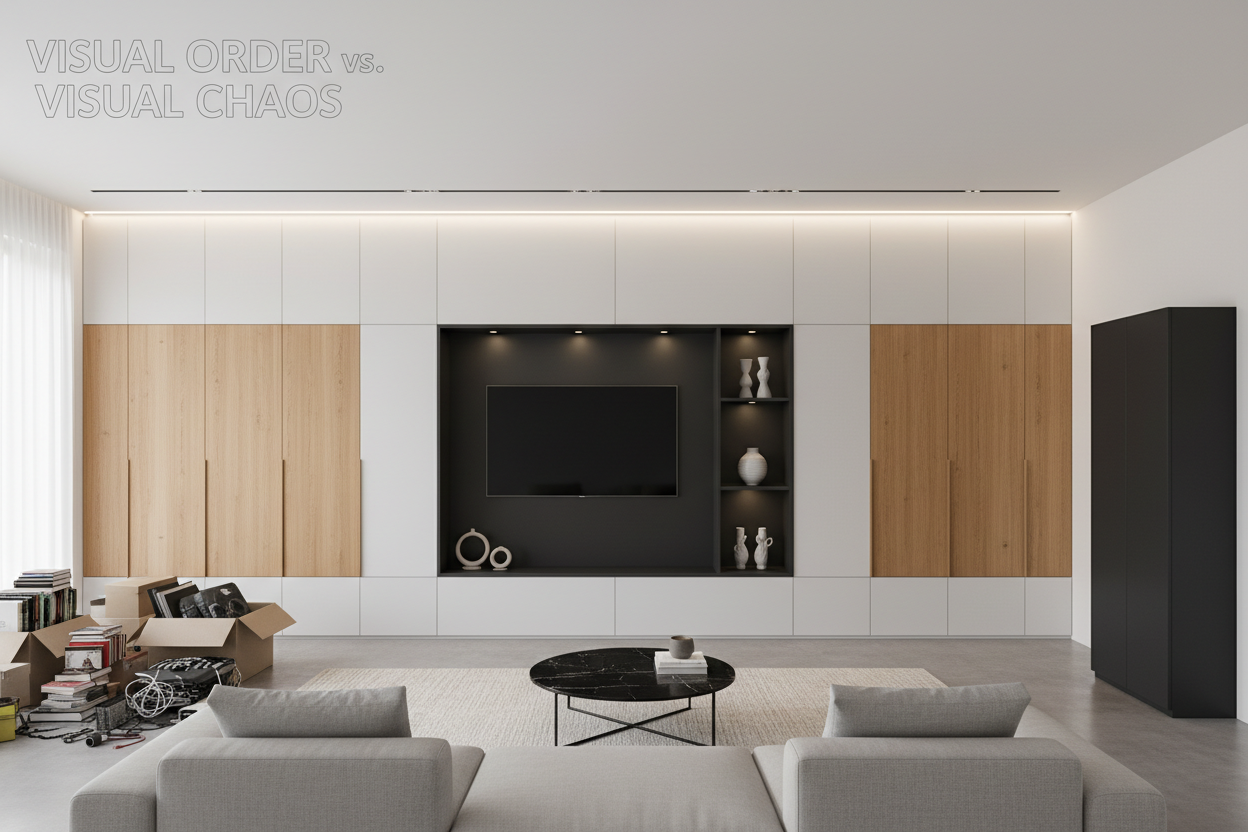
Open shelving had its moment in the spotlight. For years, we were told to curate our lives, display our books by color, and showcase every souvenir from our travels. But the reality of daily life often clashes with that Pinterest-perfect ideal. Real life involves charging cables, stacks of unread mail, board games with tattered boxes, and gaming consoles that look like miniature spaceships. The solution isn't to get rid of your things; it is to invest in furniture that works harder for you. Specifically, you need to look at living room storage cabinets with doors to regain control of your visual environment.
I learned this lesson the hard way. My previous apartment was furnished almost entirely with open industrial shelving. It looked fantastic for about three days. Then, the dust settled—literally—and the visual noise became overwhelming. I spent more time arranging objects than actually relaxing. Swapping those units for a low-profile sideboard with solid fronts changed everything. The clutter didn't disappear, but it was contained. The room instantly felt larger, calmer, and more intentional. That is the magic of closed storage: it allows you to separate the items you need to use from the items you want to see.
The Psychology of Hidden Storage
There is a distinct mental load associated with clutter. Even if items are neatly stacked, seeing them constantly demands a fraction of your attention. Closed cabinets act as a visual reset button. By hiding the functional but unattractive elements of a living room, you allow the eye to rest on the pieces that actually matter, like your sofa, a piece of art, or a rug.
When shopping for these pieces, pay close attention to the mechanism. The quality of living room storage cabinets doors often dictates how long the piece will last. You want hinges that are adjustable—floors are rarely perfectly level, and a crooked door will ruin the sleek aesthetic you are aiming for. Soft-close mechanisms are also worth the extra investment, preventing that jarring slam that disrupts a quiet evening.
Defining the Modern Aesthetic
If you are aiming for a contemporary look, modern living room storage cabinets with doors usually share a few design traits. You will rarely find ornate carving or heavy, dark varnishes. Instead, the focus is on geometry and texture. Think clean lines, matte finishes, and minimal hardware. Many modern designs utilize push-to-open latches to eliminate handles entirely, creating a seamless façade that looks more like a wall panel than a piece of furniture.
Material choice plays a massive role here. High-gloss white lacquer reflects light and makes a small room feel expansive, while walnut or white oak veneers bring warmth without the heaviness of traditional furniture. I recently helped a friend install a floating media console in a charcoal grey matte finish. Because it was mounted to the wall and had no legs, the floor space underneath remained visible, tricking the eye into thinking the room was much wider than it actually was.
The Media Console Dilemma
The television area is usually the biggest source of clutter. Between routers, gaming systems, and the tangled snake-pit of cables, this area needs serious management. Modern living room storage cabinets with doors are essential here, but you must ensure they are functional for electronics. A standard cabinet might trap heat, cooking your expensive PlayStation or receiver.
Look for units specifically designed for media, which often feature ventilated back panels or slatted doors. Slatted wood fronts are particularly clever; they hide the blinking lights of your devices while still allowing remote control signals to pass through. If you fall in love with a solid-door cabinet, you might need to install an IR repeater system so your remotes still work with the doors closed.
Versatility Beyond the TV
Don't limit closed storage to just the media wall. A credenza or buffet placed behind a floating sofa can act as a room divider while offering immense storage capacity. In my own home, I use a long, low cabinet along a side wall to store everything from table linens to photo albums. The top surface serves as a bar area when guests are over, and a display for a rotating selection of plants during the week.
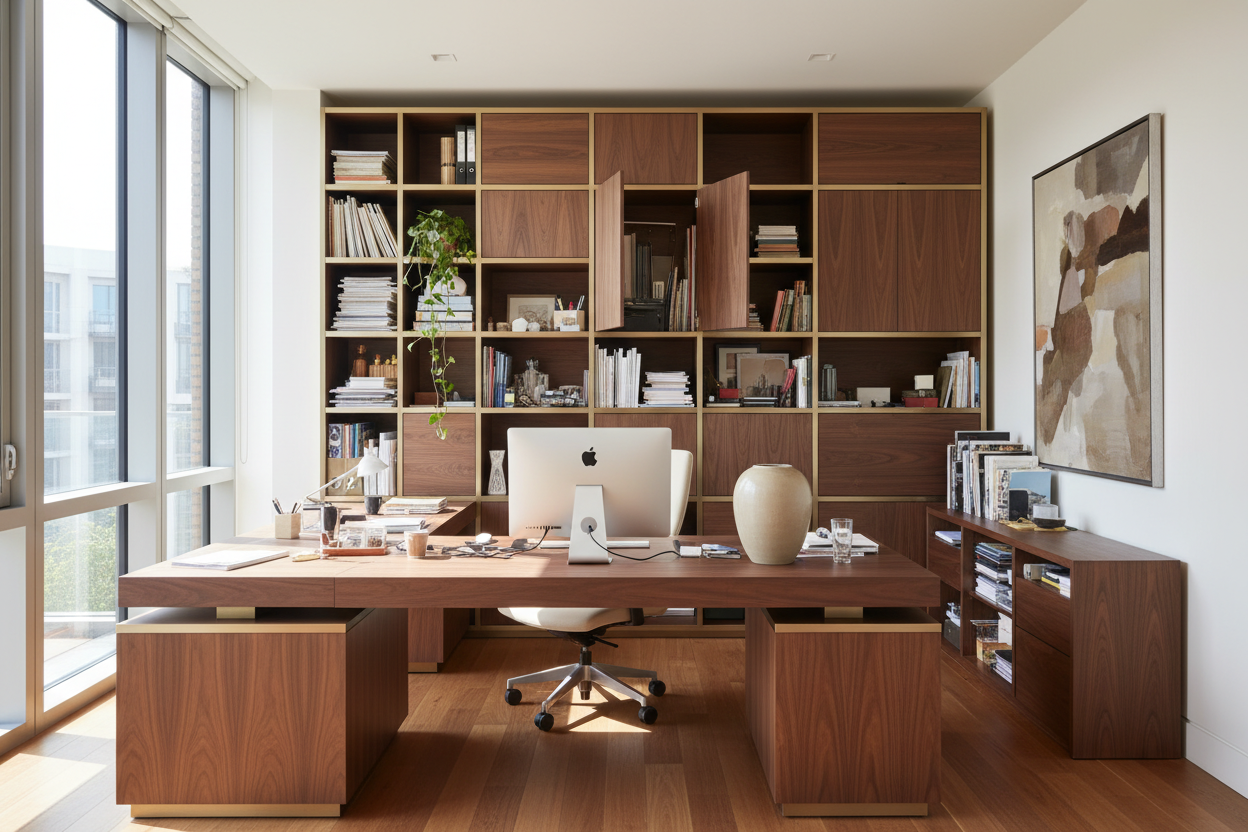
Tall cabinets, or armoires, are making a comeback in modern design as well. Unlike the bulky oak wardrobes of the 90s, modern versions are often slender and modular. They are perfect for tucking away bulky items like throw blankets or even a compact home office setup. When the work day is done, you simply close the doors, and the office disappears.
Custom vs. Ready-Made
You do not always need to spend a fortune to get the look of high-end modern living room storage cabinets with doors. A popular design hack involves buying basic modular cabinets from big-box retailers and upgrading them. You can purchase custom doors, side panels, and legs from third-party companies that specialize in aftermarket parts. This allows you to achieve a bespoke, architectural look for a fraction of the price of a custom joinery project.
If you choose to go the ready-made route, check the internal depth. Many slim-line cabinets are only 12 to 14 inches deep. While this is great for books, it won't fit a standard turntable or a large amplifier. Measure your largest item first, then hunt for the cabinet.
Maintenance and Durability
Surfaces matter for longevity. If you have kids or pets, a high-gloss finish might show every fingerprint and nose print. A textured wood grain or a matte finish is far more forgiving. Also, consider the legs. Metal legs tend to withstand vacuum cleaner bumps better than painted wood. It is these small practical details that determine whether you will still love the piece in five years.
Transforming your living space isn't just about hiding junk. It is about curating the view. By shifting from open shelves to closed cabinetry, you lower the visual volume of the room, making your home a place where you can actually recharge.
Frequently Asked Questions
How deep should a living room storage cabinet be for electronics?
For standard media equipment like receivers and gaming consoles, aim for a depth of at least 18 to 20 inches. You need space not just for the device itself, but for the stiff cables plugging into the back, which often require an extra 2-3 inches of clearance to prevent damage.
Can I use a kitchen cabinet for living room storage?
Absolutely. Upper kitchen cabinets can be mounted low on the wall to create a floating media console effect. Just ensure they are anchored securely into studs, as kitchen units are heavy even before you fill them with items.
How do I style the top of a long storage cabinet without it looking cluttered?
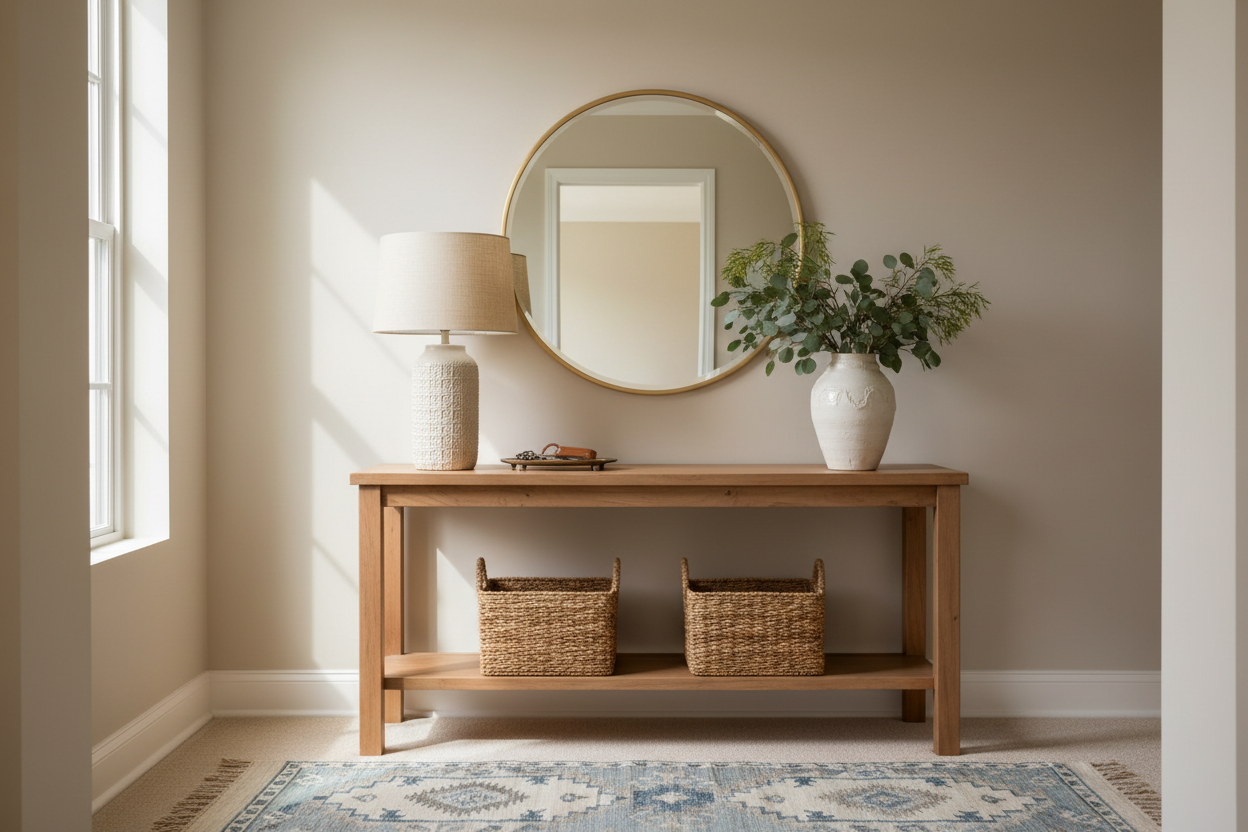
Follow the rule of three and vary your heights. Group a tall item (like a lamp or vase), a medium item (like a framed photo leaning against the wall), and a low item (like a decorative bowl) together. Leave plenty of negative space between groupings to maintain a modern, airy look.

Leave a comment
This site is protected by hCaptcha and the hCaptcha Privacy Policy and Terms of Service apply.