










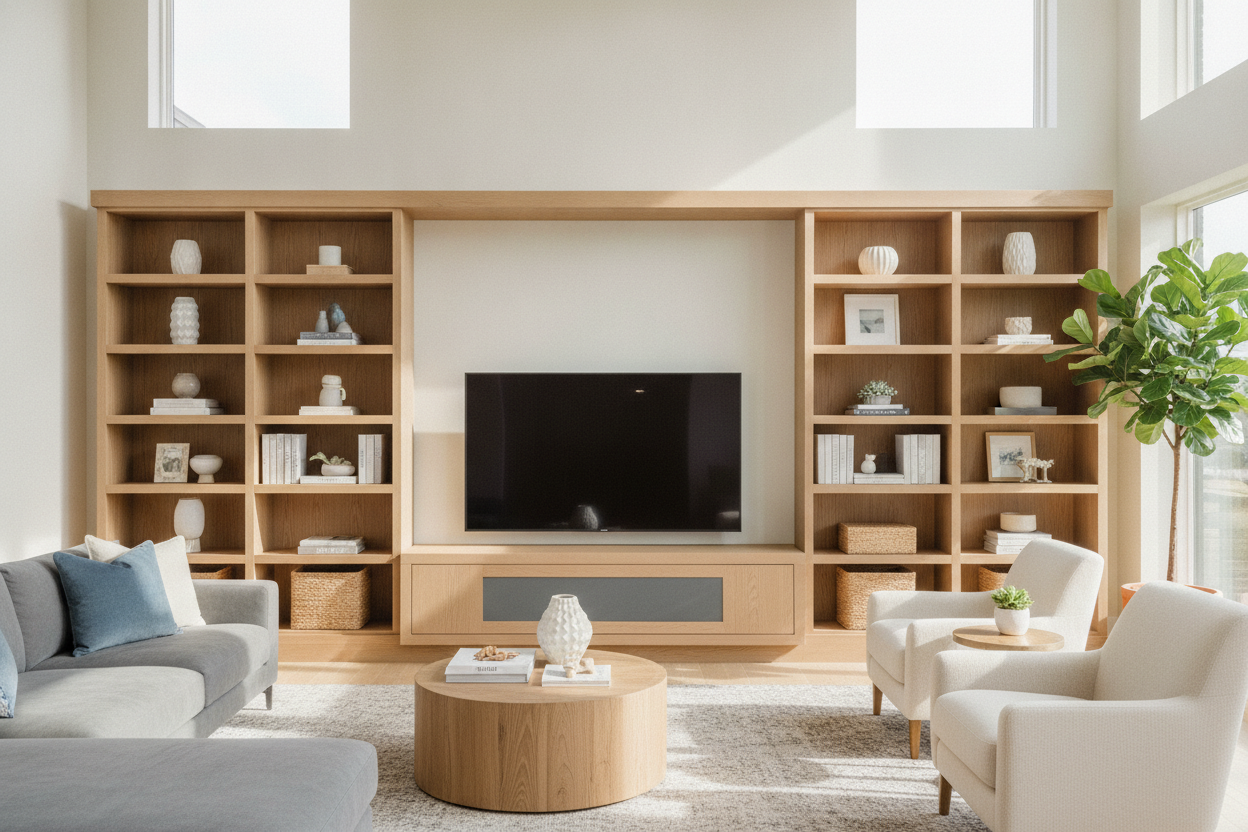
I still remember my parents' living room in the late 90s. It was anchored by a massive oak monolith—a 6 ft long tv stand that was also six feet tall, featuring glass cabinets for Beanie Babies and a cavernous hole for a 27-inch tube TV. It was the centerpiece of the house, and it was hideous. When I moved into my first place, I nearly fell into the same trap of buying 'too much furniture' for a small wall until I realized that horizontal lines are a decorator’s best friend.
Quick Takeaways
- A 6-foot length provides the perfect visual anchor for 55-inch to 75-inch screens.
- Horizontal consoles make narrow rooms feel wider and ceilings feel taller.
- Avoid the 'tower' look unless you are specifically solving for bedroom viewing heights.
- Solid wood or high-grade MDF with center support legs prevents the dreaded 'mid-stand sag.'
The Official Death of the 90s Entertainment Center
We need to talk about the 6 foot tall tv stand. It was designed for a world that no longer exists—a world of deep cathode-ray tubes and stacks of physical DVDs. Today, our screens are thinner than a stack of pancakes. Putting a sleek, 4K OLED inside a towering, chunky wooden box is like putting a smartphone in a rotary phone booth. It just looks awkward.
These vertical behemoths eat up visual real estate. They cast shadows, they collect dust in hard-to-reach places, and they make even a decent-sized room feel like a storage unit. If you are still rocking a 6 ft tall tv stand because you think you need the storage, I promise you: you don't. Most of what we stored in those units—CDs, old manuals, tangled RCA cables—is now digital or obsolete. It's time to let the wall breathe.
Why 72 Inches is the Magic Number for Modern Layouts
In the design world, scale is everything. If your TV stand is the exact same width as your TV, the whole setup looks top-heavy and precarious. A 6 ft long tv stand (72 inches) is the 'Goldilocks' size. It is wide enough to comfortably hold a 65-inch TV while leaving about seven inches of breathing room on either side for styling.
This extra width creates a stable visual base. When you browse a modern collection of TV stands, you'll notice that the most high-end layouts prioritize this overhang. It prevents the TV from looking like it’s floating away into the ether. You want your furniture to feel grounded, not like a temporary landing pad for a piece of tech.
Horizontal vs. Vertical: Filling an Empty Wall
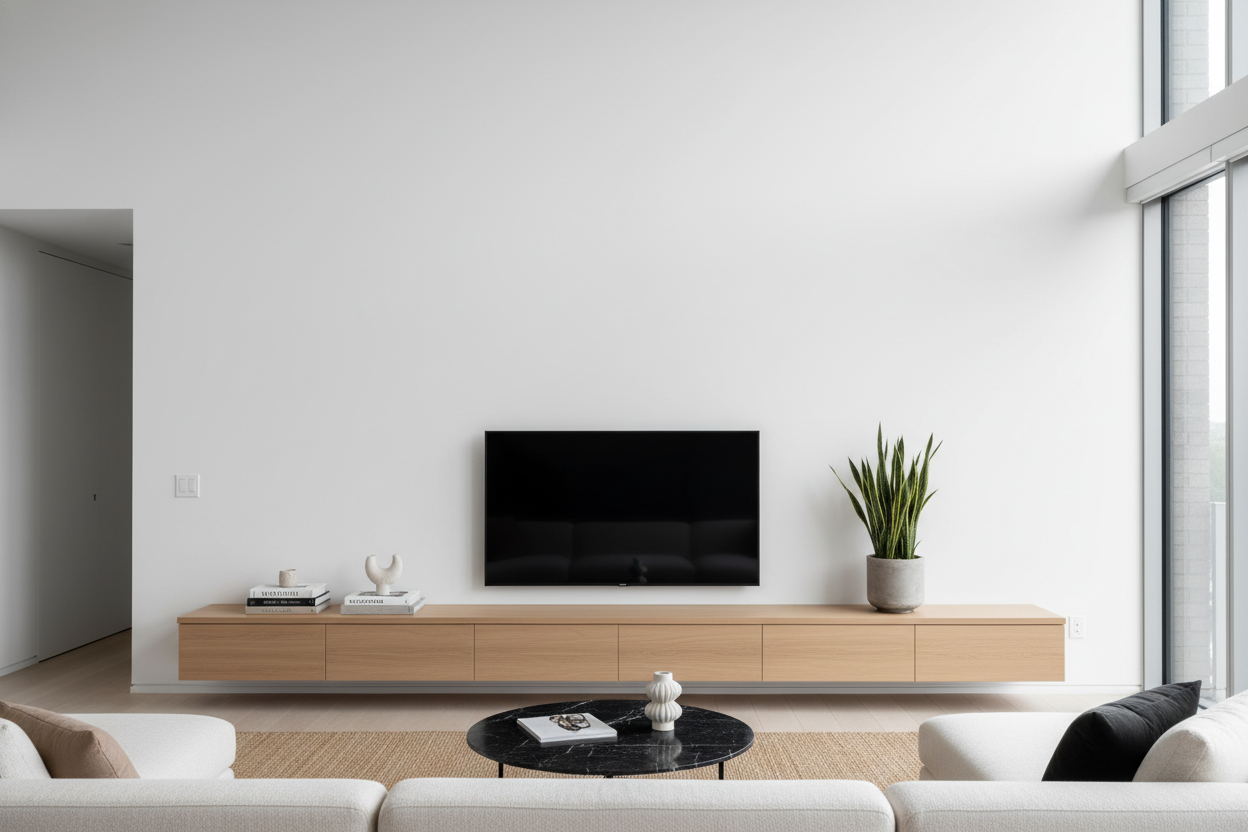
I often hear clients worry that a low-profile tv stand 6 feet long will leave too much empty space on the wall. They want to go tall to 'fill the room.' This is a mistake. A long, low console draws the eye outward to the corners of the room, which trick the brain into thinking the space is wider than it actually is.
If you’re worried about the wall looking bare, use art or shelving above the screen. A low console also makes your ceilings look higher by keeping the bulk of the weight below the mid-line of the room. I’ve seen 800-square-foot apartments look like sprawling lofts just by swapping a vertical hutch for a long, sleek sideboard.
How to Style the Ends Without Making a Mess
The beauty of a 72-inch unit is the 'bonus' surface area. But please, don't just fill it with random clutter. I usually opt for a mid-century modern TV stand because the clean lines do half the work for you. On one end, stack two or three oversized coffee table books. On the other, maybe a single structural lamp or a low-profile succulent.
The key is keeping the height of your decor lower than the middle of the TV screen. You don't want a tall vase of pampas grass competing with the climax of the movie. I once made the mistake of putting a tall, 'architectural' candle holder next to my screen, and I spent the whole of 'Dune' just staring at the silhouette of a candle instead of Timothée Chalamet. Learn from my distraction.
Is There Ever a Reason to Buy a 6 Ft Tall TV Stand?
I’m not a total hater; there are two scenarios where a 6 foot tall tv stand actually works. The first is the studio apartment. When you have zero closets, you need that vertical storage for clothes or linens, and a wall unit is a fair compromise. The second is the bedroom.
Most people watch TV in bed while propped up on pillows. A low console means you're constantly tucking your chin to your chest, which is a fast track to bedroom neck pain. In those cases, you need the height. But for the living room? Go long, go low, and let your walls finally see the light of day.
FAQ
What is the best width for a 65-inch TV?
A 65-inch TV is roughly 57 inches wide. A 72-inch (6 ft) stand is perfect, as it gives you a safe 7-inch margin on both sides so the screen doesn't overhang the edges.
How high should a 6 ft long stand be?
For most living rooms, look for a height between 18 and 24 inches. This puts the center of the screen at eye level when you're sitting on a standard 18-inch sofa seat.
Is solid wood better than MDF for long stands?
For a 6-foot span, weight is an issue. Solid wood is sturdier, but if you go with MDF, ensure the unit has a fifth 'center support' leg in the middle to prevent it from bowing over time.

Leave a comment
This site is protected by hCaptcha and the hCaptcha Privacy Policy and Terms of Service apply.