










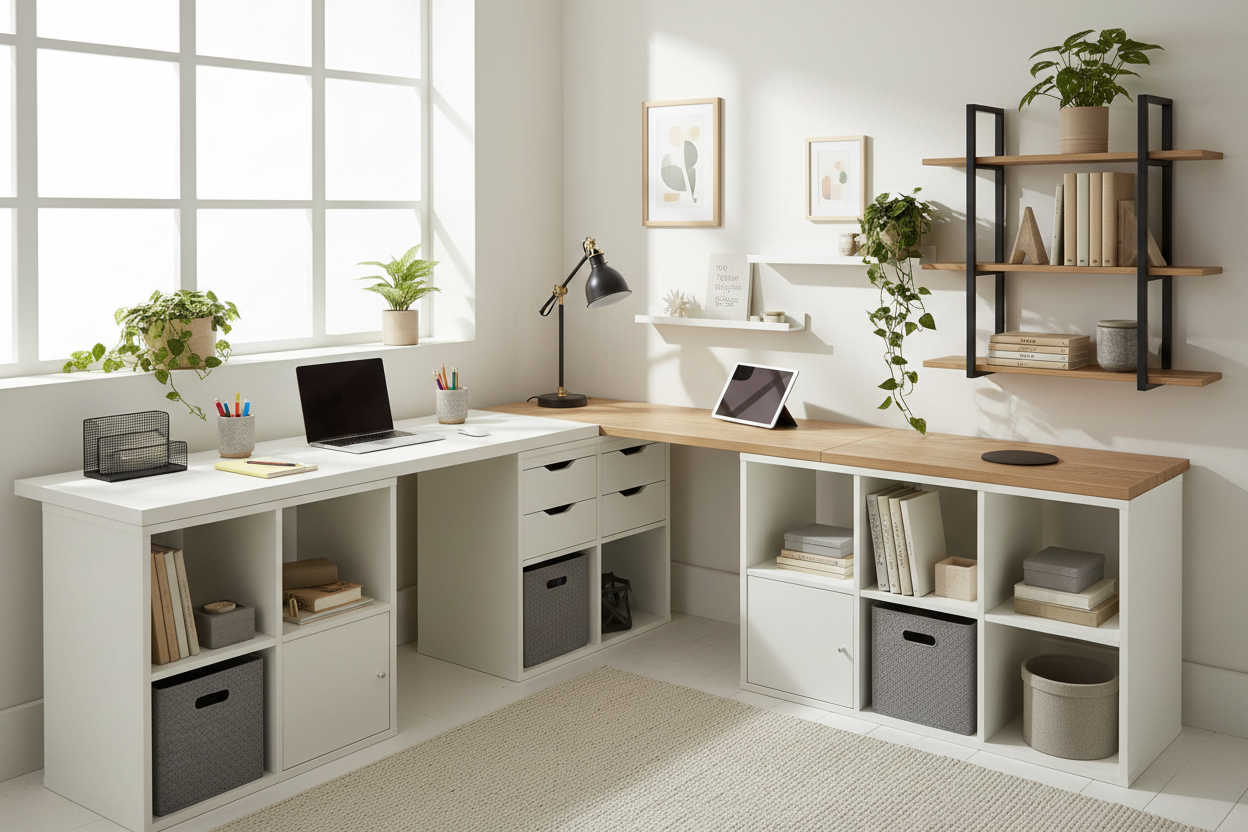
You don't have to settle for a wobbly, pre-packaged desk that barely fits your monitor setup. The secret to the most popular workstation on the internet isn't a specific piece of office furniture; it is a modular approach that mixes kitchen components with office storage. By combining a heavy-duty surface with independent drawer units, you create a workspace that is larger, sturdier, and often better looking than anything found in the designated office aisle.
The core of this build usually involves placing a kitchen work surface or a dedicated desk slab on top of two drawer units or metal legs. This method allows for complete customization regarding length, depth, and storage capacity. Whether you are a gamer needing space for three monitors or a creative professional requiring a vast layout space, understanding the difference between a standard top table IKEA sells and their kitchen counterparts is the first step to building your dream setup.
The Great Debate: Kitchen Countertops vs. Standard Desk Tops
The materials you choose define the longevity of your desk. There is a massive structural difference between the products marketed as "table tops" and those sold as "countertops." Knowing what is inside these slabs will save you from a sagging desk disaster a few months down the line.
The Standard Desk Top (Lagkapten & Linnmon)
When you walk through the office section, you will see rows of pristine white or wood-effect slabs. These are part of the standard modular system. Products like the Lagkapten are incredibly lightweight and affordable. This is because they utilize a honeycomb paper filling sandwiched between two thin sheets of fiberboard.
If you are on a strict budget, a standard top table IKEA offers is a functional starting point. However, these have limitations. Because they are essentially hollow, you cannot mount a heavy monitor arm clamp to them; the pressure will eventually crush the honeycomb structure, causing the mount to lean or break through the surface. They are excellent for light writing or laptop work but struggle under the weight of heavy PC towers or multi-monitor arrays.
The Countertop Route (Karlby, Saljan, Ekbacken)
The viral "IKEA Hack" desk almost always utilizes a kitchen surface. A countertop table IKEA manufactures, such as the Karlby or Saljan, is designed to withstand the heat, moisture, and chopping impact of a kitchen environment. Consequently, they make for incredibly robust desks.
The Karlby is the most famous option, featuring a slice of solid walnut or oak veneer over particleboard. It looks like solid wood but costs significantly less. The Saljan and Ekbacken are laminate options, which are cheaper but still solid particleboard all the way through. The primary advantage here is density. You can clamp monitor arms anywhere along the edge without fear of crushing the wood. Furthermore, kitchen countertops are often deeper than standard desks, giving you more distance between your eyes and the screen.
My Experience Building the "Karlby" Setup
I switched to a countertop setup three years ago after my standard hollow-core desk started bowing in the middle. I opted for the 74-inch walnut veneer countertop paired with two dark gray drawer units. The difference in stability was immediately noticeable. When I type aggressively or bump the edge, the monitors don't shake.
One thing the catalogs don't tell you is just how heavy these slabs are. Getting the countertop up the stairs was a two-person job. I also learned a hard lesson about friction. Simply resting the wood on the drawers isn't enough if you have slippery floors or energetic pets. I had to use small silicone bumpers between the drawers and the tabletop to prevent the slab from sliding around. It hasn't moved an inch since.
Choosing Your Support: Legs vs. Drawers
Once you have selected your surface, you need to keep it off the ground. The support system you choose dictates the legroom and storage potential of your workspace.
- The Alex Drawer Unit: This is the gold standard for these builds. They are the perfect height (27.5 inches) for a desk. By placing one unit on each side, you create a "double pedestal" desk with massive storage for cables, hard drives, and stationery.
- Adils Legs: If you want to save money or prefer a minimalist look, these metal legs are the default option. They screw directly into the pre-drilled holes of standard table tops. If you are using a kitchen countertop, you will need to drill your own pilot holes.
- Mittback Trestles: For a drafting table aesthetic, trestles offer a unique look and are height adjustable. However, they take up significantly more floor space than legs or drawers, which can be an issue in smaller rooms.
The Sagging Issue and How to Fix It
Gravity is the enemy of wide desks. If you choose a long countertop table IKEA sells—specifically the 98-inch versions—and only support it at the far ends, it will eventually sag in the middle. Particleboard is dense, but it is not as rigid as solid hardwood or steel.
If your span between supports is greater than 35 or 40 inches, you need reinforcement. The easiest solution is installing a single Adils leg in the back center of the desk. It stays out of the way of your feet but provides the necessary vertical support to keep the top perfectly flat. Alternatively, if you hate the look of a middle leg, you can screw lengths of angle iron or stiff metal channels along the underside of the desk to add rigidity without compromising legroom.
Ergonomics and Depth
Standard office desks are usually 30 inches deep, while kitchen countertops are typically 25.5 inches deep. This 4.5-inch difference matters. If you use a large 32-inch monitor, sitting 25 inches away might feel too close.
To combat this, a monitor arm is essential. It allows you to push the screen all the way to the back edge of the desk, reclaiming valuable workspace. If you stick with the standard top table IKEA creates for offices (like the Trotten system), you get that extra depth built-in, but you lose the premium aesthetic of the wood veneer. It is a trade-off between the warm, custom look of the kitchen hack and the utilitarian dimensions of standard office furniture.
Finishing Touches for a Custom Feel
Because these components are sold separately, you have to manage your own assembly. Kitchen countertops do not come with pre-drilled holes for office legs. You will need a power drill and a measuring tape to ensure your legs or drawers are aligned symmetrically.
Cable management is the final piece of the puzzle. Since there are no grommet holes in a kitchen slab, you will need to route cables off the back. Installing a cable management tray, like the Signum, under the desk keeps the wires off the floor and maintains that clean, custom look. This modular approach requires a bit more effort than buying a desk in a box, but the result is a workspace tailored exactly to your needs.
Frequently Asked Questions
Can I cut the IKEA kitchen countertops to fit my room?
Yes, products like the Karlby or Saljan can be cut to size using a circular saw or jigsaw. Since they are particleboard, you will need to use the included edge banding strips (usually provided in the package) to cover the raw cut end for a clean finish.
Do I need to screw the tabletop into the Alex drawers?
Technically, no. The weight of a heavy kitchen countertop is usually enough to keep it in place, especially if you use silicone bumpers or anti-slip pads between the drawer unit and the wood. However, for lighter tabletops like the Lagkapten, screwing them down is recommended to prevent tipping.
Is the veneer on the Karlby real wood?
Yes, the top layer is real wood veneer (usually walnut, oak, or ash), but it is thin—about 3mm thick. This means you can lightly sand and oil it to repair scratches or refresh the look, but you cannot sand it down aggressively like a solid block of butcher block.



Leave a comment
This site is protected by hCaptcha and the hCaptcha Privacy Policy and Terms of Service apply.