










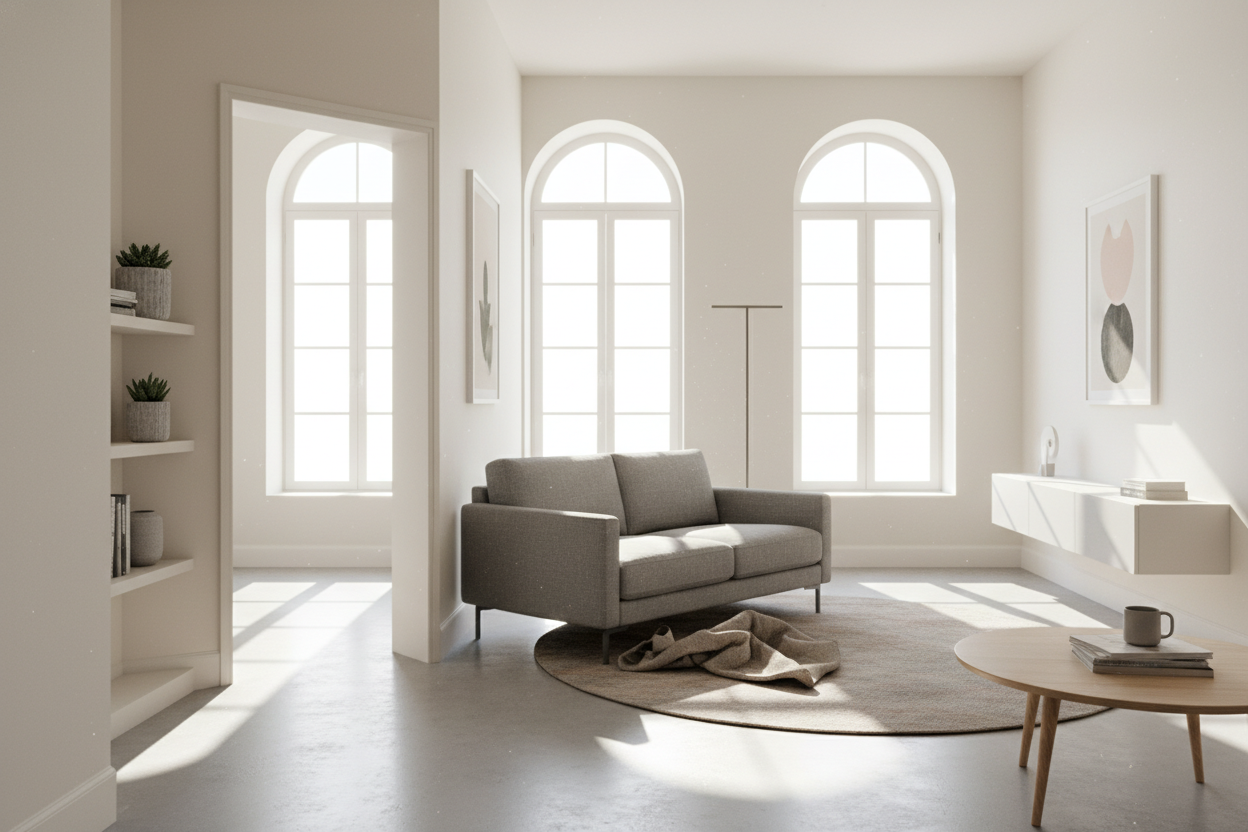
We often treat the living room as a puzzle where the sofa is the border and the coffee table is the center, but the pieces in between cause the most confusion. The most common dilemma I encounter with clients isn't choosing a massive sectional; it is knowing how to integrate compact seating without making the room feel cluttered or sparse. This is where the at home loveseat serves as a critical pivot point in interior design. It bridges the gap between a solitary armchair and a full-sized sofa, but only if selected with a keen eye for proportion and purpose.
Quick Decision Guide: Key Features to Look For
- Seat Configuration: Choose a single "bench" cushion to avoid the uncomfortable center crack, or two distinct cushions for defined personal space.
- Scale & Depth: Standard width is 52-72 inches, but depth (usually 38-40 inches) dictates visual weight and traffic flow.
- Frame Joinery: Look for kiln-dried hardwood with corner blocking. If you lift one front leg, the other should rise immediately (no wobbling).
- Fabric Durability: For high-traffic areas, prioritize performance weaves with a rub count over 25,000 double rubs.
Mastering Scale and Visual Weight
When curating a floor plan, many homeowners focus strictly on the footprint—the width and length. However, as a designer, I look at the silhouette. An at home loveseat with a skirted base and rolled arms commands significantly more visual weight than a mid-century modern piece with exposed tapered legs.
The "Legginess" Ratio
If your main sofa is heavy and sits flush with the floor, pair it with a loveseat that has exposed legs. This permits light to travel under the furniture, expanding the perception of floor space. Conversely, if your room feels too airy or ungrounded, a substantial, upholstered base can provide necessary anchor points.
Upholstery: The Tactile Experience
The fabric you choose dictates not just the aesthetic, but the longevity of the piece. In a showroom, a velvet loveseat looks luxurious. In a home with south-facing windows, that same velvet may fade within two years if it lacks UV resistance.
I always advise checking the cleaning code found under the seat deck. Code 'W' (water-based) or 'SW' (solvent or water) are non-negotiables for households with pets or children. Avoid Code 'X' (vacuum only) unless the piece is strictly ornamental.
Ergonomics and The "Two-Person" Reality
Technically, a loveseat seats two. Realistically, comfort depends on the cushion fill and spring system. A sinuous spring suspension offers a firm, bouncy sit, ideal for formal sitting rooms. For a lounging media room, you want an eight-way hand-tied spring system, which moves with your body.
Furthermore, consider the "inner arm" measurement. A loveseat might be 60 inches wide overall, but if the arms are 10 inches thick each, you are left with only 40 inches of seating space—barely enough for two adults to sit without overlapping shoulders.
Lessons from My Own Projects: The "Diagonal" Disaster
I want to share a specific lesson I learned the hard way early in my career regarding the at home loveseat. I once specified a gorgeous, deep-seated English roll-arm loveseat for a client's second-floor reading nook. We measured the hallway width and the door height. We thought we were safe.
However, we failed to account for the diagonal depth of the piece (the measurement from the top back corner to the bottom front foot) relative to the tight turn at the top of the stairs. The loveseat physically fit through the door, but it couldn't make the rotation required to enter the room. We ended up having to remove the legs and slightly compress the back upholstery just to wedge it in—leaving minor but annoying wrinkles on the back fabric.
The Takeaway: Never just measure the width. Measure the diagonal depth and compare it to the tightest corner or lowest ceiling point in your entry path. It saves you from a delivery day nightmare.
Conclusion
Selecting the right loveseat is about balancing intimacy with functionality. It shouldn't just be a "mini sofa"; it should be a distinct design element that offers comfort and elevates the room's architecture. Measure your angles, check your cushion density, and choose a silhouette that complements, rather than copies, your existing furniture.
Frequently Asked Questions
What is the difference between a loveseat and an apartment sofa?
A loveseat is typically between 52 and 72 inches wide and designed for two people. An apartment sofa is slightly larger, usually ranging from 72 to 80 inches, often featuring three narrower cushions or two wide ones, bridging the gap between a loveseat and a standard sofa.
Should my loveseat match my sofa exactly?
In modern high-end design, we avoid the "matchy-matchy" look. Instead of buying a matching set, coordinate them. If your sofa is a solid neutral, choose a loveseat in a complementary texture (like boucle or leather) or a subtle pattern to create a curated, collected feel.
How do I prevent the cushions from sliding forward?
This is a common issue with loveseats due to the way we push off them to stand. Look for pieces with "t-cushions" that wrap around the arm, or ensure the cushions have clips or Velcro attachments on the decking to keep them secured in place.

Leave a comment
This site is protected by hCaptcha and the hCaptcha Privacy Policy and Terms of Service apply.