










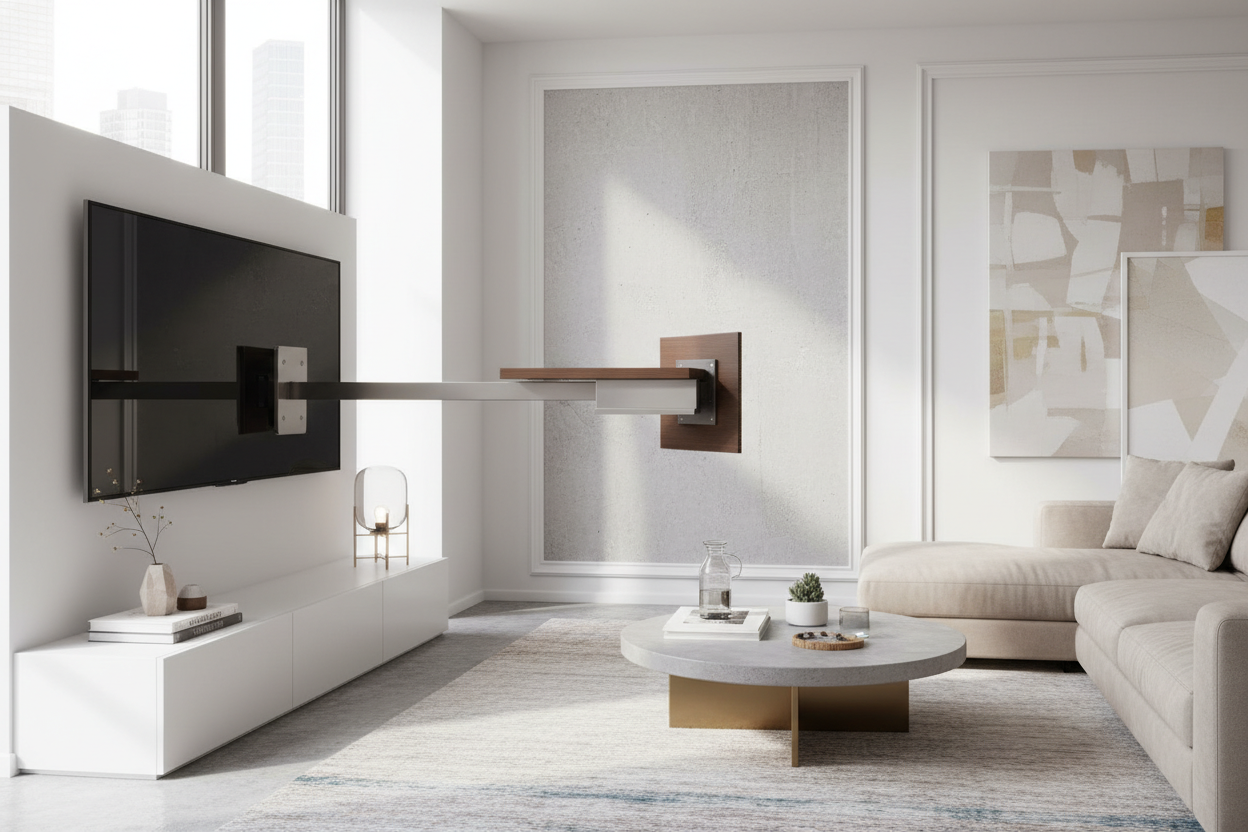
I spent three hours finding the studs, sweating over a level, and finally hoisting my 65-inch OLED onto the wall. I stepped back, expecting a Pinterest-worthy moment, but it looked like a waiting room at a local tire shop. The problem wasn't the TV; it was the vast, empty desert of drywall underneath it. This is why mounted tv stands are non-negotiable for anyone who doesn't want their living room to feel like a sports bar.
- Visual weight is real: A TV needs a base to anchor the room.
- Floating units make small rooms feel significantly larger by exposing floor space.
- The ideal gap between the TV and the console is 6 to 10 inches.
- Cable management is the primary functional reason to install one.
The 'Sports Bar' Effect (And Why It Ruins Your Living Room)
Hanging a TV on a bare wall without a stand for tv on wall setups creates a weird visual tension. It’s what I call the 'Sports Bar Effect'—that cold, industrial feeling where a screen just exists in space without any context. A tv stand for wall mounted tv setups acts as a visual anchor. It grounds the heavy black rectangle of the screen so it doesn't look like it’s floating away into the ceiling.
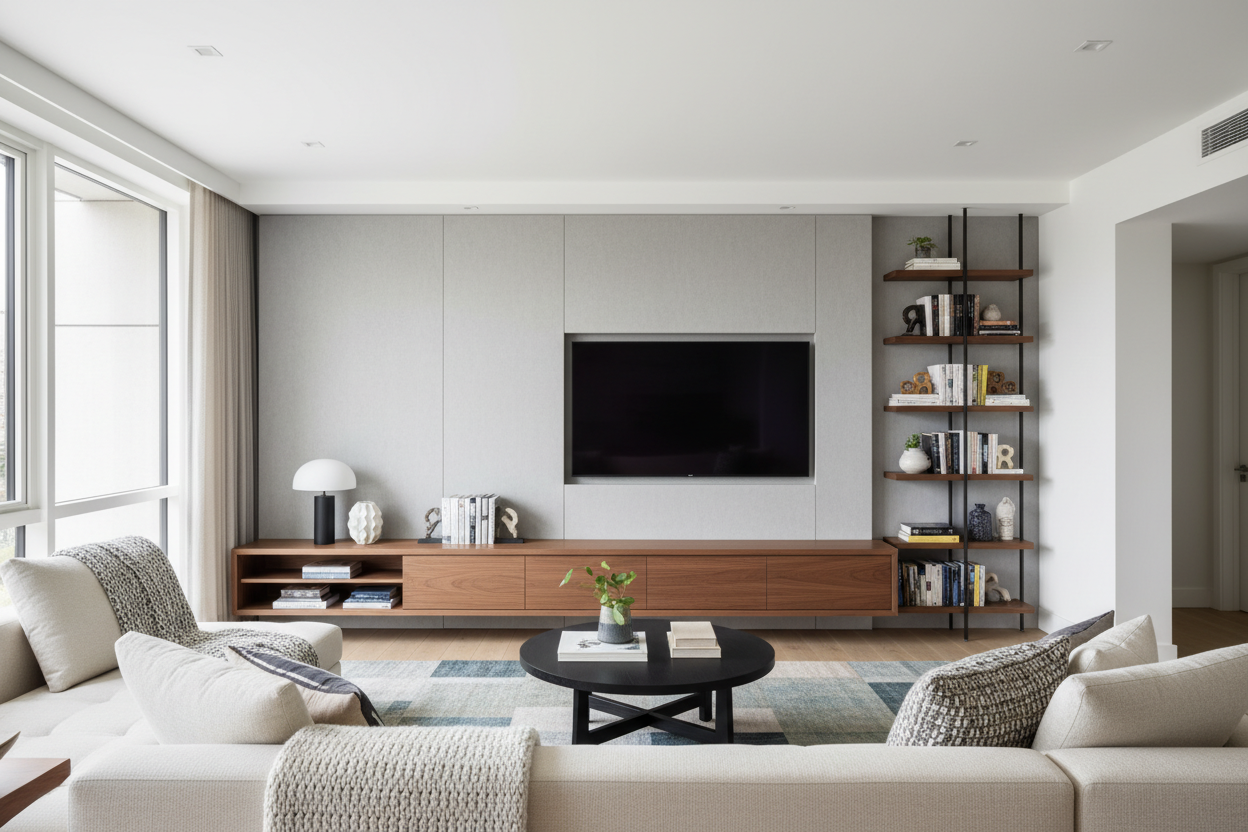
When you use a tv stand and wall mount together, you're creating a 'media zone' rather than just sticking a gadget on the wall. Even if you aren't putting a single DVD or gaming console inside it, the wall television stand provides a horizontal line that balances the verticality of your walls. It makes the room feel finished, intentional, and—most importantly—like a home rather than a commercial lobby.
Why I'm Team Floating Console Over Floor Models
I’ve lived in tiny apartments where every square inch of floor was a battlefield. This is where a wall hanging tv stand wins every single time. By mounting the console itself, you keep the floorboards visible. This little trick of the eye makes the entire room feel airier and less cluttered. Plus, your Robot vacuum won't get stuck in a corner trying to navigate around chunky furniture legs.
I personally went with a Floating Tv Stand Wall Mounted Media Console Entertainment Center because it offers enough depth for a soundbar and a few decorative pieces without eating into the walking path. If you're dealing with a small mounted tv stand, the floating aspect is even more critical. It keeps the 'heavy' furniture off the ground, which is the oldest trick in the interior design book for making a 200-square-foot studio feel like a palace.
Mind the Gap: How to Get the Proportions Right
The biggest mistake people make with wall tv consoles is the spacing. If the gap is too large, the TV looks disconnected. If it’s too small, it looks cramped. I’ve found that 6 to 10 inches is the sweet spot. This allows enough room for a few choice objects on the on wall tv unit without blocking the bottom of the screen.
Proportions also apply to width. Your tv rack wall mounted should be at least 20% wider than the TV itself. A screen that is wider than the stand underneath it looks top-heavy and precarious. If you want to dive deeper into the aesthetics, check out this guide on a Modern Tv Stand Wall Mounted How To Style For A High End Look to see how to layer objects so they bridge the gap between the wood and the glass gracefully.
Hiding the Inevitable Cable Nightmare
We all want that minimalist, 'no wires' look we see in tech reviews, but the reality involves HDMI cables, power bricks, and glowing routers. A tv stand with mount on wall capabilities usually includes a hollow back or pre-drilled grommets. This is where the magic happens. You can tuck all that tech clutter inside the tv console for mounted tv setups and run a single cord concealer up to the screen.
I once tried to go without a tv hanging stand and just used 'decorative' baskets on the floor. It was a disaster. Dust bunnies moved in within a week, and my cat thought the exposed wires were a gourmet snack. A wall mount tv stand with shelves gives you a designated drop-zone for controllers and remotes, keeping the 'living' part of your living room actually livable.
The Renter's Loophole: Hybrid Mount Stands
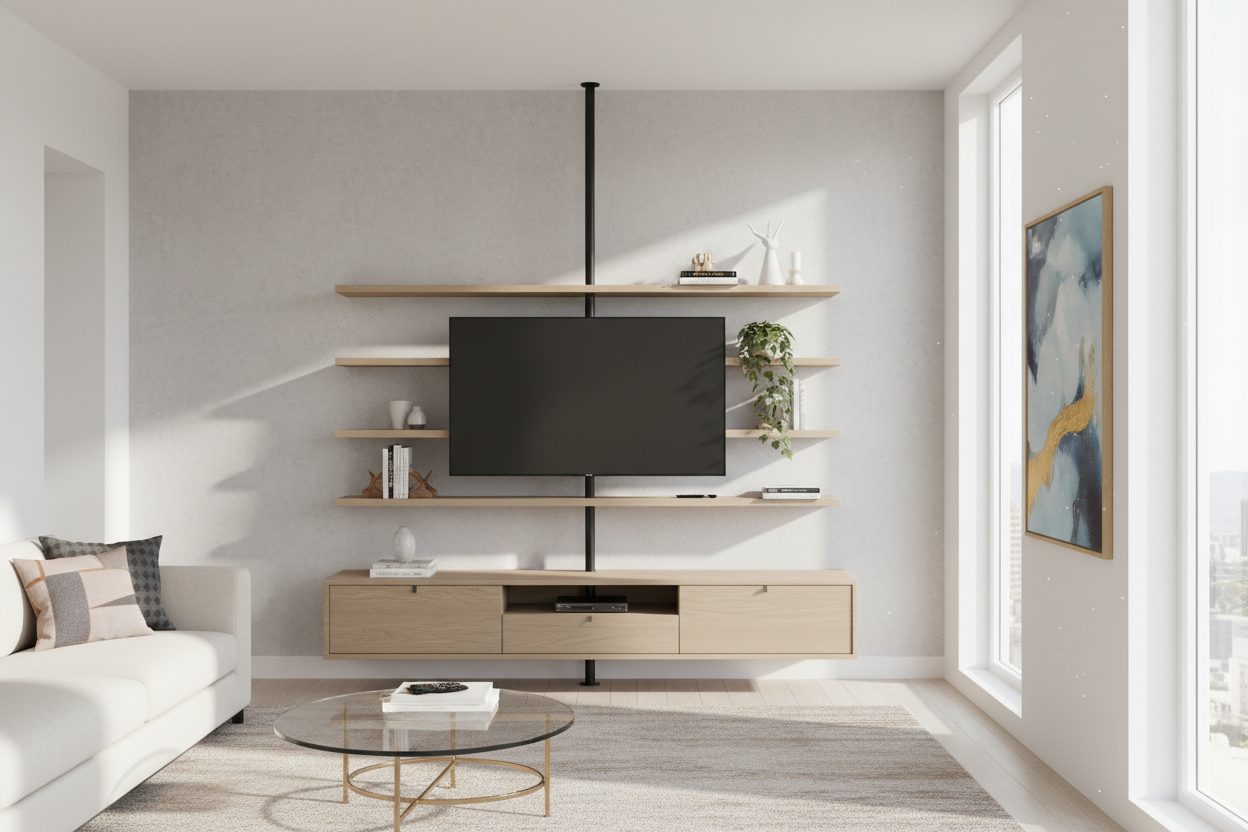
I get it—not everyone can drill four massive holes into their drywall and hope for the best. If you're in a rental or have crumbling plaster walls, look into a tv stand with wall mount attached. These are floor-based units with an integrated vertical spine that holds the TV. It gives you that 'hovering' look of a wall tv stand without the structural commitment.
These hybrid wall to wall tv stand options are incredibly sturdy and often come with built-in swivel features. If you're unsure which direction to go, browsing a collection of Tv Stands will show you the difference between a full wall mount tv table and a hybrid unit. It’s all about finding the balance between the 'floating' aesthetic and the reality of your lease agreement.
How high should I mount my TV?
The center of the screen should be at eye level when you are sitting on your sofa. Usually, this means the bottom of the TV will sit about 24 to 30 inches off the floor. Don't be the person with the 'TV too high'—your neck will thank you.
Can a floating stand hold a heavy receiver?
It depends on your studs. If you are bolted into solid wood studs with proper lag bolts, a high-quality wall tv rack can easily support 50-75 lbs. Just don't trust drywall anchors alone for anything heavier than a remote.
Do I need a stand if my TV is already on the wall?
Technically, no. But visually, yes. Without a tv stand for hanging tv setups, the wall looks unfinished and the room lacks a focal point. It’s the difference between a room that looks 'moved into' and a room that is 'designed.'

Leave a comment
This site is protected by hCaptcha and the hCaptcha Privacy Policy and Terms of Service apply.