










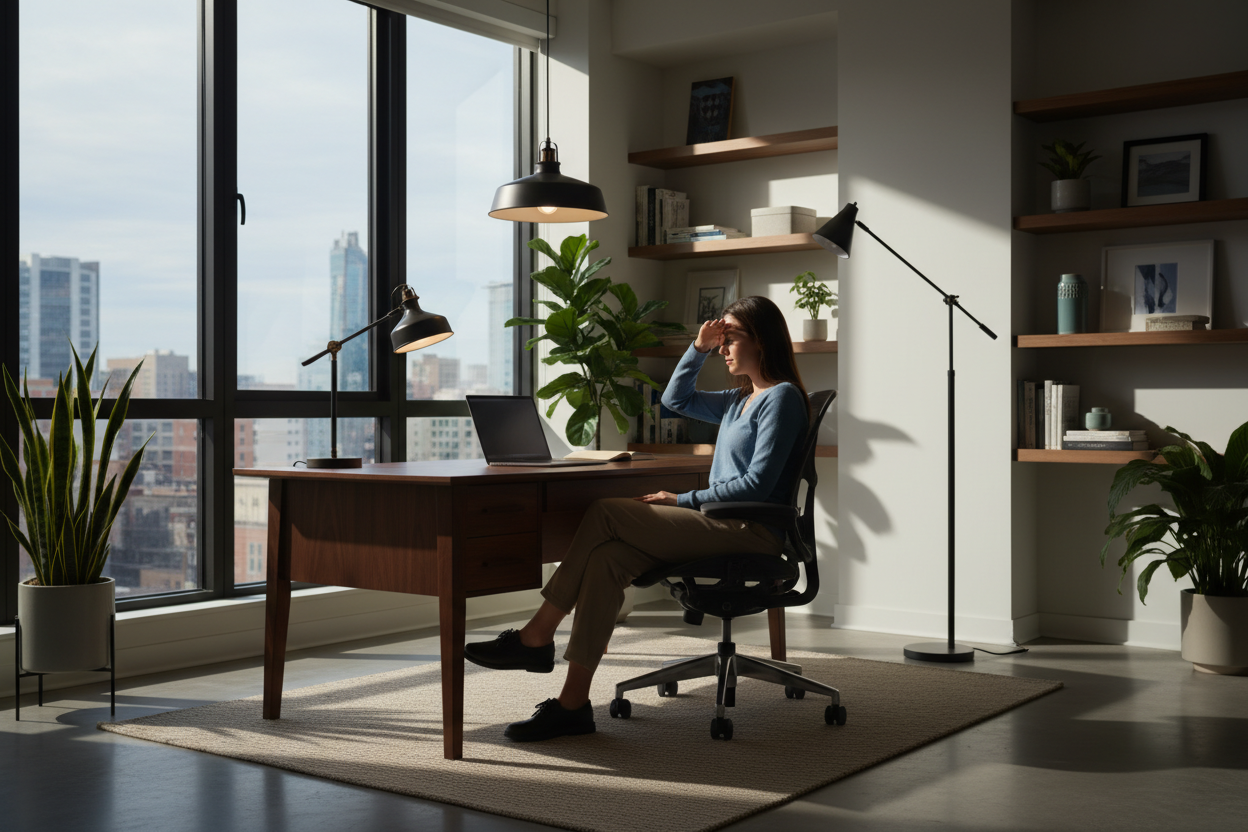
We often blame our screens for the mid-afternoon headache or that heavy feeling of fatigue around 3 PM. However, after designing hundreds of workspaces, I have found the culprit is rarely just the monitor—it is the environment surrounding it. Proper lighting for home office setups is the most underestimated element of interior design, yet it dictates both your productivity and your video call appearance.
Key Features to Look For
If you want to skip the guesswork and find the best light for office at home setups immediately, focus on these four non-negotiable specifications:
- Color Temperature (Kelvin): Aim for 3500K to 4500K. This mimics cool daylight, keeping you alert without the harshness of clinical blue light.
- Adjustability: Look for articulating arms or goosenecks. Static lamps force you to move; good lighting moves with you.
- Lumens (Brightness): You need at least 450-800 lumens for task areas to reduce eye strain against bright monitors.
- Diffused Shielding: Avoid exposed bulbs. A frosted lens or deep shade is essential to prevent retinal burn and glare.
The Art of Layering: Beyond the Single Desk Lamp
The biggest error I see homeowners make is relying on a single overhead fixture or a solitary desk lamp. Good home office lighting requires a layered approach, much like a well-dressed living room.
Ambient vs. Task Lighting
Ambient lighting is your base layer—usually recessed cans or a central pendant. However, this creates shadows on your work surface if it is behind you. To counter this, you need dedicated home desk lighting. Ideally, this task light should be positioned opposite your writing hand to eliminate hand shadows. For computer work, bias lighting (LED strips behind the monitor) is a game-changer for reducing contrast strain.
Selecting the Right Material and Aesthetic
When curating lighting ideas for home office spaces, the physical build of the fixture matters as much as the bulb.
Metal vs. Fabric Shades
For a focused beam spread, opaque metal shades (like brass or matte black powder coat) are superior. They direct light downward onto documents, making them the best light for work from home if you deal with physical paperwork. Conversely, if your office feels small or dark, a linen or fabric shade allows light to bleed through the sides, contributing to the room's overall glow and softening the visual weight of the desk.
Ergonomics and Video Call Considerations
In the era of Zoom, your face is a focal point. The best home office light for video calls is never directly above your head—that creates "raccoon eyes" (dark shadows in eye sockets). Instead, position two light sources at 45-degree angles in front of you, or bounce a strong task light off a white wall facing you. This creates a soft, flattering wash of light that looks professional rather than interrogative.
My Personal Take on Lighting for Home Office
I learned the hard way that "aesthetic" doesn't always equal "functional" when I designed my own study three years ago. I fell in love with a stunning, high-gloss lacquered writing desk and paired it with a vintage architectural lamp that had a clear glass shade.
It looked incredible in photos. But the reality? The high-gloss finish acted like a mirror. Every time I turned the lamp on, the reflection of the naked bulb bounced off the desk surface and pierced right into my eyes. I spent two weeks popping ibuprofen before I realized the glare was the trigger. I had to swap the lamp for one with a deep, matte-finish cone shade and a honeycomb grid filter. It wasn't as "sculptural," but the headache disappeared instantly. If you have a glass or glossy desk, do not buy a light with an exposed bulb—trust me on this.
Conclusion
Treating your workspace lighting with the same care as your living room decor pays dividends in focus and comfort. By layering your sources and paying attention to color temperature, you elevate the room from a utility corner to a sophisticated design statement. Investing in good lighting for home office use is ultimately an investment in your own energy levels.
Frequently Asked Questions
What is the best color temperature for a home office?
For most people, 4000K (Cool White) is the sweet spot. It is crisp enough to promote concentration but warm enough to blend with residential interiors. 2700K is too sleepy for work, while 6000K can feel like a hospital.
How do I stop my glasses from reflecting light on video calls?
The trick is geometry. Raise your light source higher and move it to the side, rather than directly in front of your face. This changes the angle of incidence so the reflection bounces onto your chest rather than into the camera lens.
Is a floor lamp better than a desk lamp for small desks?
Absolutely. If surface area is premium, a floor lamp with an arc or an adjustable reading arm is the best light for home office setups in tight spaces. It frees up valuable desktop real estate while still providing direct overhead illumination.


Leave a comment
This site is protected by hCaptcha and the hCaptcha Privacy Policy and Terms of Service apply.