










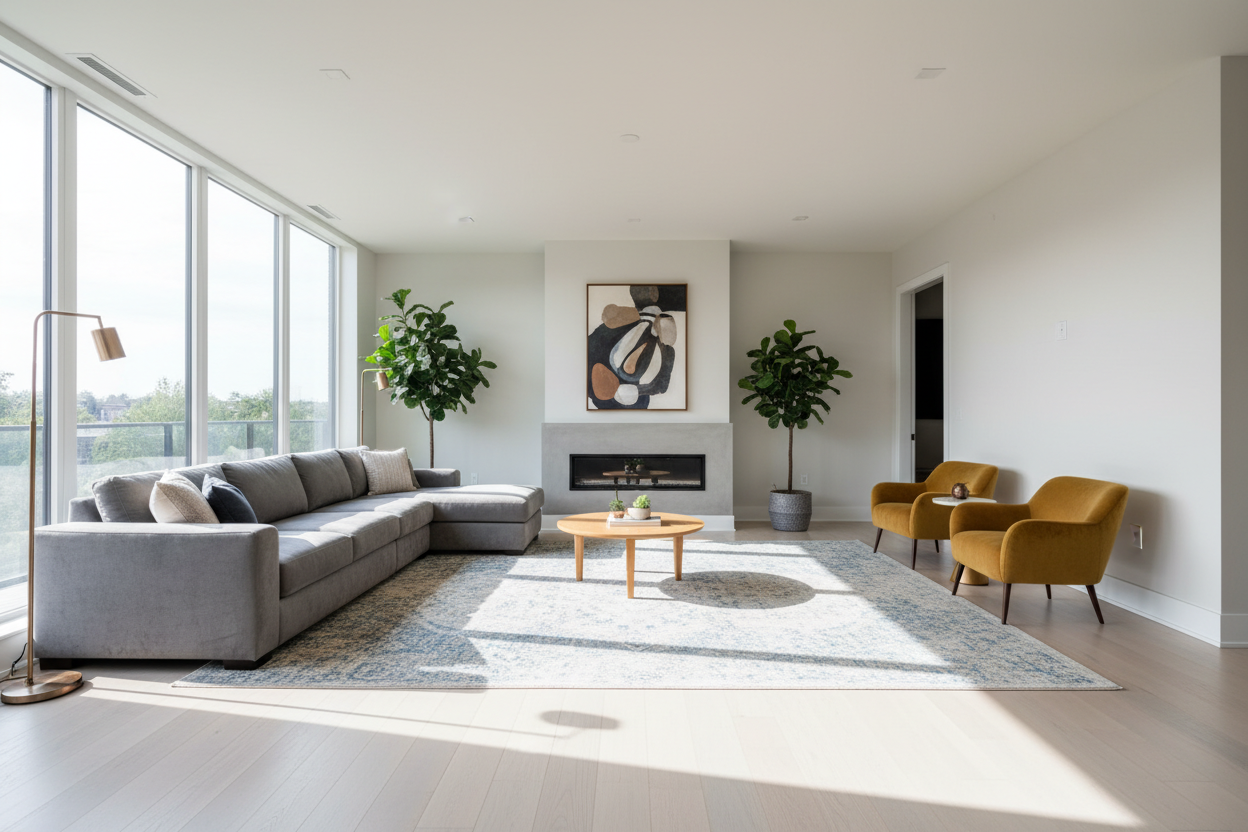
The allure of a sprawling, plush seating arrangement is undeniable, yet balancing scale with circulation is the true challenge when designing a living room with sectional. Many homeowners fall into the trap of letting the furniture dictate the room, rather than curating the space around the lifestyle. As a designer, I often see spaces where the flow is choked off by an oversized chaise or where the visual weight feels overwhelmingly heavy. The goal is to anchor your space without drowning it.
Quick Decision Guide: Sectional Essentials
- Orientation (RAF vs. LAF): Determine if you need a Right-Arm Facing or Left-Arm Facing chaise based on your room's focal point and traffic flow.
- Frame Construction: Look for kiln-dried hardwood frames rather than plywood to prevent warping over time.
- Cushion Fill: High-density foam wrapped in down provides the best balance of structure and 'sink-in' comfort.
- Modularity: Consider modular pieces for future flexibility, especially if you plan to move or reconfigure the layout.
- Fabric Durability: For high-traffic areas, seek performance fabrics with a double rub count of at least 30,000.
Mastering the Layout and Flow
Positioning sectional couches in living room settings requires a keen understanding of negative space. The most frequent error I encounter is pushing the sectional flush against the walls. In a modern living room with sectional, floating the piece in the center of the room—provided you have at least 30 inches of walkway clearance—creates a sense of airiness and luxury. This placement defines a specific zone for conversation while leaving the perimeter open for movement.
The Rug Rule
When placing a living room with sectional sofa, the rug is your anchor. A common pitfall is choosing a rug that is too small. The front legs of every piece of the sectional should sit on the rug. Ideally, for a cohesive aesthetic, the rug should extend 6 to 10 inches beyond the sides of the sofa, unifying the zone.
Materiality and Visual Weight
A sectional sofa in family room environments often demands durability, but that shouldn't come at the cost of style. If your room is small, avoid rolled arms and skirted bases; these traditional elements add unnecessary visual bulk. Instead, opt for track arms and exposed legs, which allow light to pass underneath the furniture, making the footprint feel lighter.
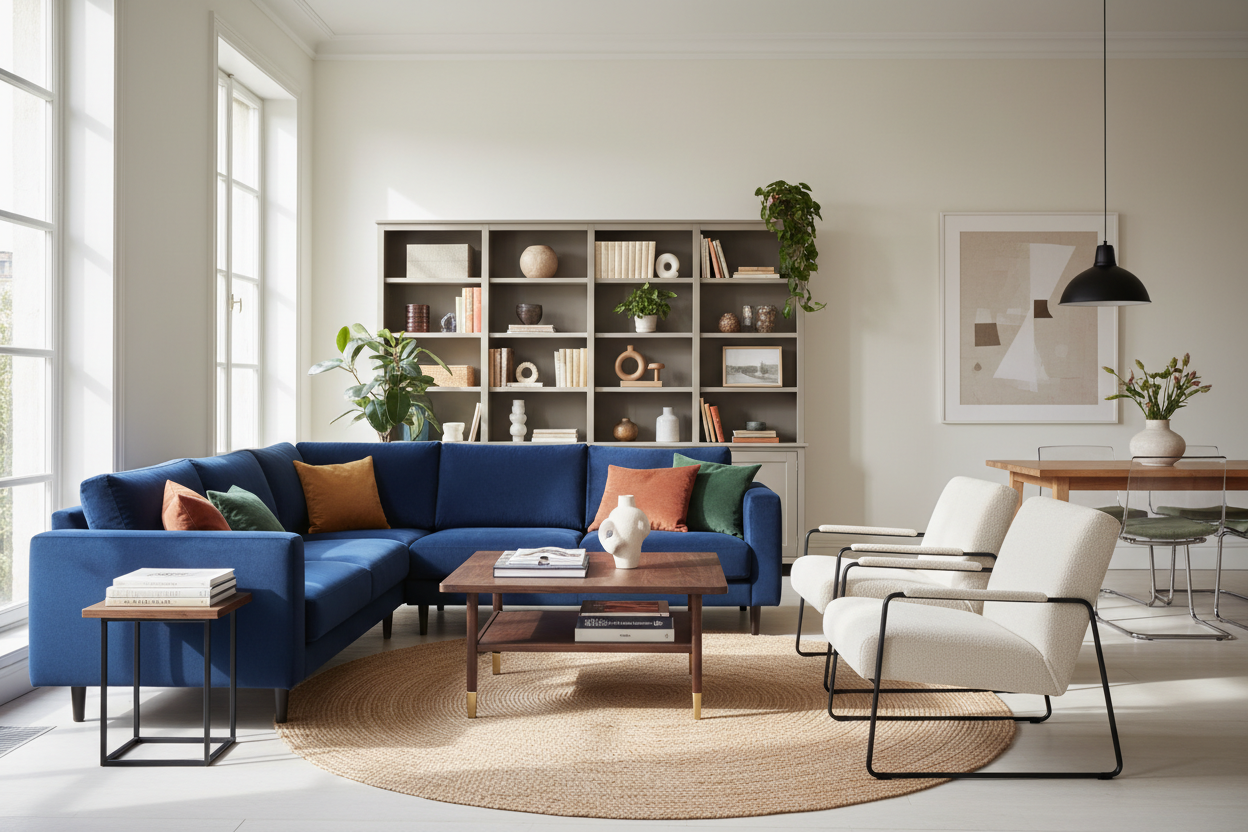
For upholstery, velvet adds depth and changes color depending on the light, acting as a dynamic focal point. However, for a sectional and sofa in living room combination—typically found in large great rooms—I recommend contrasting textures. If the sectional is a heavy, textured boucle, pair it with a sleek leather sofa or accent chairs to break up the monotony.
Lessons from My Own Projects: The "Connector" Reality
I want to share a specific detail that rarely makes it into the glossy brochures but has caused headaches in my own home and client projects. It concerns the under-mount connectors (often called "alligator clips") that hold modular sectionals together.
In a project last year, we selected a beautiful, low-profile Italian sectional. Visually, it was stunning. However, on hardwood floors, the lack of heavy-duty rubber grips on the feet meant that every time someone flopped down, the modules drifted apart because the supplied connectors were flimsy plastic rather than metal.
Furthermore, nobody tells you about the "crumb valley" that forms between modules. If you are buying a sectional for a family with kids, I personally advise choosing a bench-seat cushion (one long cushion) rather than individual seat cushions where possible. It saves you from constantly fishing remotes and snacks out of the crevices. Also, measure your elevator or hallway width twice—I once had to hire an upholsterer to remove legs on-site because a client's "standard" door was actually 29 inches wide.
Conclusion
Integrating a sectional is about more than just maximizing seating; it is about sculpting the room's volume. By respecting the traffic patterns and choosing a silhouette that complements your architecture, you can achieve a space that is both functional and visually arrested. Don't be afraid to pull that furniture off the wall and let the room breathe.
Frequently Asked Questions
How do I fit a sectional in a small living room?
Focus on "apartment-size" or reversible chaise sectionals. Look for a depth of 36 inches or less (standard is often 40+) and choose a light-colored fabric to reduce visual heaviness. Ensure the chaise is on the side that does not block the main walkway.
What is the difference between Left-Arm Facing (LAF) and Right-Arm Facing (RAF)?
This refers to the arm placement when you are standing facing the sofa. If the arm is on your left as you look at the piece, it is LAF. This is crucial for flow; you generally want the open side (the chaise) to be on the side of the room with less traffic.
Can I mix a sectional with other sofas?
Yes, in large rooms. A sectional and sofa in living room layout works best if the pieces share a similar seat height and back height but differ in texture. For example, a neutral fabric sectional paired with a cognac leather sofa creates a sophisticated, layered look.


Leave a comment
This site is protected by hCaptcha and the hCaptcha Privacy Policy and Terms of Service apply.