










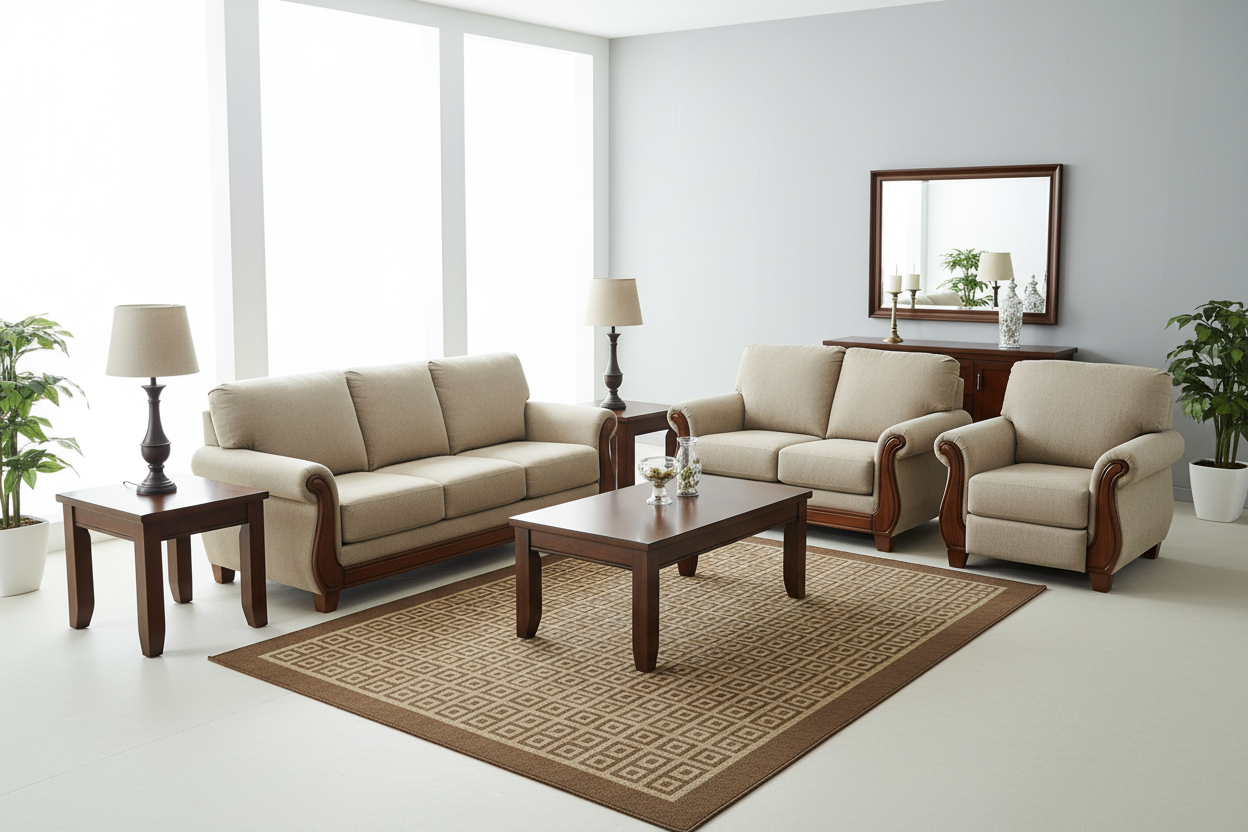
We have all walked into a space that feels less like a personal sanctuary and more like page 42 of a big-box catalog. The culprit is often a lack of curation. While purchasing matching furniture sets living room layouts rely on can be a convenient, time-saving strategy, it presents a significant design dilemma: how do you achieve a cohesive look without it appearing flat or generic? As a designer, I often see homeowners rely too heavily on the manufacturer's pairing, resulting in a room that lacks soul and visual hierarchy.
Key Features to Look For
If you are committed to buying a set for the sake of continuity, prioritize these specific elements to ensure the investment ages well:
- Silhouette Variation: Avoid sets where the sofa, loveseat, and chair have identical, blocky profiles. Look for varying back heights or arm styles within the collection.
- Upholstery Performance: Check the double-rub count (aim for 15,000+ for residential) to ensure the matching fabric wears evenly across all pieces.
- Leg Finish & Material: Ensure the wood stains or metal finishes are consistent but neutral enough to mix with other occasional tables.
- Scale & Proportion: Verify that the depth of the seating suits your room's traffic flow; bulky sets can suffocate a standard 12x14 living room.
Breaking the "Catalog Effect"
The primary challenge with a full suite of matching furniture is the overwhelming uniformity. To combat this, you must introduce contrast through other mediums. If your sofa, loveseat, and armchair share the same linen weave, your surrounding elements—rugs, curtains, and throw pillows—must offer divergent textures. Think velvet, bouclé, or raw leather. This tactile variety disrupts the visual monotony and forces the eye to move around the room rather than glazing over a single block of color.
Choosing the Right Material: Solid Wood vs. Veneer
When selecting case goods (coffee tables, sideboards, and end tables) as part of a set, the construction quality dictates longevity. Solid wood sets allow for refinishing down the line, which is crucial if one piece gets water-damaged. Veneer sets offer a sleek, uniform grain pattern often impossible with solid wood, but they are unforgiving. If you chip the edge of a veneer coffee table, it is nearly impossible to repair invisibly. For high-traffic family rooms, I always advise clients to prioritize solid wood or high-pressure laminates for the horizontal surfaces.
Ergonomics and Comfort
A hidden downside to matching sets is that they assume everyone sits the same way. A deep-seated sofa might be perfect for lounging, but the matching armchair might be uncomfortable for a guest who prefers upright support. Test the ergonomics of each piece individually. It is often smarter to buy the sofa and loveseat as a set, but source a contrasting accent chair that offers a different sit profile—perhaps a firmer, high-back wingback—to accommodate different body types.
Space Planning & Layout
Do not fall into the trap of lining the walls with your matching pieces. This creates a "waiting room" effect. Instead, float the sofa and loveseat perpendicular to each other to create an intimate conversation zone. Use the matching armchair to close the circle, but angle it inward. By pulling the furniture away from the perimeter, you create negative space that allows the matching silhouettes to breathe, making the set look intentional rather than obligatory.
My Personal Take on matching furniture sets living room
I learned a hard lesson early in my career regarding "dye lots." I once specified a high-end, three-piece matching velvet set for a client in Chicago. We ordered the sofa first, and the matching chairs three months later. When the chairs arrived, they were technically the same color code, but the slight variation in the fabric batch was glaringly obvious under the client's halogen pot lights.
Furthermore, the "wear pattern" became an issue. The family used the sofa daily, but the matching loveseat rarely. After two years, the sofa's cushions had softened and the fabric had developed a patina, while the loveseat looked brand new. The set no longer looked like a set; it looked like one old piece and one new piece. My advice? If you buy a set, rotate the cushions between the pieces every few months if possible, or accept that they will age differently.
Conclusion
Buying a furniture set is not a design crime; it is a foundation. The mistake lies in stopping there. By layering in contrasting textures, optimizing your layout, and understanding the nuances of material aging, you can elevate a standard package into a sophisticated living space. Treat your set as the canvas, not the painting.
Frequently Asked Questions
Should I buy the coffee table that matches the sofa set?
Generally, no. This is usually where the "catalog look" becomes too heavy. I recommend choosing a coffee table in a contrasting material—like metal, glass, or a different wood tone—to break up the visual weight of the upholstery.
How do I modernize an old matching furniture set?
Focus on accessories and lighting. Re-stuffing sagging cushions can restore the silhouette. Then, use a large, modern area rug to ground the space and distract from dated upholstery patterns. Adding contemporary throw pillows can also bridge the gap between old and new.
Is it better to buy a 3-piece set or a sectional?
For smaller rooms, a sectional often utilizes space better than a sofa-plus-loveseat combo, which leaves "dead corners." However, a 3-piece set offers more flexibility if you plan to move to a different home in the future, as the pieces can be dispersed into different rooms.

Leave a comment
This site is protected by hCaptcha and the hCaptcha Privacy Policy and Terms of Service apply.